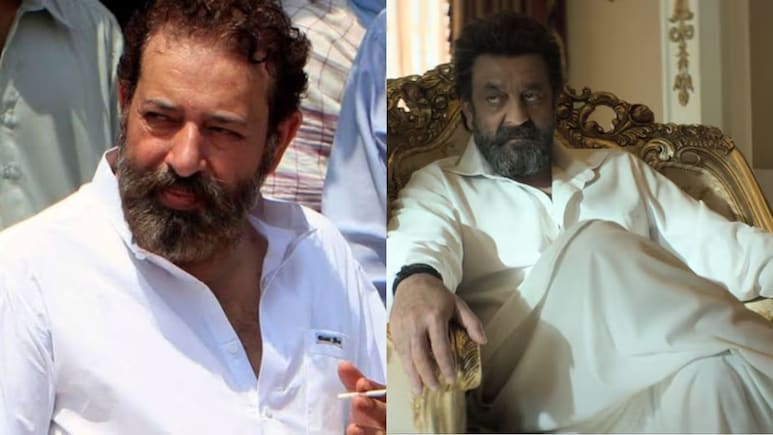
- SP Chaudhry Aslam joined Sindh Police in 1984 and became known for anti-terror operations
- Aslam faced frequent allegations of fake encounters but was cleared by internal inquiries
- He survived nine assassination attempts before dying in a 2014 suicide car bombing claimed by TTP
Spoilers Ahead: This story contains spoilers related to Dhurandhar 2.
There are men who live long, and then there are men who live loudly. SP Chaudhry Aslam belonged to the latter: his life less a straight line and more a series of explosions, both literal and metaphorical. Long before cinema discovered him, Karachi already knew his name.
Cinema may frame him as a swaggering, larger-than-life cop, but the real man existed in far murkier terrain, where power, fear, and controversy often went hand in hand.
The Making Of A 'Larger-Than-Life' Cop
SP Chaudhry Aslam wasn't just a police officer, he was, by most accounts, a force of nature. Joining the Sindh Police in 1984 as an Assistant Sub-Inspector, he rose steadily through the ranks, eventually becoming one of Pakistan's most recognisable faces in anti-terror operations.
He operated across some of the most volatile phases in Karachi's history, from the political violence of the 1990s to the Lyari gang wars of the 2000s, and finally the rise of extremist outfits like Tehrik-i-Taliban Pakistan (TTP).
His reputation? Complicated, to say the least.
He was known for taking on everyone: gangsters, political militias, and jihadist groups, often simultaneously.
As Deputy Inspector General Omar Shahid Hamid described him in a conversation with Digi Tales, "The thing about Aslam and why I think he kind of makes good copy, even in terms of cinematic viewing and all, is that he was always larger than life. And my first sort of meeting with him was that he showed up in his white shalwar kameez, took out a glock, put it on the table, and started narrating the story of how he had arrested my father's assassin."
Hamid further reflected on Aslam's approach, "Aslam at heart was a crime fighter. I know there has been a lot of debate about him, about his tactics, about whether he was a good cop or a bad cop, and I'm not defending any of that. But I will say this: for a police officer to take on, one after another, and often at the same time, the biggest menaces to law and order and criminality in the 1990s, which was the MQM's (Muttahida Qaumi Movement) militant arm at the time, and then, in the early 2000s, the Lyari gang wars, the various characters within Lyari like Rehman Dakait or Arshad Pappu, and to not side with one or the other, as many police officers have done, but to take on all sides simultaneously, to fight a multi-front war."
He added, "And then later, in the 2010s, right up to his death, to take on the jihadists, whether it was Lashkar-e-Jhangvi or the Pakistani Taliban, to open so many fronts simply because the state said, 'Look, you've got to fight these guys, there's no one else to do it.' To take on that burden, I know many, many police officers who backed off."
And yet, even his admirers admitted the grey areas, "He took on all those multiple fronts, which were special. When you are living day to day under that sort of pressure, sometimes the government tells you that you have to clean Lyari, make it crime-free, and you are thrust into that role, and then eight or nine months later, the government changes, you are suspended, they lodge FIRs against you because it's a different government, and the people who are around you are targeted systematically."
Justice Or 'Fake Encounters'?
For every story of bravery, there was an equally persistent allegation - "fake encounters."
Aslam was frequently accused of carrying out extrajudicial killings, eliminating suspects in staged gunfights rather than producing them in court.
These accusations followed him throughout his career, especially after the killing of gangster Rehman Dakait in 2009, which many alleged was not a legitimate encounter.
Even so, internal inquiries cleared him, and his methods, however controversial, earned him both fear and admiration in equal measure.
A Man Who Lived On Borrowed Time
If there's one thing that defined Aslam's life, it was how often he cheated death.
He survived at least nine assassination attempts before the one that finally succeeded, per The Tribune.
The Major Attempts On His Life
- January 15, 2006: Gunmen attacked his convoy in Gizri. Two police officers were killed.
- November 11, 2010: An explosives-laden truck targeted the CID centre near PIDC, killing at least 15. Aslam was believed to be a key target.
- September 19, 2011: A vehicle carrying 300 kg of explosives rammed into his house in DHA Phase VIII. He survived, but eight others, including a schoolteacher and a student, were killed.
- May 2013: Rocket and grenade attacks during the Lyari operation targeted police officers, including Aslam.
- July 20, 2013: A bomb attack near Essa Nagri injured a city official; police suspected Aslam was the intended target.
After the 2011 attack on his home, he had famously said, "I will give my life, but I won't bow to terrorists. They targeted sleeping children. I walk these streets day and night. If they want to kill me, they should come and attack me directly."
It was a chilling foreshadowing of what was to come.
A Blast That Finally Hit Its Mark
On January 9, 2014, Chaudhry Aslam's luck ran out.
A suicide car bomber rammed an explosives-laden vehicle into his convoy in Karachi's Essa Nagri area. The explosion was devastating, destroying vehicles, damaging nearby buildings, and killing Aslam along with two others.
The Tehrik-i-Taliban Pakistan (TTP) quickly claimed responsibility.
Their spokesman stated, "Yes, we have killed Chaudhry Aslam and claim the responsibility of his killing."
They added, "He has killed, tortured and wounded our mujahideen friends ... finally, we have sent him towards his end."
For the TTP, Aslam was not just another officer, he was a long-standing enemy who had relentlessly targeted their network.
Pakistan's then Prime Minister Nawaz Sharif condemned the attack, saying, "We will not let the will of the nation be crushed by these cowardly acts by terrorists."
Investigations later revealed a chilling twist: his own driver, who also served as a bodyguard, had allegedly leaked details of his movements to the attackers.
There were also later claims, strongly denied by India, that foreign intelligence agencies may have played a role, though the TTP's responsibility remains the widely accepted account.
How Dhurandhar 2 Reimagines SP Chaudhry Aslam's Death
In Dhurandhar 2, SP Chaudhry Aslam, played by Sanjay Dutt, is every bit as intense, brutal, and unyielding as his real-life counterpart.
In the film, Aslam is already suspicious of Hamza (Ranveer Singh). The doubt doesn't come out of nowhere. A police officer from his own team, Omar, flags Hamza's intentions, prompting Aslam to dig deeper. Trust, for a man like him, is always conditional, and in this case, fatally misplaced.
Earlier, Aslam had made his position clear: Hamza was not to interfere in the matter of Uzair Baloch, one of Karachi's most feared crime figures.
When Uzair was about to be extradited, Aslam had already decided his fate: he planned to eliminate him. His approach, much like his real-life counterpart, leaned heavily on extrajudicial methods.
Hamza agrees, at least on the surface.
But beneath that agreement is a plan already in motion.
What follows is less an ambush and more a psychological game. Hamza calls Aslam and feeds him misleading intelligence, suggesting that his men are trying to save Uzair and advising him to take a specific route. Aslam, ever suspicious, assumes this is a trap, that Hamza has planted men on that very route to kill him.
So, he does what he believes is the smarter move: he changes course.
What he doesn't realise is that Hamza has anticipated this exact reaction.
A Balochi operative linked to Shirani Baloch's group is already stationed to track Aslam's movement. The moment his convoy diverts, the operative follows. The trap isn't the route, it's Aslam's own instinct to outthink it.
Then comes the final call.
Hamza, now fully in control of the situation, calls Aslam and delivers a chilling message, "Your justice for Balochs was justifiable. Khair jab jehnnum mein milenge tab hisaab barabar karlenge ("We'll settle the score when we meet in hell.")
On the other end, Aslam responds with the same swagger that has defined him throughout the film. He says, "Aye baloch, itna overconfidence acha nahi. SP Aslam vo jinn hai jo...("This kind of overconfidence isn't good. SP Aslam is that jinn who...")
He never gets to finish the sentence.
A suicide bomber, driving an explosives-laden car, rams straight into his convoy.
The explosion is immediate. Violent. Final.
From a distance, Hamza and his father-in-law Jameel Jamali (Rakesh Bedi) watch it unfold from a terrace, silent spectators to a death they meticulously engineered.
In Dhurandhar 2, Aslam doesn't die as a target of terror. He dies as a man outplayed, undone not by brute force, but by strategy, ego, and the very instincts that once made him formidable.
The Final Word
The real Chaudhry Aslam lived a life that almost feels written for cinema: relentless battles, multiple enemies, moral ambiguity, and a violent end.
But where films simplify, reality complicates.
He was, as even his colleagues admit, neither entirely hero nor entirely villain. He was a product of his time, a man operating in a city where the lines between law, survival, and justice were constantly blurred.
Perhaps that is why his life continues to be retold, because it forces an uncomfortable question: When the system breaks down, does the man who bends the rules become its saviour, or just another symptom of the same disorder?
Also Read | In Dhurandhar 2, The Revenge Was Also For Deepika Padukone From 19 Years Ago
