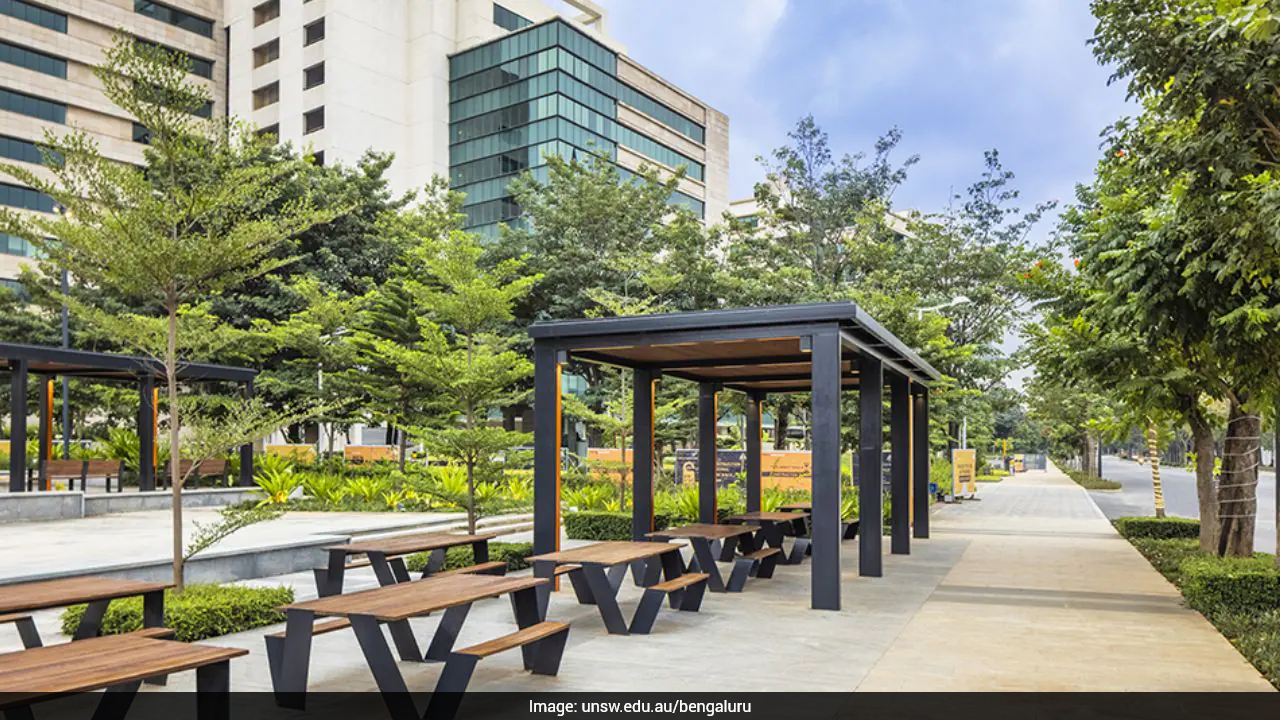

Are you considering earning a degree from a globally reputed institution without bearing the high cost of studying abroad? If yes, this could be good news for you. Students will no longer need to relocate to cities such as London, Chicago or Melbourne, as several leading international universities are opening campuses in India, including in Mumbai, Delhi and Bengaluru, marking a major shift in the country's higher education landscape.
According to the Union Ministry of Education, 15 foreign universities have so far been issued Letters of Intent (LoIs), clearing the way for them to establish independent campuses in the country. Most of these campuses are expected to admit their inaugural batch of students in August this year, with each campus likely to begin operations with 200 to 250 students. The intake is projected to increase to 1,000-1,200 students annually per campus over the next five years.
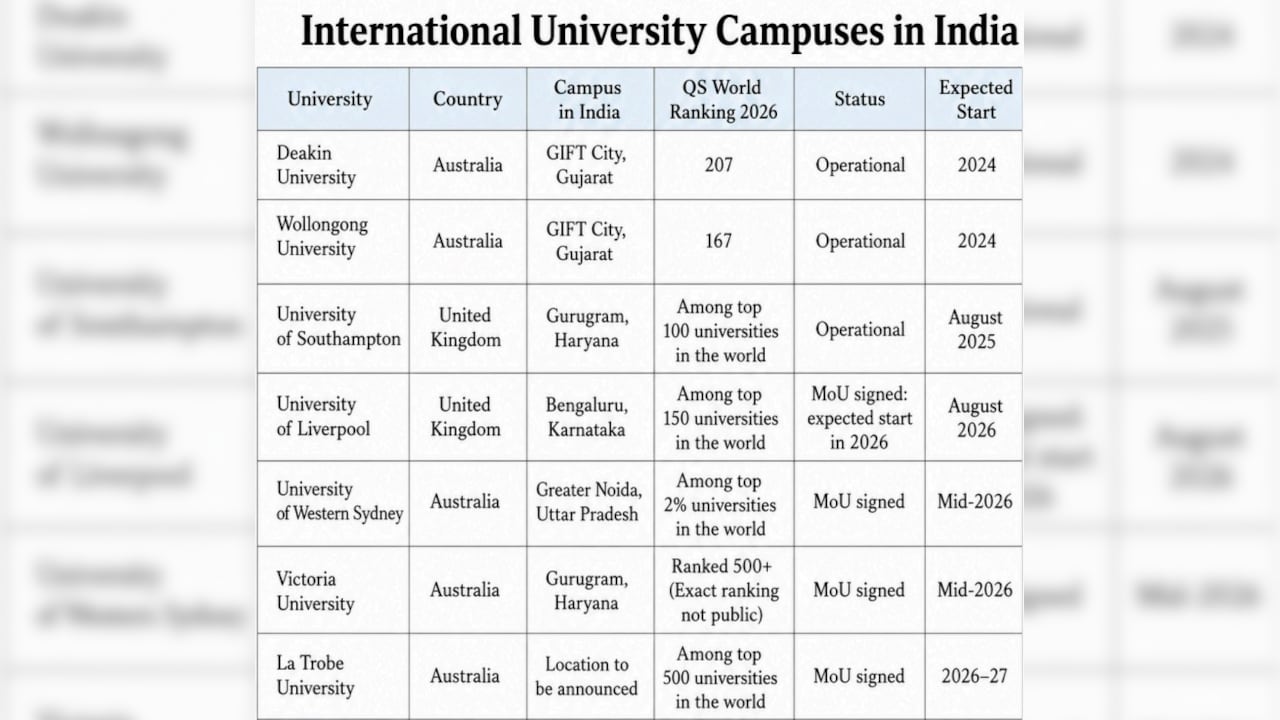
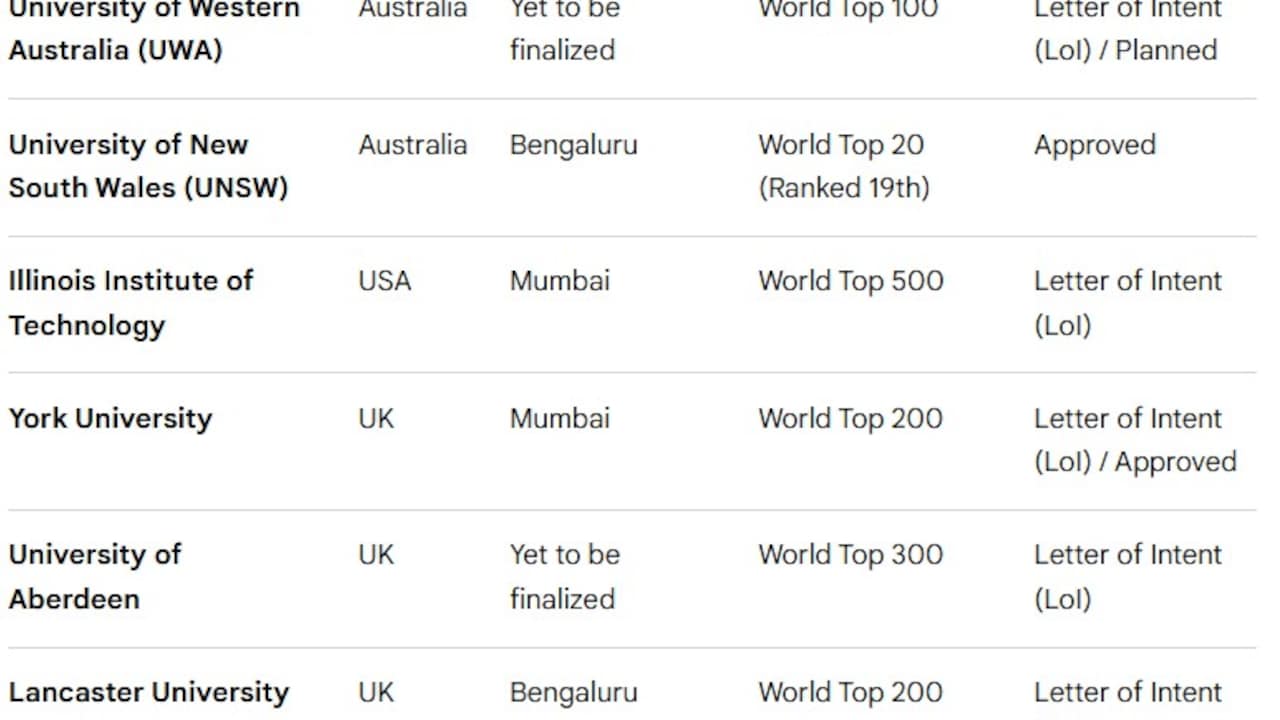
Among the institutions planning to establish campuses in India are the University of Aberdeen, the University of Bristol, the University of Liverpool, Illinois Tech and Victoria University. According to a Dainik Bhaskar report, the current admission cycle has already attracted more than 10,000 applications.
Here's the complete list:
- University of Southampton (UK)
- Deakin University (Australia)
- University of Wollongong (Australia)
- Queen's University Belfast (UK) - GIFT City, Gujarat
- University of Liverpool (UK)
- University of York (UK)
- University of Bristol (UK)
- University of Aberdeen (UK)
- Illinois Institute of Technology / Illinois Tech (USA)
- Western Sydney University (Australia)
- Victoria University (Australia)
- Coventry University (UK)
- University of Surrey (UK)
- La Trobe University (Australia)
- Lancaster University (UK)
Admissions, Curriculum And Exchange Programmes
Most universities require a minimum of 75% marks in Class 12 and 55%-70% in graduation, depending on the programme.
Students securing between 70% and 85% marks in English in their board examinations may not be required to submit IELTS scores.
The curriculum, examinations and grading systems will follow the academic standards of the respective home campuses. Initial academic offerings will primarily focus on Artificial Intelligence (AI), Computer Science and STEM disciplines.
Students will also have opportunities to spend one or two semesters abroad through exchange programmes. The University of York plans to offer a 2+1 pathway, allowing students to study for two years in Mumbai and one year in the UK. Students enrolled at the University of Bristol's India campus will also be able to access the university's AI supercomputing infrastructure in the United Kingdom through cloud-based systems.
Faculty, Scholarships And Fees
The campuses will adopt a combination of permanent Indian faculty and visiting international professors.
Universities have also announced scholarships based on merit and financial need. A combined scholarship fund of around Rs 1,000 crore has been earmarked over the next five years, with students eligible for fee waivers ranging from 10% to 100%, depending on merit and financial need.
Individual institutions, including the University of Aberdeen and the University of Bristol, have also announced annual scholarship support for eligible students.
University representatives argue that while admissions to premier Indian institutions such as IITs and IIMs remain highly competitive, foreign university campuses in India will provide students access to internationally recognised degrees, global faculty, research infrastructure and alumni networks at an estimated cost that is 30%-40% lower than pursuing the same degree overseas.
Growing Demand For International Education
Data indicates that the number of Indian students pursuing education abroad has risen sharply in recent years, increasing from 6.8 lakh in 2020 to 18 lakh in 2025.
According to a Deloitte and Knight Frank report, more than 5.6 lakh students could be enrolled at foreign university campuses in India by 2040. The report estimates that such expansion could help retain foreign exchange worth approximately $113 billion (around Rs 10.67 lakh crore) that would otherwise be spent on overseas education, while also generating demand for nearly 19 million square feet of educational infrastructure across the country.
