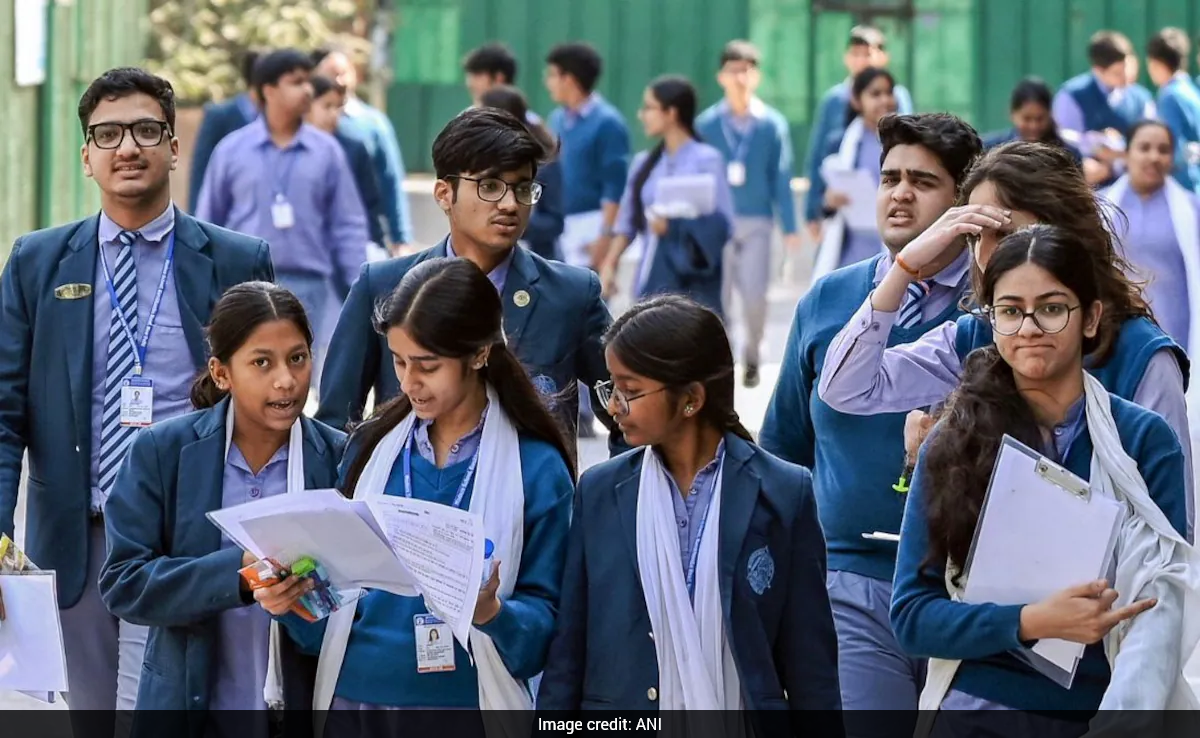
CBSE Board Exams 2026: The Central Board of Secondary Education (CBSE) conducted the Class 12 Economics examination on Wednesday from 10:30 am to 1:30 pm. Initial feedback from educators indicates that the paper was balanced and aligned with the NCERT syllabus.
Alka Kapur, Principal of Modern Public School, Shalimar Bagh, said the question paper maintained a moderate difficulty level and covered both Macroeconomics and Indian Economic Development. It included a mix of direct questions, numericals, and application-based components.
She noted that nearly 20% of the paper comprised competency-based questions aimed at testing conceptual understanding and real-world application. However, case study-based questions required careful reading and were time-consuming.
Susmita Nath (PGT) and Venketason K (PGT) from JAIN International Residential School (JIRS), Bengaluru, described the paper as moderate to slightly difficult. They highlighted a strong focus on competency-based questions, with higher-order thinking questions primarily appearing in the four-mark section, while case study-based questions were included in the six-mark section across both sections of the syllabus.
They added that many questions required analytical thinking and precise interpretation, as they were designed to assess application rather than rote learning. Students had to read questions carefully to respond accurately.
The educators further observed that the paper featured a significant number of application-based questions linked to real-life scenarios. Graph-based questions were absent, and numerical questions were limited. Greater emphasis was placed on conceptual clarity and interpretation skills, making it necessary for students to have a strong grasp of fundamentals to score well.
Sonia Rawat, PGT Economics at Global Indian International School, Noida, said the paper was moderate and well-structured, closely following NCERT content and previous year trends. She noted that most questions were concept-driven, making the paper scoring for well-prepared students.
While some multiple-choice and case study questions included tricky elements, the overall paper was manageable in length, allowing students to complete it within the given time. She added that clarity of concepts and the use of appropriate keywords were essential for securing high marks.
