





A powerful earthquake in Venezuela has raised fresh concerns over India's rapidly expanding oil trade with the South American nation. Industry experts warn that shipping delays, port disruptions and higher insurance costs could follow.
The twin earthquakes, measuring 7.2 and 7.5 in magnitude, struck Venezuela on June 24 within seconds of each other. The tremors were the strongest recorded in the country in more than 125 years.
Authorities have reported hundreds of deaths and thousands of injuries, while aftershocks continue to rattle the region.
Also Read | Layoffs Are Rising In Tech, But These Skills Are Helping People Unlock Better Pay
For India, the disaster comes at a sensitive moment. The country had been facing disruptions in oil supply due to the Iran war. Just a few days ago, the US and Iran inked a peace deal, raising hopes that disruptions at the Strait of Hormuz -- a critical sea route for oil supplies -- would finally ease.
According to Kunal Khanna, Managing Director - Reinsurance & Global Head of Natural Resources at EDME Insurance Brokers Ltd, Venezuela has only recently emerged as a key source of crude oil for Indian refiners. Any disruption in the country's export infrastructure could therefore have implications that extend far beyond its borders.
"India's exposure is growing because Venezuela has become an increasingly important supplier in a very short period of time," Khanna noted.
Venezuela's Oil Exports To India
India sharply increased purchases of Venezuelan crude in recent months as refiners looked for alternatives amid uncertainty in the Middle East. Imports from Venezuela surged through April and May, helping the country become one of India's most significant crude suppliers.
That makes the earthquake more than just a local disaster.
Khanna points out that the risk is not limited to physical damage at oil facilities. Even if export terminals escape major structural harm, associated disruptions can still affect global supply chains.
Power outages, damaged transport links and emergency restrictions at ports can slow cargo movements for days or even weeks, he explained. Venezuela's key cargo gateway, La Guaira, has already been placed under a disaster declaration, increasing concerns over shipping schedules and port operations.
For tanker operators, delays can quickly translate into higher costs.
Ships waiting to load cargo may face longer turnaround times, rerouting requirements and demurrage charges. Those expenses eventually ripple across the supply chain, affecting traders, refiners and insurers alike.
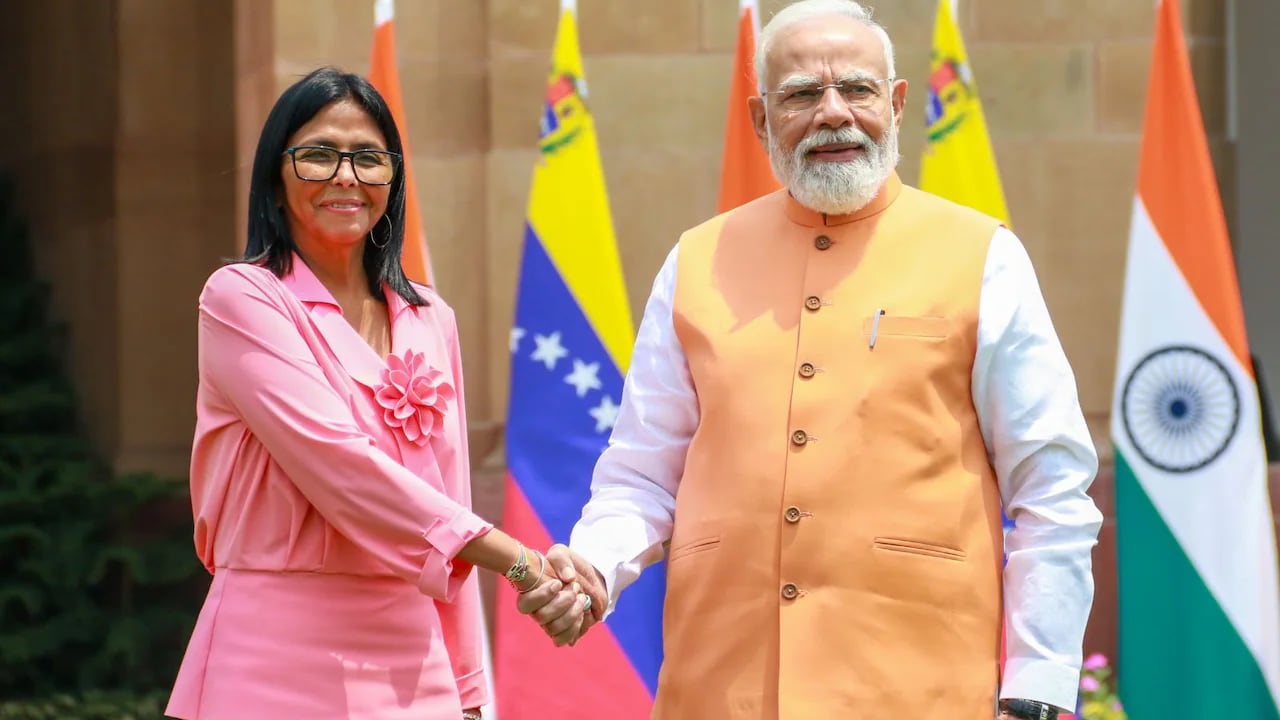
Earlier this month, PM Modi held talks with Venezuela's acting President Delcy Rodriguez.
Khanna said marine insurance policies covering shipments from Venezuela were largely designed around geopolitical and sanctions-related risks. A major seismic event introduces a different layer of uncertainty that may not have been a primary consideration when policies were priced.
"The corridor was evaluated mainly through the lens of shipping and political risks. Natural catastrophe exposure is now part of the equation," he said.
India's Investments In Venezuela
The implications also extend beyond cargoes currently at sea.
India has direct investment exposure in Venezuela through ONGC Videsh, which holds stakes in oil projects in the country. Khanna noted that any prolonged disruption could therefore have both operational and financial implications for Indian interests.
The broader lesson, according to Khanna, is that diversification does not eliminate risk. It simply changes its nature.
India turned to Venezuela to reduce dependence on other volatile energy corridors. However, the earthquake highlights how every new trade route brings its own vulnerabilities.
Earlier this month, Prime Minister Narendra Modi also held talks with Venezuela's acting President Delcy Rodriguez. According to reports, PM Modi and Rodriguez also explored opportunities for Indian companies to invest in Venezuela's sectors including mining, critical minerals, pharmaceuticals and automobiles. Now, the twin earthquakes may prompt delays or re-consideration.
For insurers, brokers and corporate risk managers, Khanna believes the event is a reminder that emerging supply chains must be reassessed continuously.
As the full extent of the damage becomes clearer in the coming days, shipping companies, energy traders and insurers will be closely watching developments in Venezuela. For India, the quake has exposed a new fault line in one of its newest and most important oil supply routes.
Track Latest News Live on NDTV.com and get news updates from India and around the world

