





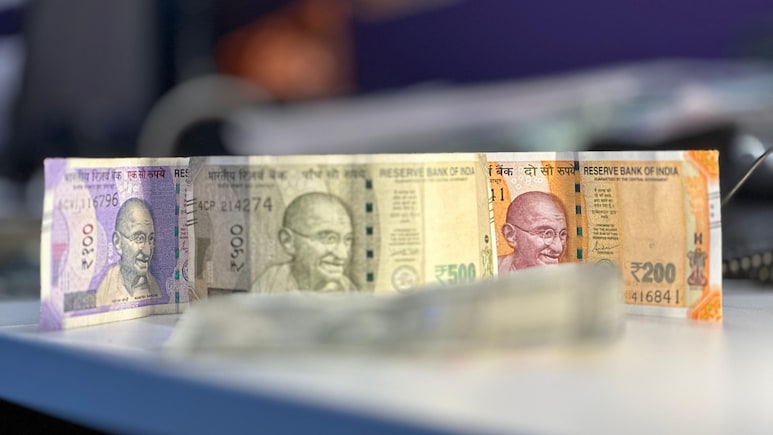
Indian Economy: India has fallen to being the world's sixth largest economy, according to the International Monetary Fund (IMF) latest global GDP data. Just a year earlier, India was briefly touted as the fourth largest economy.
But now it sits at number six - behind the United States, China, Germany, Japan, and the United Kingdom. Significantly, the slip is not because the economy went into reverse. In rupee terms, the economy is still growing fast. Follow Live Updates
So, What Led To The Drop:
- Weakening rupee: When GDP is converted into US dollars, a weaker rupee gives a smaller number.
- Change in GDP base year: New methods made India's nominal GDP look smaller on paper.
So the economy did not shrink. It just looked smaller in global dollar rankings.
Also Read | Layoffs Are Rising In Tech, But These Skills Are Helping People Unlock Better Pay
Top 10 World Economies (nominal GDP)
| Rank | Country | GDP (USD trillion approx) |
| 1 | United States | 30.8 |
| 2 | China | 19.6 |
| 3 | Germany | 4.7 |
| 4 | Japan | 4.4 |
| 5 | United Kingdom | 4.0-4.3 |
| 6 | India | 3.9-4.2 |
(Note: IMF estimates convert local currencies at current exchange rates. India's rank has moved mainly due to exchange rate change and statistical revisions.)
Why This Matters
India is still growing fast. IMF projects over 6-7 per cent growth, highest among major economies. The slip does not reflect a collapse. It shows how exchange rates and data methods affect world rankings.
Officials say India's economy is still strong and will regain a higher rank soon. Many forecasts now see India back to fourth place by 2027 and possibly third by the early 2030s.
"The depreciation of the Indian rupee against the US dollar makes the economy look smaller in international dollar terms despite the fact that we have been the fastest growing economy in the world. Despite robust 7-8 per cent GDP growth, the nominal ranking is hindered by currency value fluctuations. However the depreciation is over done and we could see the rupee appreciate over time once the crude oil softens post the cease fire and war ends. We could also see the FPI inflows to India as the equity market has corrected and this could prop up the rupee too.," said Poonam Tandon, Chief Investment Officer, IndiaFirst Life Insurance.
Base Year Change Effect
India updated its GDP calculation base year to a more recent one. This is standard practice but can make nominal GDP numbers smaller on paper. This technical change also pushed India down in the ranking.
Sharing his insights, Siddharth Maurya, Managing Director, Vibhavangal Anukulkara, said, "A change in India's global economic rankings because of the weakness in the rupee should not be viewed with alarm but rather with some caution... India's growth trends, fueled by consumer spending, infrastructure development, and services, are continuing as normal. Nevertheless, weakening in the rupee does have some practical significance in terms of its impact on the cost of imports, inflation pressure, and short-term foreign investment decisions. Overall, this serves as a timely reminder that exchange rates are as important as growth when it comes to shaping perceptions on a global scale."
Adding to this, Senthil Kumar R, CEO & MD, Nitstone Finserv, said, "The underlying growth momentum, domestic demand, and financial system resilience remain strong. Such phases highlight the importance of stability and long-term perspective, as India continues to navigate global uncertainties while maintaining a steady and broad-based economic trajectory."
Track Latest News Live on NDTV.com and get news updates from India and around the world

