





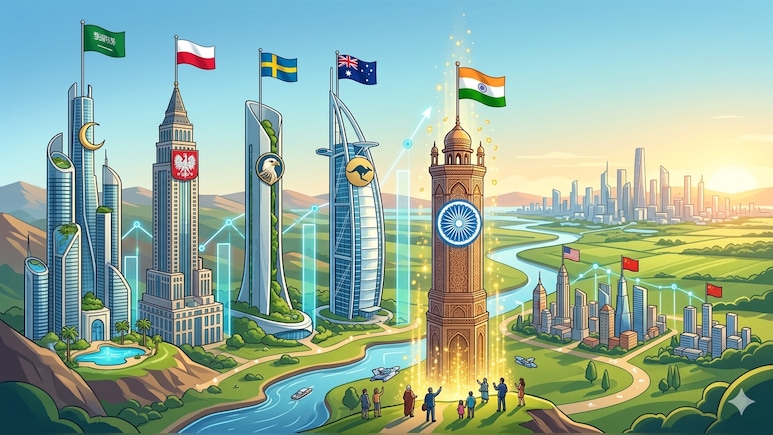
India's rich are getting richer, the class is expanding faster than most of the world.
The latest edition of Knight Frank's The Wealth Report 2026 reveals that India is now among the fastest-growing billionaire hubs globally, even as economic giants like China and the US are missing from the top billionaire growth rankings.
India is projected to see a 51 per cent jump in its billionaire population between 2026 and 2031, according to the report. That would take the number of Indian billionaires from 207 to 313 over the next five years.
Also Read | Layoffs Are Rising In Tech, But These Skills Are Helping People Unlock Better Pay
Knight Frank describes India's ultra-wealth journey as "one of rapid expansion followed by consolidation at scale".
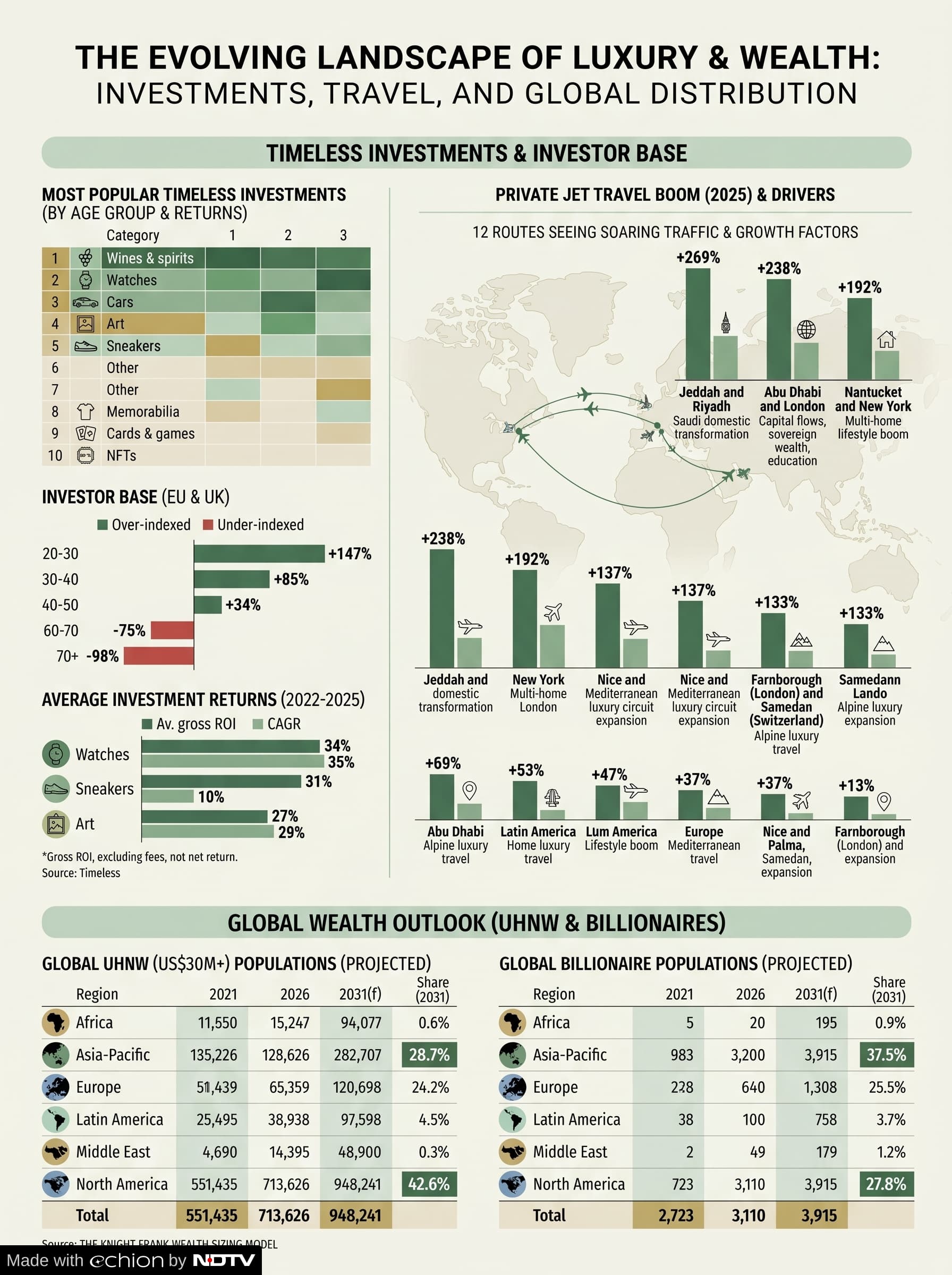
Between 2021 and 2026, India's population of ultra-high-net-worth individuals - people with wealth exceeding $30 million - surged 63%, rising from just over 12,000 to nearly 20,000.
And the growth is far from over.
The report forecasts another 27% rise by 2031, taking India's UHNW population past 25,000.
"This trajectory mirrors India's economic evolution: an entrepreneurial economy maturing into one with deeper capital pools, more sophisticated financial markets and a growing cohort of globally connected founders and investors," the report said.
Knight Frank added that "digitalisation, listed equities, private capital and family-owned businesses all play a role".
In other words, India's wealth creation machine is now running on multiple engines - startups, stock markets, industrial expansion and old-money family businesses alike.
What makes India's rise even more significant is the absence of China and the US from the top billionaire growth table.
Only countries that top India on the list are:- Saudi Arabia, Poland, Sweden and Australia.
US Dominates Global Wealth Creation
The US still dominates global wealth creation in absolute numbers. The report says America accounted for 41 per cent of all newly created UHNWIs between 2021 and 2026. China remains the world's second-biggest wealth engine.
But when it comes to future billionaire growth rates, India is growing faster than both.
That shift is beginning to reshape luxury real estate markets too.
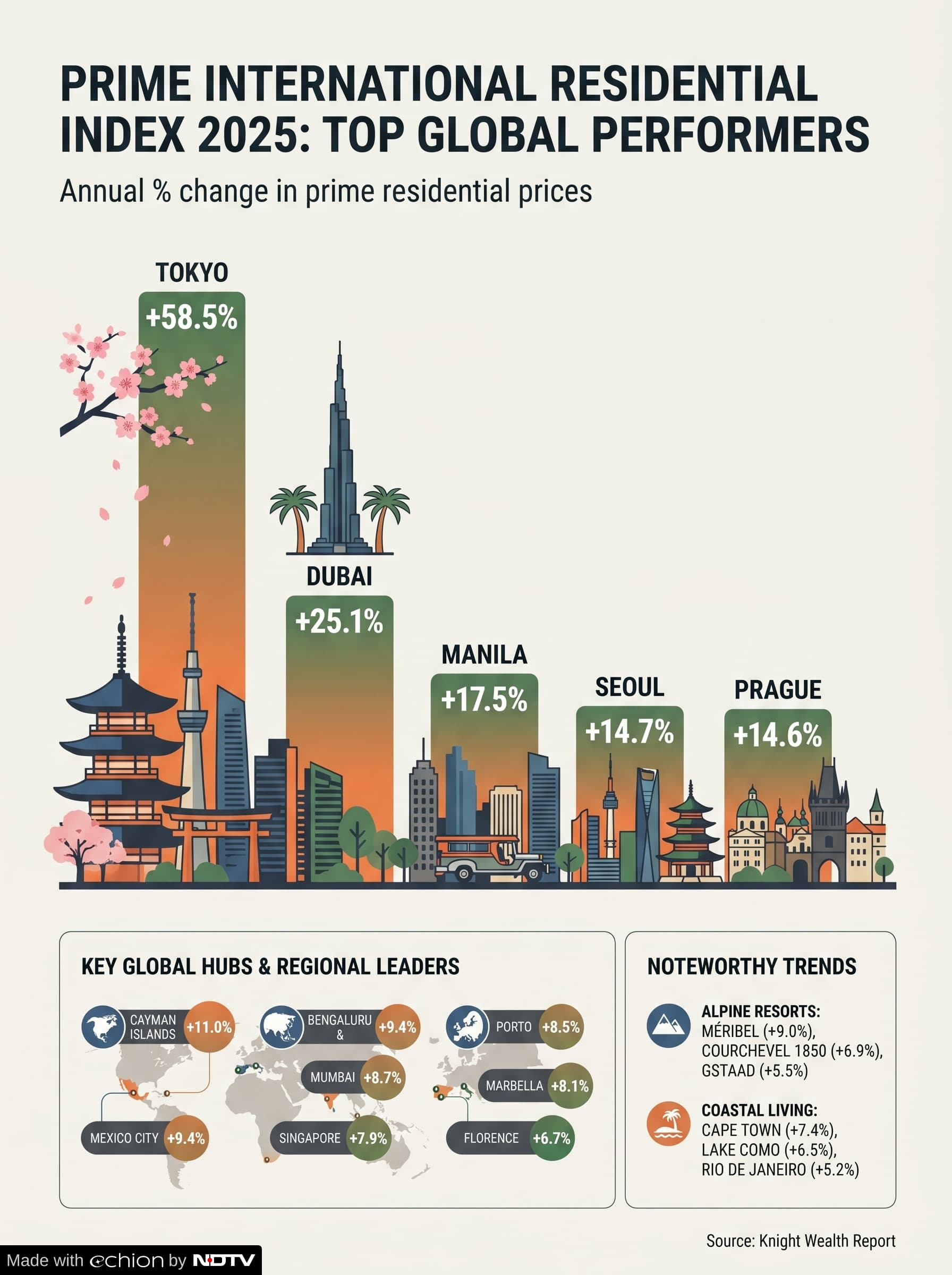
Mumbai and Bengaluru have emerged among the world's top-performing luxury housing markets in Knight Frank's Prime International Residential Index (PIRI 100).
Bengaluru ranked eighth globally with prime residential prices rising 9.4 per cent in 2025. Mumbai came in tenth with an 8.7 per cent rise, outperforming several global luxury destinations.
Tokyo topped the list with a staggering 58.5 per cent annual rise in luxury home prices, followed by Dubai at 25.1 per cent and Manila at 17.5 per cent.
Knight Frank said rapid domestic wealth creation is transforming India's luxury housing market, especially in Mumbai.
The report noted that Mumbai recorded 56 new-build sales in the $5 million-plus category in 2025.
"A rise in GDP of 38 per cent in five years is fuelling the domestic ultra-luxury market, with India's financial capital leading the charge," the report said.
Knight Frank compared Mumbai to New York, saying the city's "restricted coastal geography and chronic land scarcity naturally command a substantial premium".
It also highlighted a "post-pandemic appetite for lifestyle upgrades", with wealthy Indians chasing expansive views and world-class amenities.
Industry voices believe this is just the beginning.
Keshav Mangla, GM, Business Development, Forteasia Realty, said Bengaluru's and Mumbai's strong rankings reflect how luxury housing in India is evolving from a lifestyle purchase into a serious wealth-building asset.
According to him, high-income professionals, startup founders, global investors and HNIs now increasingly view luxury real estate as a long-term investment tool.
He added that India's growth is being driven by rapid urbanisation, infrastructure expansion and strong economic conditions.
Mangla also argued that while cities like Tokyo and Dubai are attracting global investment, India's luxury housing market is witnessing "more sustainable growth" backed by genuine domestic demand rather than speculation.
Aman Gupta, Director, RPS Group, said infrastructure is becoming a key trigger for luxury housing demand in India. According to him, metro rail expansion, expressways and mixed-use commercial developments are changing how affluent buyers choose homes.
He said luxury buyers are no longer evaluating only elite neighbourhoods. They are now looking closely at connectivity, metro access and urban amenities. Gupta pointed specifically to NCR corridors like Dwarka Expressway and the Northern Peripheral Road as future luxury hotspots.
'Wealthy Becoming Increasingly Mobile'
Beyond India, the report highlights how global wealth itself is changing shape.
Knight Frank estimates the world added 162,191 new UHNWIs between 2021 and 2026. That means nearly 89 people crossed the $30 million wealth mark every single day over the past five years.
The report also says the world's wealthy are becoming increasingly mobile.
Tax changes, geopolitical tensions and lifestyle preferences are pushing billionaires and family offices to spread assets across cities like Dubai, Singapore, Miami and London.
At the same time, luxury itself is evolving. Knight Frank says the global elite are moving away from "conspicuous consumption" and towards experience-led spending focused on wellness, exclusivity and transformation.
Even amid global uncertainty, luxury real estate continues to outperform mainstream housing markets.
The PIRI 100 index showed global luxury residential prices rose 3.2 per cent in 2025, slightly ahead of broader housing markets.
For India, though, the bigger takeaway may be this: the country is no longer just producing startups and unicorns. It is producing serious global wealth -- at a pace the world can no longer ignore.
Track Latest News Live on NDTV.com and get news updates from India and around the world

