





Amid the controversy around India's first quarter GDP growth data, World Bank Executive Director Neelkanth Mishra has slammed those questioning the headline GDP growth of 7.8 per cent for the April-June quarter.
Describing some of the pushback as "ill-educated and egregiously wrong", Mishra said "I was shocked to see the ill-educated and egregiously wrong claims made by some that if the 'original' base of the June-2025 quarter was used, growth in the June-2026 quarter would be much lower."
The comments were aimed chiefly at former Finance and Economic Affairs Secretary Subhash Chandra Garg, who has questioned whether India's headline GDP growth of 7.8 per cent for the April-June quarter (Q1 FY27) properly reflects the pace of economic activity.
Garg argued that GDP should also be assessed in current prices, that is, before adjusting for inflation. Using the previous year's base for the same quarter, he said, nominal GDP growth works out to under 2.5 per cent, against the 10.3 per cent nominal growth implied by the government's revised numbers.
'Collective Demand For Growth Is Good'
When asked why roads and infrastructure still appear inadequate if the economy is growing at 7.8 per cent, Neelkanth Mishra said India remains a lower-middle-income country and such shortcomings are likely to persist for another 15 to 20 years.
"Those metrics may look ugly for the next 15-20 years. What we should be discussing is the pace of improvement," he said.
Read: Ex-Chief Economic Adviser Backs GDP Data, Calls Methodology "Cutting-Edge"
Mishra added that a widespread demand for faster growth is, in itself, a positive sign. "It's good that there is a collective demand for growth," he said.
Mishra, however, accepted that there is "a slack in the labour market". He added, "In our case, real wage growth is not happening. But the output is up across sectors. The demand growth is also strong. Any metric will show you that India is growing."
Why India's 7.8% GDP Growth Number Is Being Debated?
India's economy expanded 7.8 per cent in the April-June quarter. The growth outperformed most forecasts.
However, critics, including former Finance Secretary Subhash Chandra Garg, argue that growth appears stronger partly because last year's GDP estimates were revised downward.
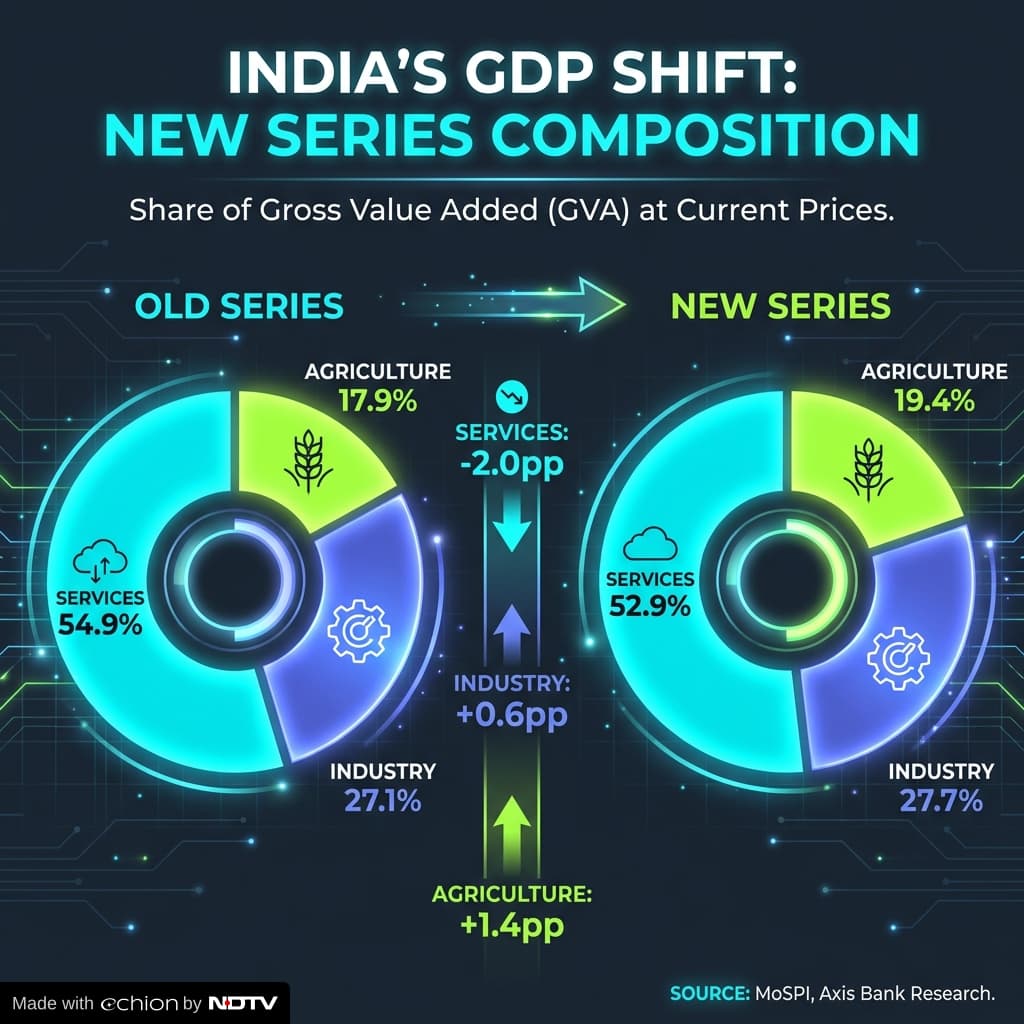
Notably, the government has shifted the base year for national accounts from 2011-12 to 2022-23. According to the revised series, GDP for the corresponding quarter a year earlier was lowered as newer data and methodologies were incorporated.
Now, critics are saying that if the older estimates had been retained, the year-on-year growth rate for the latest quarter would have been significantly lower -- 2.5 per cent (as per Garg).
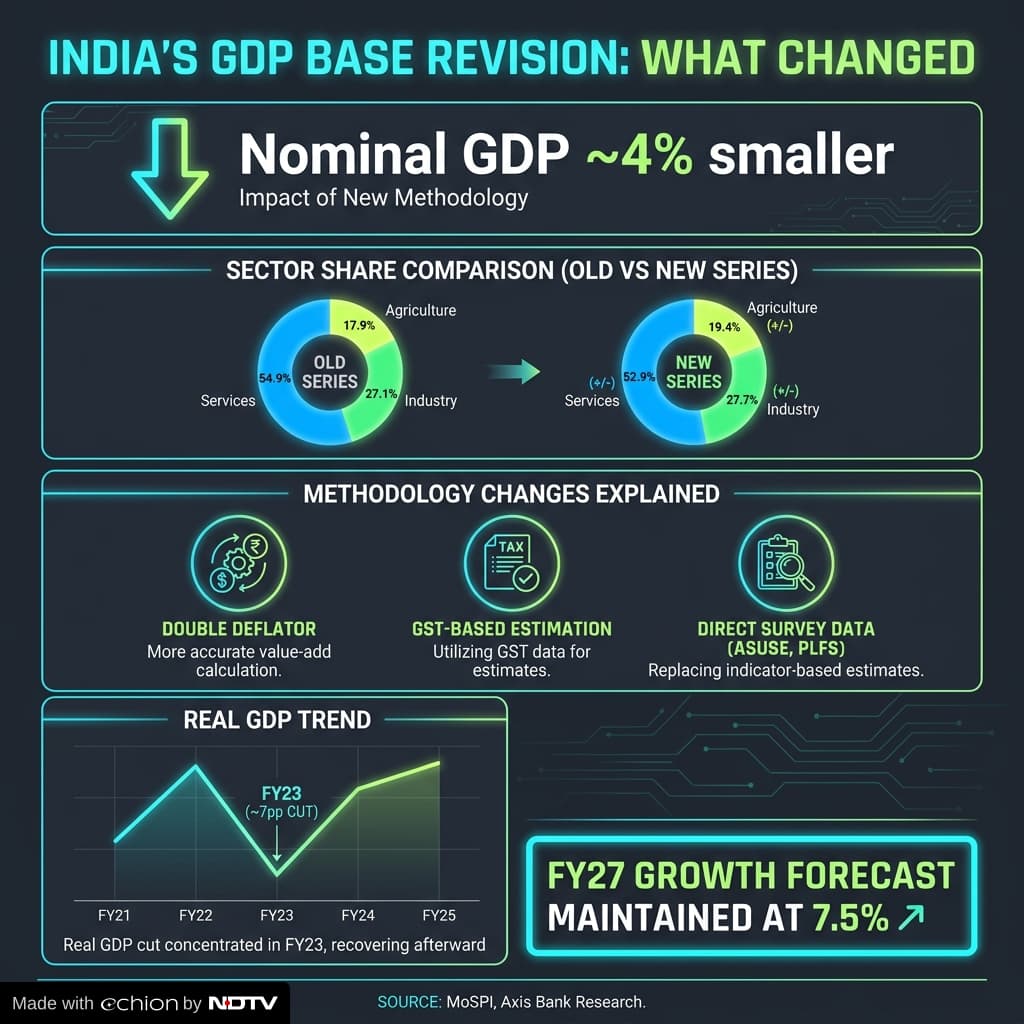
Meanwhile, government officials and several economists have rejected that argument, saying the comparison mixes figures derived from two different statistical series. They maintain that GDP estimates prepared under the old and new base years cannot be compared directly because the methodology, data sources and sectoral weights have changed.
The new series includes broader data coverage, greater use of GST-based information and updated measures of consumption and economic activity. Economists supporting the revision say these changes bring India's GDP calculations closer to international standards and provide a more accurate picture of the economy.
Track Latest News Live on NDTV.com and get news updates from India and around the world

