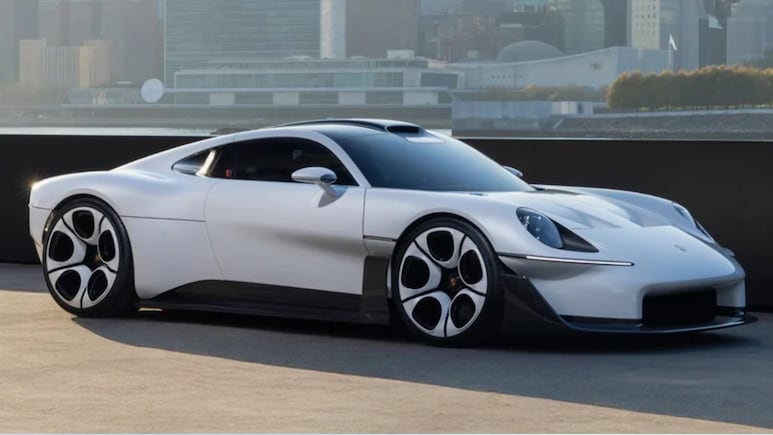
Porsche has pulled the covers off the Mission S, a concept that gives us a first proper look at the brand's next mid-engined supercar. Positioned above the 911, it is not being pitched as a one-off hypercar. Porsche says the platform is meant to become a permanent part of its range. The concept also sets the tone for Porsche's future design language, borrowing heavily from its own past.
Porsche Mission S: Design
Up front, the Mission S gets a low nose, rounded headlights and slim LED daytime running lights. The raised ‘torpedo' fenders sit higher than the bonnet, while a large air intake sits at the front of the roof. The roofline slopes away into sculpted side panels, and the rear gets narrow split tail lights, an active wing, a large diffuser and a cooling fan above the engine bay.
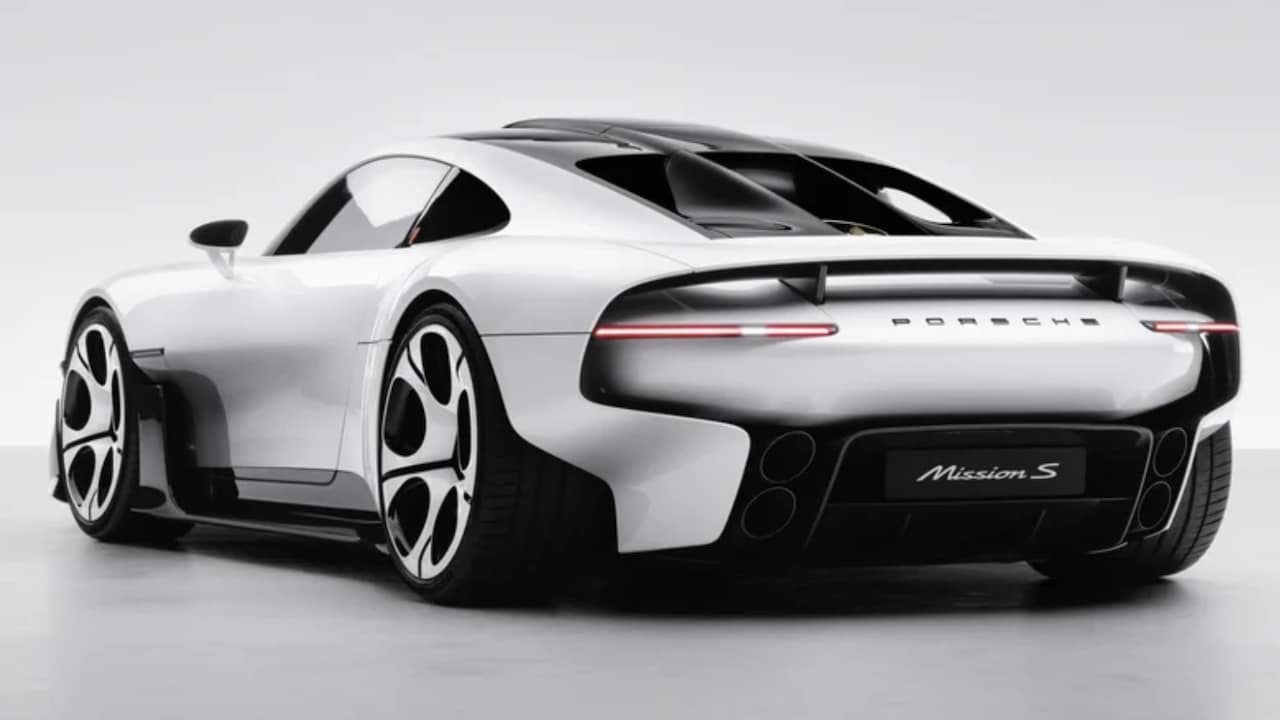
There are plenty of nods to Porsche's back catalogue here. The roofline borrows from the 959, the rear bodywork takes cues from the 911 GT1, and the wheels use a telephone-dial design inspired by the 928.
READ | Elon Musk's Tesla Roadster Flies, Flips Mid-Air Using SpaceX Tech: Science Explained
Tobias Sühlmann, head of Style Porsche, explained the thinking behind the raised fenders: “The Bauhaus rule is that form and function work together, and that's vital in the exterior and interior of our cars.” He added that the higher fenders help drivers judge the position of the front wheels and the edges of the car.
READ | Mahindra October 2026 Discounts: Scorpio, XUV And More Get Up To Rs 1.5 Lakh Off
The active rear wing retracts when not needed, while the rear cooling setup draws inspiration from the Porsche 917.
READ | Jawa, Yezdi, And BSA Festive Offers Announced: Zero Down Payment, 100 Per Cent Funding
Porsche Mission S: Cabin
Inside, the Mission S takes its cues from the 550 Spyder and 356. Two connecting lines run across the dashboard and doors, the seats feature an integrated seatbelt buckle in the centre panel, and the cabin uses a white, grey and red colour scheme.
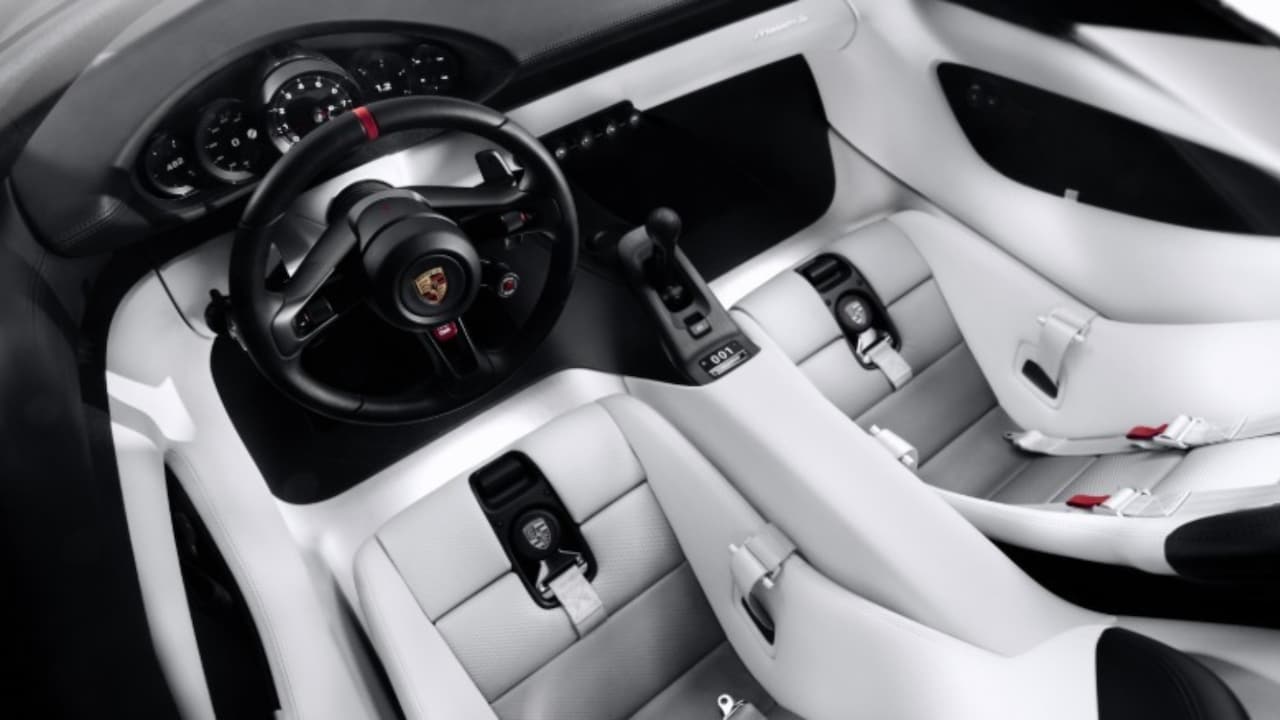
Behind the steering wheel sit five round instruments, including an analogue rev counter. Digital displays sit behind them, with layouts that change depending on the selected driving mode. Physical buttons and switches are retained, along with push-pull controls for driving and comfort functions, and a redesigned Sport Chrono element that blends analogue and digital displays.
There's no fixed central touchscreen or passenger display here. Instead, Porsche has fitted a retractable smartphone holder compatible with Apple MagSafe, letting the phone handle navigation and other information. The My Porsche app also lets users change the digital designs shown on the instrument cluster.
Track Latest News Live on NDTV.com and get news updates from India and around the world
