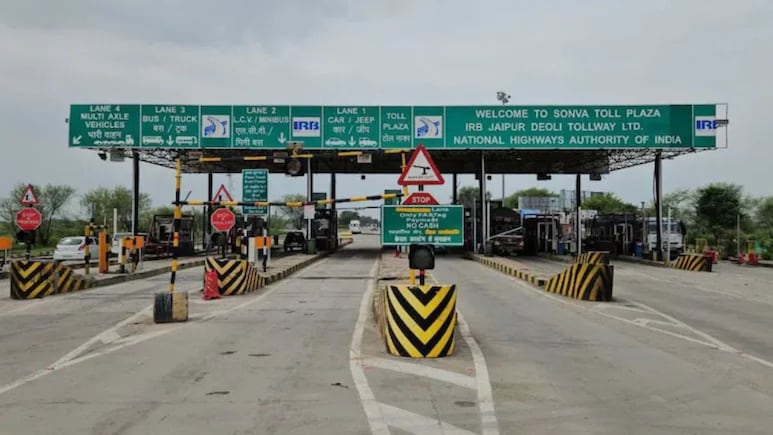
From April 10, highway travel across India is set to become fully digital as NHAI moves to eliminate cash transactions at toll booths. Alongside the new rule, the authority is also tightening toll exemptions and pushing wider adoption of the FASTag Annual Pass, making digital highway commuting faster and more seamless for frequent users.
NHAI Toll Rule Update: No Cash From April 10
In a major update for road users, NHAI has confirmed that cash payments will no longer be accepted at toll booths from April 10. FASTag will remain the primary mode of toll collection, while UPI will serve as the fallback payment option for vehicles that arrive without a valid FASTag.
-

-
 Andrew Ng On AI At Scale: Building The Intelligence Economy | NDTV World Summit 2026
 -
 NDTV World Summit 2026: Behind The Scenes As Ayush And Vedika Preview Two-Day Mega Event
 -
 Who Is Rajiv Mehta? Lilavati Hospital Trustee To Speak At NDTV World Summit 2026
 -
 Ex-CIA Director To Decode 'War In Times Of AI' At NDTV World Summit
 -
 From Call Centre To Billion-Dollar Disruptor: Nikhil Kamath At NDTV World Summit
 -
 'Every 5 Years, You'll See A New India': Swami Sarvapriyananda Ahead Of NDTV World Summit
 -
 Alain Ebobisse, Africa50 CEO, To Attend NDTV World Summit 2026. All About Him
 -
 Kriti Sanon At NDTV World Summit: A Look At Her Career And Business Ventures
 -
 Ex-CIA Director To Decode 'War In Times Of AI' At NDTV World Summit
 -
 Who Is Vikram Rai, CEO, South Asia GE Aerospace, Set To Attend The NDTV World Summit 2026
The move is expected to reduce waiting time at toll plazas and improve traffic flow on busy national highway stretches, where long queues remain a common issue during weekends and peak travel hours.
Also Read: Hyundai Car Discounts April 2026: Verna, Creta, i20 And More Get Benefits Of Up To Rs 1.10 Lakh
No FASTag? UPI Will Cost More
For motorists without an active FASTag, UPI payments can still be used at the toll booth. However, this convenience comes with an added charge, as the toll amount will be 25 percent higher than the standard fee. This effectively makes FASTag the most practical and cost-efficient choice for regular highway users.
If a driver refuses both FASTag and UPI payment, toll authorities can deny entry under the existing National Highways Fee Rules. An e-notice may also be issued, and if the dues remain unpaid for three days, the payable amount can double.
ID Card Exemption Practice Ends
Another key change is the end of informal toll waivers through government ID cards in private vehicles. Going forward, only officially eligible vehicles fitted with Exempted FASTags will be allowed to pass without toll payment.
This is expected to reduce misuse of exemptions and cut down on arguments at toll plazas, especially involving personal trips made in private cars.
FASTag Annual Pass Becomes More Relevant
The rule change also puts more focus on the FASTag Annual Pass, which now costs Rs 3,075 for private non-commercial vehicles. The pass allows up to 200 toll crossings or one year of validity, whichever comes first. For frequent intercity commuters, this can prove significantly more economical than repeated individual toll payments, especially on routes with multiple plazas.
Also Read: Maruti Suzuki Dzire Tops India Car Sales In March 2026, Beats Nexon, Creta, Punch
How To Apply For FASTag Annual Pass?
Motorists can apply for or renew the FASTag Annual Pass through digital platforms such as the Rajmarg Yatra App, as well as the official websites of NHAI and MoRTH.
To activate the pass, users need to log in with their FASTag-linked account, enter vehicle registration details and a registered mobile number, and complete the payment through UPI, debit or credit cards, or net banking. After the payment is processed, the pass is automatically linked to the FASTag and typically becomes active within 24 hours, providing one year or up to 200 toll crossings of validity.
Track Latest News Live on NDTV.com and get news updates from India and around the world
