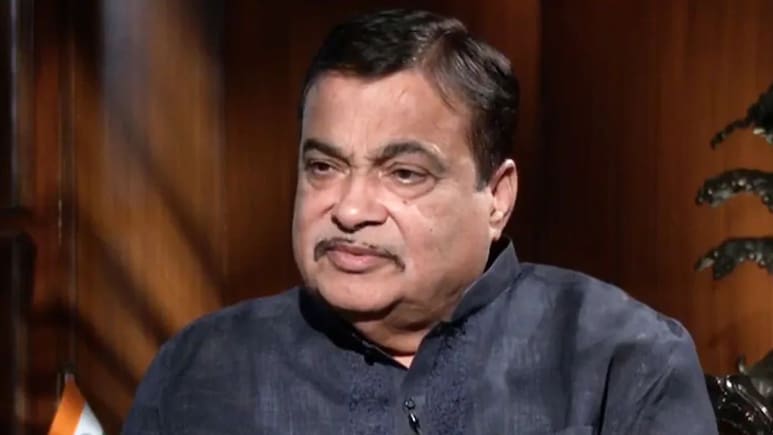
Nitin Gadkari, the Minister of Road Transport and Highways in India, has urged for a strong initiative towards achieving 100 per cent ethanol fuel usage in the country in the near future. His statement was made during the Indian Federation of Green Energy's Green Transport Conclave. This call for increased ethanol fuel adoption comes in light of vulnerabilities in oil exports due to the ongoing crisis in West Asia, highlighting the need for India to attain self-reliance in the energy sector.
What Is E100 Fuel?
E100 refers to a high-ethanol fuel blend that is primarily or nearly pure ethanol, typically comprising 95 to 100 per cent ethanol by volume. In India, the official "Ethanol 100" fuel introduced by IndianOil consists of approximately 93 to 93.5 percent ethanol, with about 5 percent petrol and 1.5 percent co-solvent included for safety purposes.
Why Push '100 Per Cent Ethanol Blending'?
As per Union Minister Nitin Gadkari, the use of 100 per cent ethanol-blend petrol will reduce the country's dependence on fossil fuel imports. This will be done by lowering the requirement of imports from the current 87 per cent to a lower number. It will eventually result in financial gain, which currently drains around Rs 22 lakh crore annually. Furthermore, the ongoing conflict in West Asia has exposed the vulnerabilities associated with importing fuel.
Also Read: Tesla Model Y L Six-Seater Variant Launched In India At Rs 61.99 Lakh
Current Status of 100 Per cent Ethanol Blend Petrol In India
India has made significant progress in its biofuel program in recent years. After the rollout of E20 (20 per cent ethanol-blended petrol) on April 1, 2026, the government is now focusing on transitioning to Flex-Fuel Vehicles (FFVs) for E100 or E85.
The upcoming CAFE III standards, effective April 1, 2027, will promote the adoption of electric and flex-fuel technologies. A draft notification for E85 fuel is reportedly in the final stages, indicating a prioritization of infrastructure for higher blending levels.
![Union Minister Hardeep Singh Puri At Launch Of Ethanol 100 Fuel [Image Source- PIB (2024)]](https://c.ndtvimg.com/2026-04/ofn67itk_ethanol-blend_625x300_22_April_26.jpg?im=FaceCrop,algorithm=dnn,width=1200,height=800 "Union Minister Hardeep Singh Puri At Launch Of Ethanol 100 Fuel [Image Source- PIB (2024)]")
Union Minister Hardeep Singh Puri At Launch Of Ethanol 100 Fuel [Image Source- PIB (2024)]
India saw the launch of E100 fuel back in 2024 by Union Minister Hardeep Singh Puri. IndianOil launched the fuel at the time and began distribution via 183 retail outlets across five states, including Maharashtra, Karnataka, Uttar Pradesh, New Delhi, and Tamil Nadu.
Also Read: Mahindra Sold More Cars In FY26 Than Toyota And Kia Combined; Scorpio Remained Best-Seller
Which Countries Use 100 Per cent Ethanol Fuel?
Presently, Brazil is the only country that uses 100 per cent ethanol (E100) fuel for road vehicles at a meaningful scale. Meanwhile, there are a few countries like Sweden that currently use E85 fuel, while other European countries are limited to E5 to E10.
Also Read: Renault Duster Vs Tata Sierra Vs Kia Seltos: Which One Is The Safest SUV?
Impact On Manufacturers and Consumers
Manufacturers will play a crucial role in the transition to fuels with high ethanol content. Vehicles will need technological improvements to enhance their environmental friendliness. One major challenge will be to develop and tune engines that can handle the higher concentration of ethanol, as it is more corrosive than standard petrol. This will be the first hurdle to overcome. Ultimately, this transition is expected to benefit consumers by providing higher power output and improved efficiency. Furthermore, the cost of the fuel will be reduced by producing it domestically.
Track Latest News Live on NDTV.com and get news updates from India and around the world
