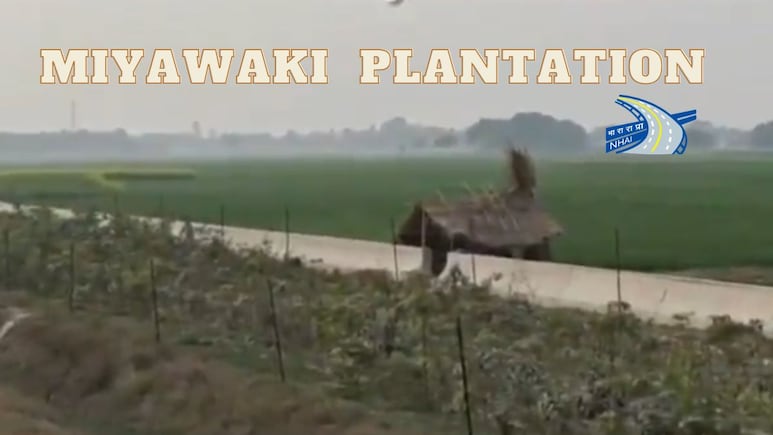
The National Highways Authority of India (NHAI) has taken another step towards greener infrastructure by adopting the Miyawaki plantation method along the Ghazipur-Ballia stretch of NH-31. The initiative is part of the government's broader Green Highways programme, aimed at increasing green cover and promoting environmental conservation alongside major road projects. By using this method on a Greenfield National Highway, NHAI is looking to balance rapid infrastructure development with sustainability.
🌱 मियावाकी पद्धति एक विशेष जापानी वृक्षारोपण तकनीक है, जिसमें छोटे क्षेत्र में देशी प्रजातियों के पौधों को घने रूप से लगाया जाता है।
— NHAI RO Varanasi (@NHAIROVaranasi) May 8, 2026
यह तकनीक पारंपरिक वृक्षारोपण की तुलना में तेज़ी से विकसित होकर लगभग 3 वर्षों में मिनी फॉरेस्ट तैयार करने में सहायक होती है।🌳
इस तकनीक से… pic.twitter.com/0c0pgsSurB
NH-31: Cities It Passes Through
Talking of the NH-31, it is over a 1,000 km long highway that stretches through Uttar Pradesh, Bihar, West Bengal, and Assam. It passes through multiple cities, namely:
Uttar Pradesh
- Prayagraj
- Ghazipur
- Ballia
Bihar
- Chhapra
- Hajipur
- Begusarai
- Khagaria
- Purnea
- Kishanganj
West Bengal
- Siliguri
- Jalpaiguri
- Cooch Behar
Assam
- Kokrajhar
- Bongaigaon
- Goalpara
- Guwahati
Also Read - Why Electric Trucks Won't Scale In India Without Fuel Efficiency Norms
What Is Miyawaki Plantation?
The Miyawaki method is a Japanese afforestation technique that involves planting native tree species densely in a small area, allowing them to grow faster and form a self-sustaining mini forest in about three years. Compared to conventional plantation methods, Miyawaki forests grow quicker, support higher biodiversity, and are particularly effective in urban and roadside environments. By implementing this technique, NHAI hopes to improve air quality, strengthen ecological balance, and make India's highways greener and more resilient.
Also Read - Gujarat Highway Users Praise FASTag-Based Barrier-Free Tolling On NH-48 Near Surat: Video
Benefits Of Miyawaki Plantation?
Rapid forest growth: Miyawaki plantations grow nearly 10 times faster than conventional plantations, creating dense green cover in just 2-3 years.
Boosts biodiversity: By using native plant species, the method supports birds, insects and local ecosystems, restoring natural balance.
Improves air quality: Dense vegetation helps absorb pollutants, reduces dust levels and increases oxygen output, especially along highways.
Requires less maintenance: Once established, Miyawaki forests become self-sustaining, needing minimal watering or human intervention.
Ideal for urban and roadside spaces: The technique works well in limited land parcels, making it suitable for highways, medians and urban corridors.
Enhances climate resilience: Dense tree cover helps lower surface temperatures, reduces noise pollution and improves overall environmental health.
Track Latest News Live on NDTV.com and get news updates from India and around the world
