India's electric vehicle market is growing, but the shift is not happening at the same pace everywhere. In 2018, EVs accounted for just 0.5 per cent of vehicle sales. By 2025-26, that share had risen to 8.25 per cent, with more than 8.7 million EVs on Indian roads. But the bigger question remains - how much is this push attracting private vehicle owners?
Which States Are Pushing EVs?
The India Electric Mobility Index (IEMI) 2025, released by NITI Aayog in collaboration with WRI India, looks at this state-wise. It is the second edition of the index and assesses the progress of States and UTs during 2025. The index looks at three broad areas, which are Transport Electrification Progress, Charging Infrastructure Readiness, and EV Research and Innovation
Delhi topped the overall index with a score of 84, followed by Maharashtra at 78, Karnataka at 73, Chandigarh at 71, and Goa at 65.
But a high overall score does not necessarily mean people in that state are buying the most private EVs.
Are Private Buyers Buying EVs?
Private EV adoption shows a different picture. Kerala and Goa recorded the highest private EV adoption at 12 per cent, followed by Karnataka at 11 per cent.
Odisha stood at nine per cent, while Tamil Nadu, Maharashtra, and Telangana were at eight per cent. This indicator measures the share of EVs among registered private two-wheelers and four-wheelers.
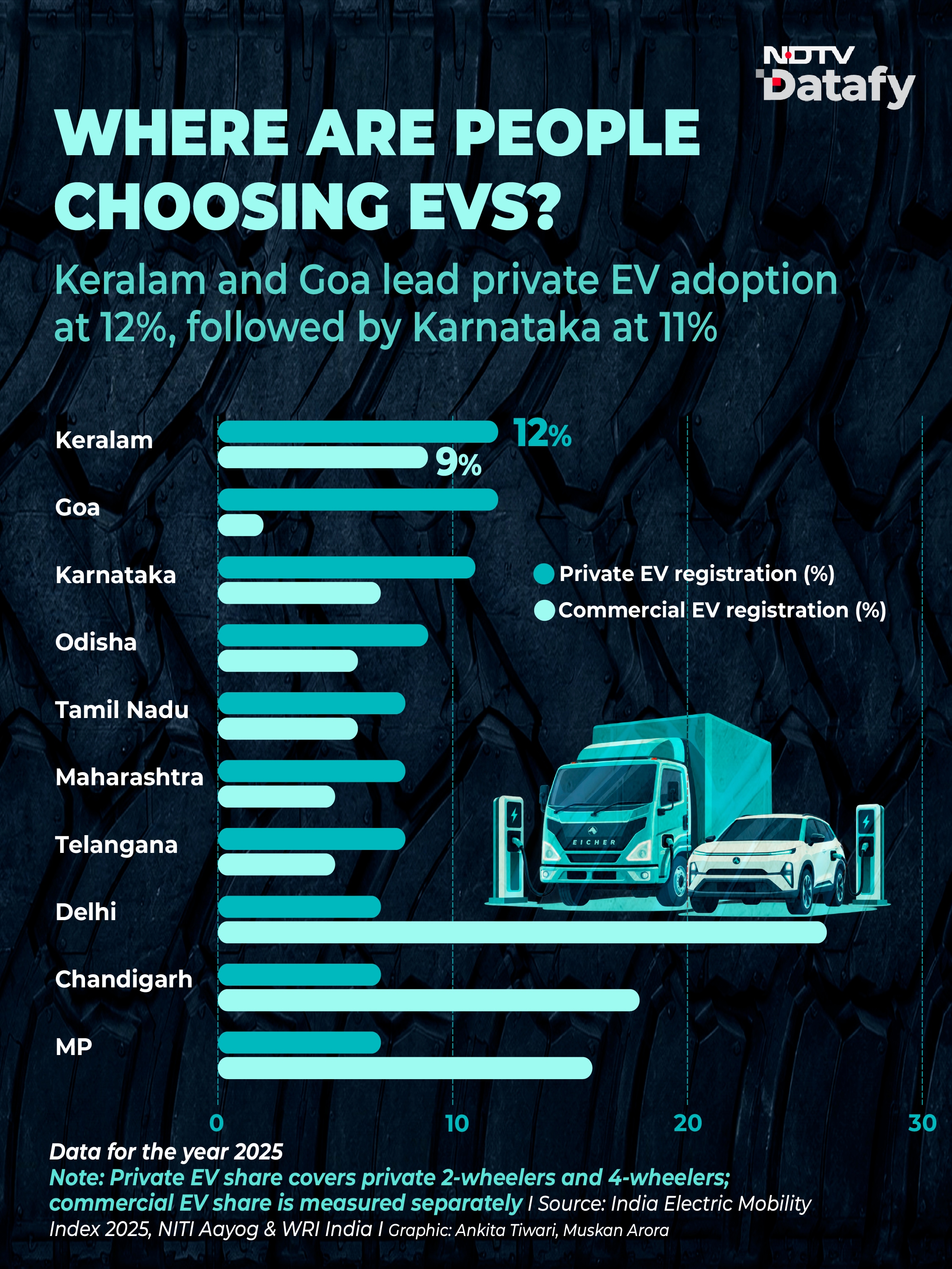
Commercial EV adoption tells a different story. Tripura has recorded the highest commercial EV adoption at 61 per cent. In contrast, the state with the highest private EV adoption hovers around 12 per cent even.
A large share of commercial EVs is linked to government-supported electric buses and other fleet-based adoption. So, why are private buyers slower to switch? Is the lack of charging infrastructure one of the reasons holding back private EV adoption?
Does Charging Infrastructure Decide The Pace?
Buying an EV is only one part of the transition. The next question is whether people have enough places to charge them. The IEMI shows a wide gap between states. Delhi has 41.1 public chargers per lakh registered vehicles, followed by Karnataka at 36.8. At the other end, Andaman & Nicobar Islands has 3.2.
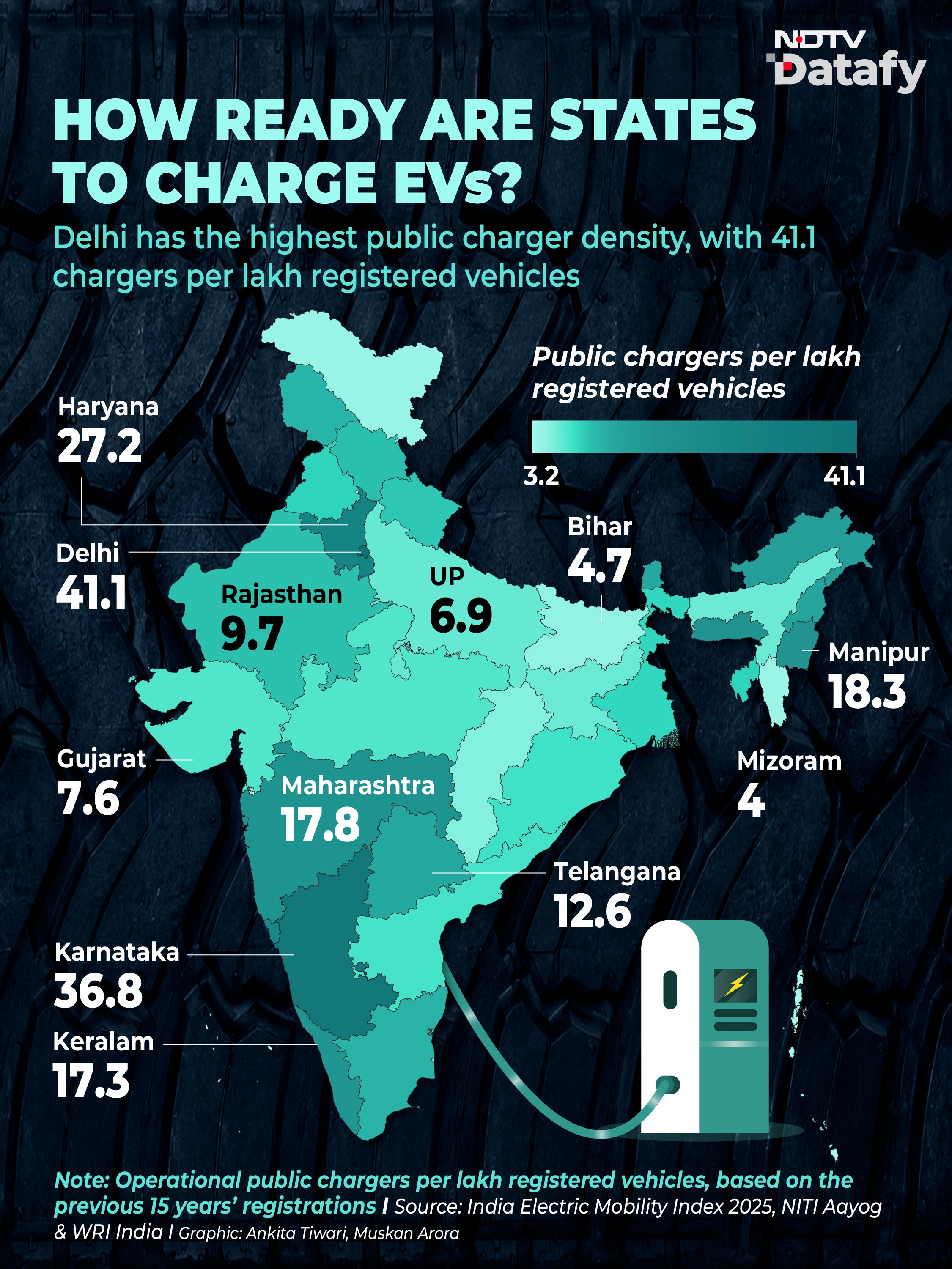
The measure is based on operational public charging points per lakh registered vehicles, using the previous 15 years data.
And What About The EV Startup Ecosystem?
The electric mobility transition is also creating a new ecosystem around EVs.
The IEMI measures EV startups relative to the size of each state's economy. Delhi recorded 30 EV startups per Rs 1 trillion GSDP, followed by Haryana at 24, while Maharashtra and Telangana recorded 19 each.
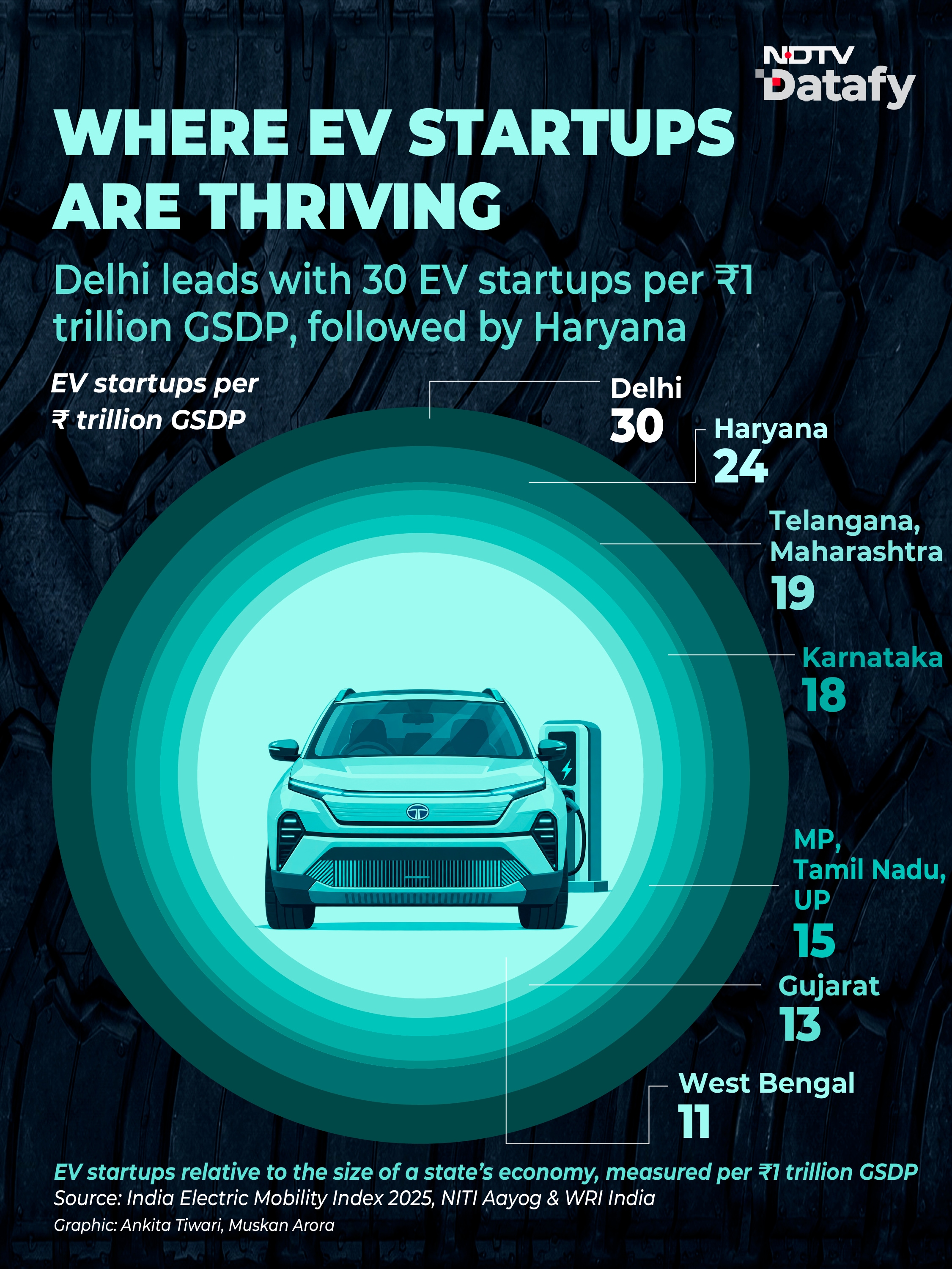
This gives another way of looking at the EV transition that not just how many people are using EVs, but where businesses and innovation around electric mobility are developing.
Track Latest News Live on NDTV.com and get news updates from India and around the world
