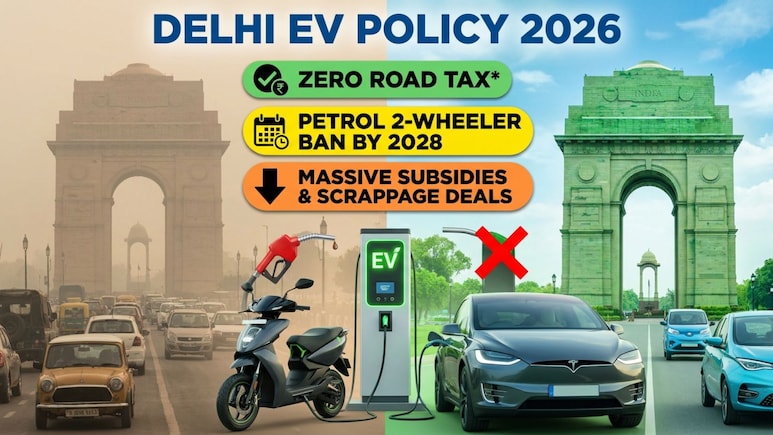
- 100 percent road tax waiver applies to electric cars priced up to Rs 30 lakh ex-showroom
- New ICE vehicle registrations banned for auto-rickshaws by 2027 and two-wheelers by 2028
- Scrappage incentives offer up to Rs 1,00,000 for old ICE cars exchanged for EVs
The Delhi Government has officially rolled out the Delhi EV Policy 2026, and it is the most aggressive push toward vehicle electrification India has seen yet. Active until March 31, 2030, it is a clear roadmap to phase out internal combustion engines (ICE) in the national capital, backed by a staggering Rs 7,000 crore outlay.
If you are planning to buy a vehicle in Delhi over the next few years, the rules of the game have fundamentally changed. Here is exactly what the new policy means for your wallet and your garage.
Zero Road Tax For Real
To make EVs immediately cheaper than their petrol counterparts, Delhi is offering a 100% waiver on road tax and registration fees. However, there is a critical cap for passenger cars. This tax waiver is only valid for electric cars priced up to Rs 30 lakh (ex-showroom). If you are eyeing a luxury EV above that mark, you will be paying standard taxes.
Direct purchase subsidies have also been heavily funded, all routed straight to the buyer via Direct Benefit Transfer (DBT):
- Electric Two-Wheelers: Up to Rs 30,000
- Electric Three-Wheelers: Up to Rs 50,000
- N-1 Electric Trucks (under 3.5 tonnes): Up to Rs 1,00,000
Also Read - 3 Key Lessons From Tigor-Scorpio Accident On Dehradun Expressway To Stay Safe
The ICE Ban: Hard Deadlines for Petrol and Diesel
The policy doesn't just encourage EVs; it outright bans new ICE registrations in specific categories over the next 24 to 48 months.
- January 1, 2027: No more petrol, diesel, or CNG registrations for L-5 category auto-rickshaws (passenger and cargo) and N-1 commercial goods carriers.
- April 1, 2028: The death of the petrol commuter in Delhi. From this date, 100% of new two-wheeler registrations must be electric.
Also Read - Tata Sierra.EV Launching Tomorrow: Design, Specs, Features, Range, Price
Big Cash For Scrapping Your Old Vehicle
To get older, polluting vehicles off the road, the government has allocated over Rs 1,500 crore purely for scrappage incentives. If you scrap an old ICE vehicle to buy an EV, the payouts are substantial:
- Four-Wheelers: Rs 1,00,000
- Two-Wheelers: Rs 10,000
- Three-Wheelers: Rs 25,000
- N-1 Commercial Trucks: Rs 50,000
Also Read - Rs 2 Lakh Fine For Offroading In Pangong Lake Or Wildlife Areas Of Ladakh
Commercial & Fleet Mandates
Heavy freight is a primary driver of Delhi's winter smog. To counter this, the first 1,000 heavy-duty N-2 electric trucks (3.5 to 12 tonnes) bought within three months of the policy notification will get a massive perk: a 10-year exemption from Delhi's restrictive 'No Entry' timings.
School fleets are also on notice. Operators must transition 10% of their fleet to EVs within two years, 20% by year three, and hit 30% electrification by March 2030. To support all of this, the state is targeting the installation of over 30,000 active charging points to permanently kill range anxiety.
Track Latest News Live on NDTV.com and get news updates from India and around the world
