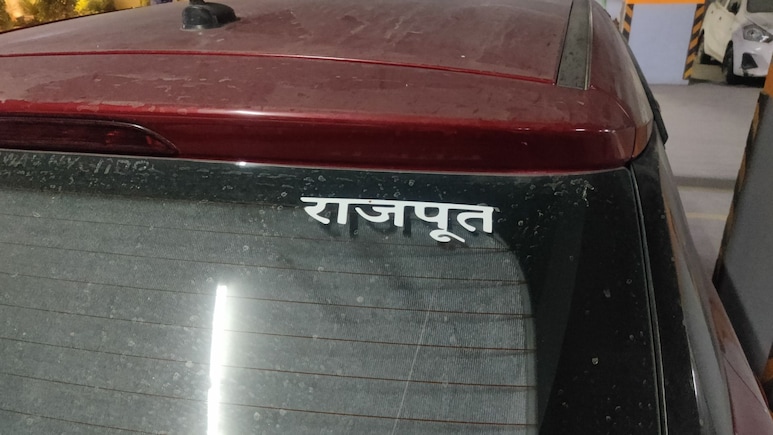
In many parts of India, vehicles proudly display caste names like Rajput, Jaat, Pandit, Yadav, or Gujjar on their bodies or number plates. This practice raises questions about its legality under traffic regulations. Authorities have long viewed such displays as violations, with enforcement varying by state.
Challan For Caste Stickers
The Motor Vehicles Act, 1988, and the Central Motor Vehicles Rules, 1989, form the basis of these restrictions. Rule 50 explicitly prohibits stickers, adhesive labels, or any markings on registration number plates beyond the prescribed format. Section 192 of the Act penalizes non-compliant number plates with fines up to Rs 5,000 for first offences and up to Rs 10,000 plus one-year imprisonment for repeats.
-

-
 Who Is Rajiv Mehta? Lilavati Hospital Trustee To Speak At NDTV World Summit 2026
 -
 Ex-CIA Director To Decode 'War In Times Of AI' At NDTV World Summit
 -
 From Call Centre To Billion-Dollar Disruptor: Nikhil Kamath At NDTV World Summit
 -
 'Every 5 Years, You'll See A New India': Swami Sarvapriyananda Ahead Of NDTV World Summit
 -
 AI Can Think, But Can It Be Conscious? Swami Sarvapriyananda Weighs In
 -
 Alain Ebobisse, Africa50 CEO, To Attend NDTV World Summit 2026. All About Him
 -
 Kriti Sanon At NDTV World Summit: A Look At Her Career And Business Ventures
 -
 Ex-CIA Director To Decode 'War In Times Of AI' At NDTV World Summit
 -
 Who Is Vikram Rai, CEO, South Asia GE Aerospace, Set To Attend The NDTV World Summit 2026
 -
 Rahul Kanwal: The World Is Changing. What Comes Next? | NDTV World Summit 2026
Even on vehicle bodies, caste-specific writings fall foul of broader norms. Section 177, read with Section 179(1), deems unauthorized writings or stickers as general traffic violations, attracting fines of Rs 1,000 to Rs 2,500. States like Uttar Pradesh have reinforced this through directives; in 2023, Noida and Ghaziabad police issued over 2,300 challans during a special drive. The UP Transport Department has repeatedly ordered action against such displays, citing risks to social harmony.
Also Read: Uttar Pradesh To Roll Out Automated Challan System For Traffic Enforcement
Why Is Using Caste Stickers Banned?
Various efforts from the government target slogans glorifying castes like Brahmin, Yadav, or Kshatriya under the amended Central Motor Vehicles Act. Haryana and other northern states report analogous enforcement, often amid complaints of selective policing.
Also Read: Maruti Suzuki Ignis At 9: Is Niche Hatchback Nearing Its Final Chapter?
Proponents argue these displays reflect cultural identity, but officials prioritize road safety and uniformity. Altered plates can hinder identification during accidents or crimes, while caste markings may fuel tensions. Traffic police now use apps for e-challans, making violations easier to penalize.
What Should Be Done?
Vehicle owners should adhere to High Security Registration Plates (HSRP) standards, which mandate reflective alphanumeric characters in a fixed font and size. No nicknames, emblems, or caste indicators are permitted. Legal experts advise removing such writings to avoid fines, especially during routine checks.
As urbanization grows, consistent enforcement could standardize India's roads. Motorists displaying "Jaat Pride" or "Gujjar King" risk not just penalties but vehicle impoundment in extreme cases. Awareness campaigns by transport departments aim to educate owners, emphasizing that pride need not compromise compliance.
Track Latest News Live on NDTV.com and get news updates from India and around the world
