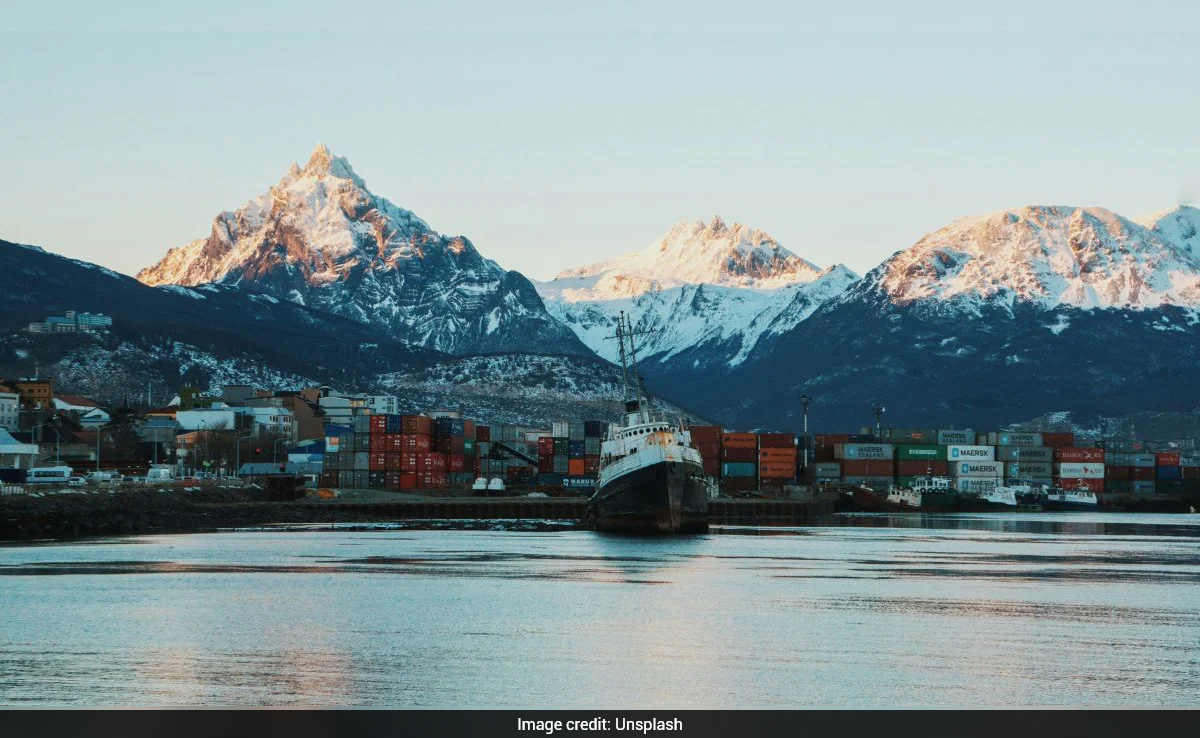
Ushuaia, the Argentinian city nicknamed "The End Of The World," is pushing back against claims it sparked a deadly hantavirus outbreak aboard the Dutch cruise ship MV Hondius. The virus has already killed three passengers and triggered international health alerts. Ushuaia is a tourist spot and is long known as the southernmost city on Earth and the main departure point for Antarctic expeditions. However, the city has recently found itself at the centre of attention, which is apparently hampering local businesses and tourism.
The MV Hondius left the city's port on April 1 with 114 passengers and 61 crew from 22 countries, bound for a 35-day Atlantic voyage to Europe. Weeks later, eight confirmed hantavirus infections and two probable cases were linked to the ship, according to the World Health Organization (WHO). So far, three people have died, including a 70-year-old Dutch man on April 11, his 69-year-old wife on April 26 in South Africa, and a German woman on May 2. Other confirmed cases include British, Swiss, French and American nationals.
While the virus is believed to have come aboard in Ushuaia, its actual origin remains a mystery, the BBC reported.
Also read | Who Was Leo Schilperoord? 'Patient Zero' In Deadly Hantavirus Cruise Ship Outbreak
Where did hantavirus originate?
Several reports identified Dutch ornithologist Leo Schilperoord as the "patient zero". The 70-year-old likely contracted the rare strain when he visited a landfill in Ushuaia to watch a rare bird. The dump attracts rats and mice, and tourists often visit to watch birds, especially seabirds drawn to the waste. Schilperoord was the first patient to die of the virus on board the ship.
Hantavirus cardiopulmonary syndrome usually spreads through inhaling particles from rodent droppings, not person-to-person. But the Andes strain, the one found on the MV Hondius, is the only version known to transmit between humans through close, prolonged contact involving bodily fluids or respiratory droplets.
But local authorities strongly reject the link. "In Tierra del Fuego, we have no record of hantavirus cases in our history," Juan Facundo Petrina, the province's Director General of Epidemiology and Environmental Health, told the BBC.
"Specifically, since 1996 - when the National Surveillance System included it among mandatory reporting diseases - we haven't had a single case in Tierra del Fuego."
Petrina noted that the disease's endemic zone lies nearly 1,000 miles north of Ushuaia. "To begin with, we do not have the subspecies of the long-tailed mouse [which transmits the disease], nor do we share the same climatic conditions as northern Patagonia - neither in humidity nor temperature - for its development," he said.
"And if rodents were to start moving, since they don't respect geographical boundaries, it's important to remember that we are an island.
"They would face the limitation of crossing the Strait of Magellan in order to infect local species, so that is an additional difficulty, beyond the climate."
Also read | Rare Letter By Princess Diana Reveals What She Dreamed Of Becoming, Heads To Auction
City defends its reputation
Ushuaia relies heavily on tourism and is nestled between the Martial Mountains and the Beagle Channel. It's the starting point for most Antarctic cruises and a hub for Patagonia's landscapes. Locals are worried that the outbreak speculation could damage the city's image ahead of peak season.
The patient thought to be 'patient zero' had travelled extensively in Chile and Argentina before boarding. WHO believes the Dutch couple and possibly others were infected before joining the cruise on April 1.
Still, no cases have ever been recorded in Tierra del Fuego province. Local health teams have been sent to investigate potential exposure sites around Ushuaia, but so far have found no evidence of local transmission.
Track Latest News Live on NDTV.com and get news updates from India and around the world


