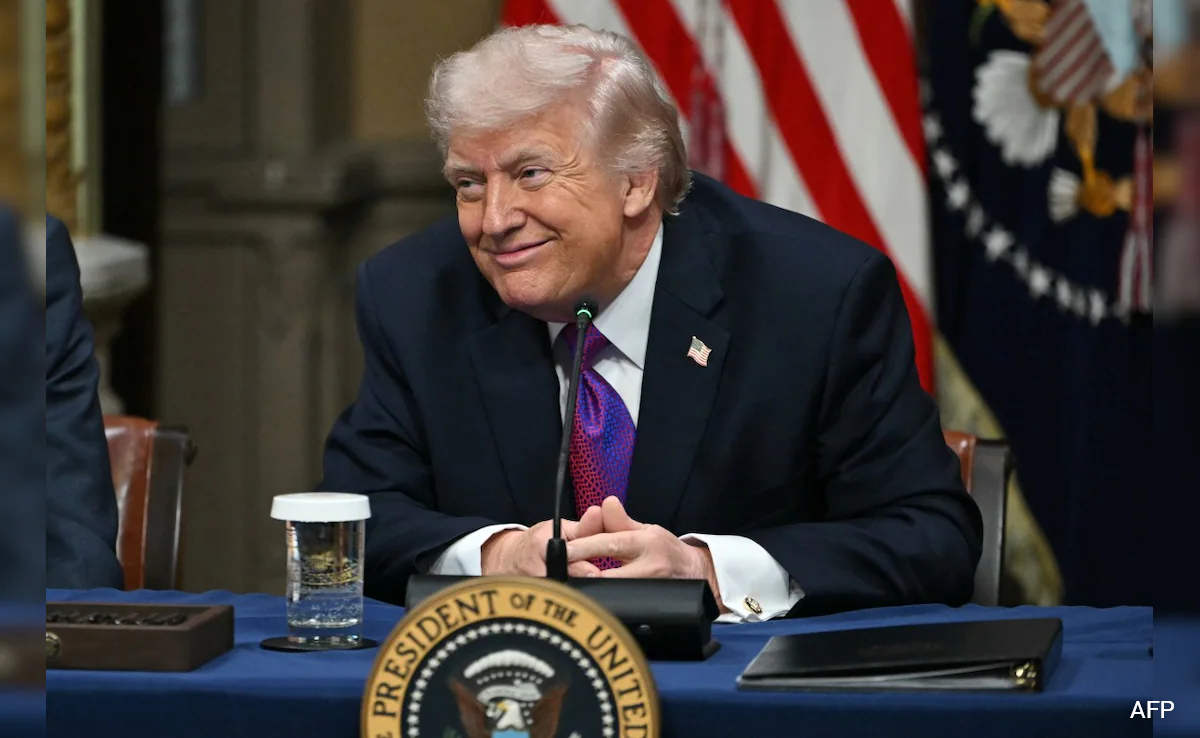
President Donald Trump expressed confidence in the US military campaign against Iran even as the timeline for operations remained deeply unclear on the fifth day of the Middle East war.
"We're doing very well on the war front," Trump said Wednesday at the White House, adding that for "47 years, they've been killing our people and killing people from all over the world, and I think we have great support."
The conflict showed no sign of abating, with Tehran again targeting Israel and Gulf states. Meanwhile, Israeli and US forces made good on pledges to bomb more targets in the Islamic Republic. The US sank an Iranian warship in international waters, marking the first time since World War II that an American submarine has attacked a surface vessel.
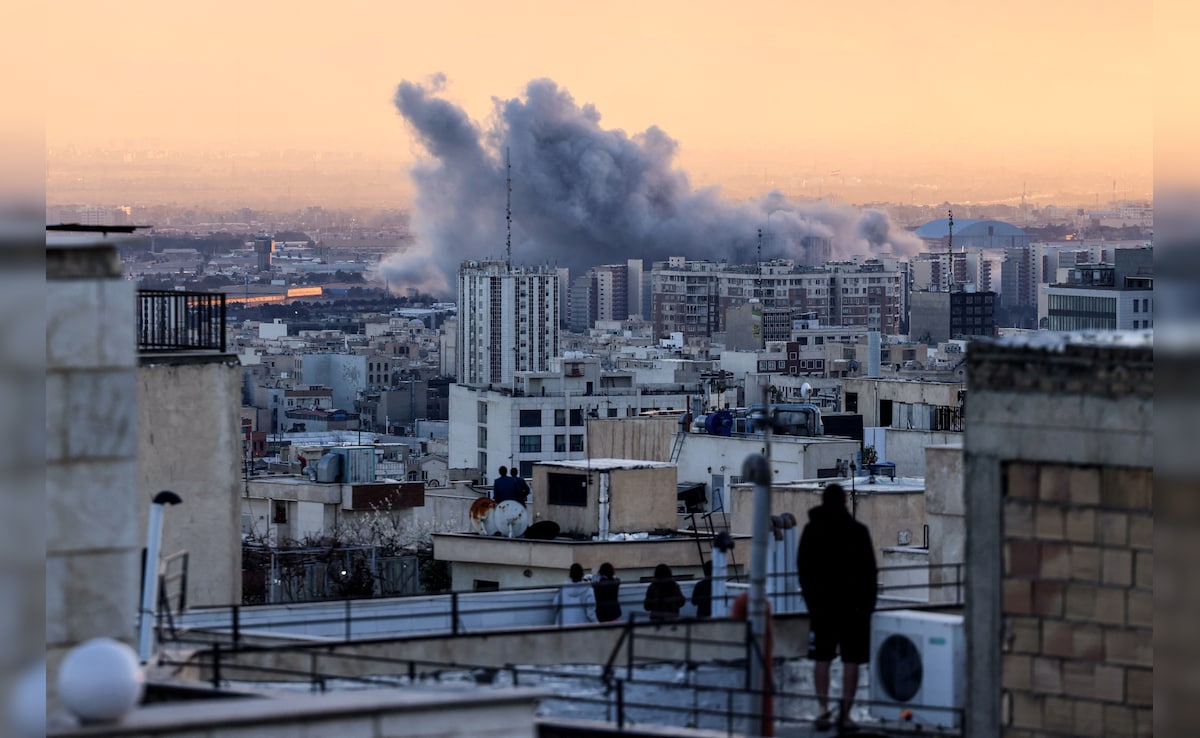
In Washington, the Republican-controlled US Senate cleared the way for Trump's military strikes to continue on a mostly party-line vote, rejecting a Democratic-backed attempt to halt them. The House, also controlled by Trump's party, will vote on a similar measure Thursday.
The White House earlier Wednesday said the Iranian regime has been "absolutely crushed." Still, financial and energy markets were strained over a conflict that showed further escalation with no clear end in sight.
The US has sunk more than 20 Iranian vessels, eliminated 49 Iranian officials, struck more than 2,000 targets and is moving toward "complete and total control of Iranian airspace" in a "remarkably successful" mission, White House Press Secretary Karoline Leavitt told reporters.
Follow LIVE Updates
Trump in recent days has offered shifting rationales for why the US and Israel launched strikes on Iran and differing expectations for what it would take to complete the mission. He reiterated claims that Iran posed an imminent threat and said "if we didn't do it first, they would have done it to Israel and given us a shot, if that was possible."
"Their missiles are being wiped out rapidly. Their launchers are being wiped out. They're attacking their neighbours. They're attacking their allies, or not so long ago, allies," Trump said. "It's really a nation that was out of control, and they would have used it on us if we let them."
Leavitt reinforced Trump's caution that the future of Iran's leadership remains deeply unclear, with intelligence agencies "closely monitoring" the succession.
The duration of military operations also is a shifting target, with Defense Secretary Pete Hegseth telling reporters earlier on Wednesday that "it could be six, it could be eight, it could be three" weeks.
At times, US officials appeared to sow confusion about the operation. Leavitt said that it was her "understanding over the past several hours" that Spain had "agreed to cooperate with the US military." A Spanish official later denied that the government had reversed course on its refusal to allow the US to strike targets from bases inside its borders.
The Islamic Republic has shown no signs it will bow to demands to abandon its nuclear-enrichment ambitions, scrap its ballistic missile program or stop supporting militant groups. It's fighting on despite Israeli and US claims they've destroyed hundreds of Iranian missiles and launchers.
Iran still has "significant capabilities," Danny Danon, Israel's ambassador to the United Nations, told Army Radio. "There's still a long way to go in this war."
The Trump administration also has faced blowback from critics who say it failed to sufficiently plan evacuations of Americans from the region before launching hostilities. US officials pushed back on those accusations, with the State Department reporting that some 17,500 Americans have safely fled the region and urging others to register via its website.
Leavitt said the US would be chartering more flights, but withheld details citing security risks.
Oil prices ended the session little changed from Tuesday's levels after rallying more than 10% in the previous two sessions. Traffic through the Strait of Hormuz, a maritime chokepoint vital for energy flows and container shipping, has slumped, prompting Trump to announce the US would provide insurance guarantees and naval escorts if needed to ensure safe passage for oil tankers and other vessels.
Leavitt provided few details about the insurance programme, or when US naval escorts would begin - despite industry appetite for more information.
Traders and analysts still expect it will take weeks before flows can resume meaningfully. Global benchmark Brent crude traded near $81 a barrel by 2:17 p.m. in New York after rallying by more than 10% in the previous two sessions.
Iran's attacks on neighbouring countries and Israel continued to cause havoc. Tehran dismissed a report that its Ministry of Intelligence had reached out to the US to negotiate an end to the conflict as "pure falsehood."
"We have no trust in the Americans and no intention of negotiating with the US," Mohammad Mokhber, an adviser to the late Supreme Leader Ayatollah Ali Khamenei who was slain in the first salvo of strikes, told Iran's state-run television.
(Except for the headline, this story has not been edited by NDTV staff and is published from a syndicated feed.)
Track Latest News Live on NDTV.com and get news updates from India and around the world


