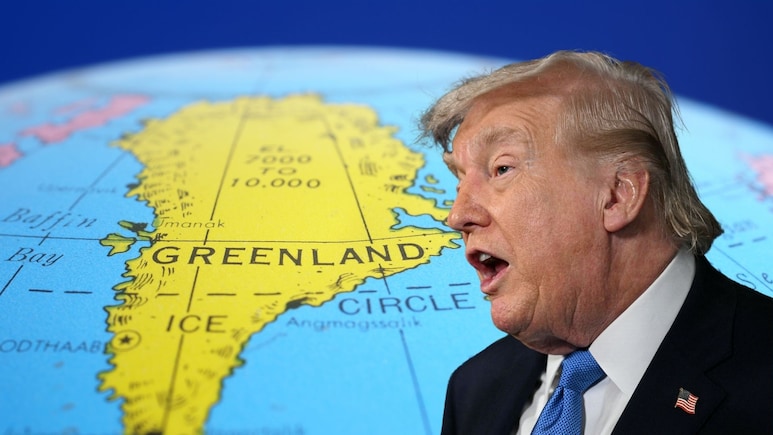
When US President Donald Trump announced on January 18 that eight European allies, including Denmark, France, Germany, Sweden, the Netherlands, Finland, Norway, and the United Kingdom, would face a 10% tariff from February 1, rising to 25% by June 1, unless they agreed to negotiate over Greenland, it marked a dramatic escalation. A territorial dispute that once sounded improbable is now spilling directly into the global economy.
A deep dive into 25 years of US trade data, analysed by NDTV, shows why the European Union is not just another region in Washington's trade map-it is the single most consequential economic partner the US has. Any tariff Washington places on EU countries is, in effect, a tariff on one of America's most tightly interlinked economic relationships.
EU: America's Largest Trade Partner
According to US Census Bureau data, from January to October 2025, the EU accounted for 18.7% of America's imports, valued at $538 billion. This makes the bloc a larger partner than Mexico (15.6%) and Canada (11.2%), the United States' traditional North American anchors. India, in comparison, ranks ninth, contributing just 2% of total US imports during this period.

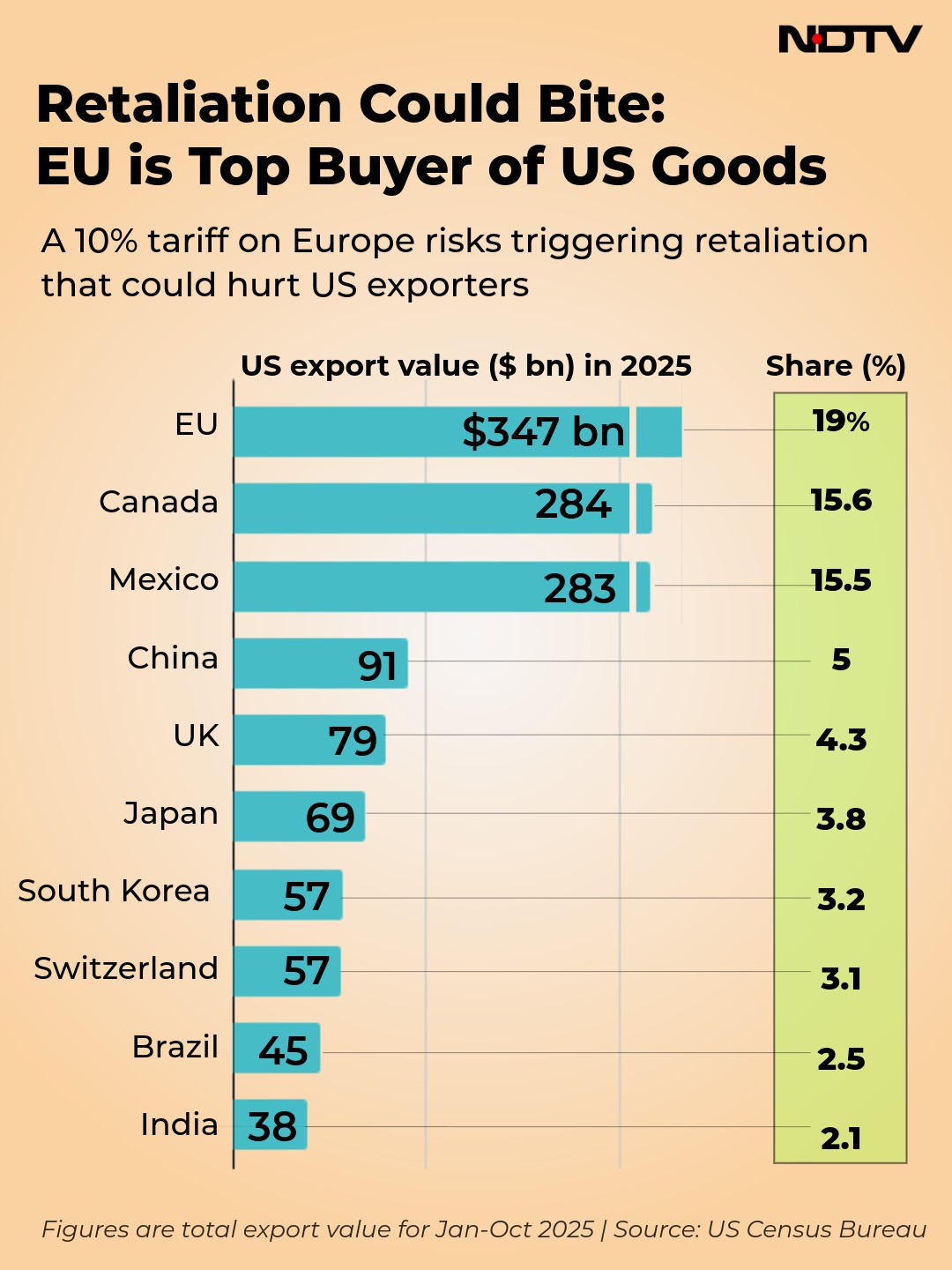
The EU is not merely America's top import source-it is also its largest goods export market. According to US government figures, the EU accounted for 19% of all American exports between January and October 2025, valued at $347 billion.
A 25-Year Pattern of Deep Integration
A long-term view makes the scale of this relationship even clearer. Over the last quarter-century:
The EU's share of US imports has consistently held between 18% and 20%.
The EU has absorbed 17% to 22% of US exports, year after year.
This stability reflects deeply woven supply chains across aerospace, chemicals, automotive, pharmaceuticals, energy equipment, and advanced machinery. None of these industries that can be restructured overnight.
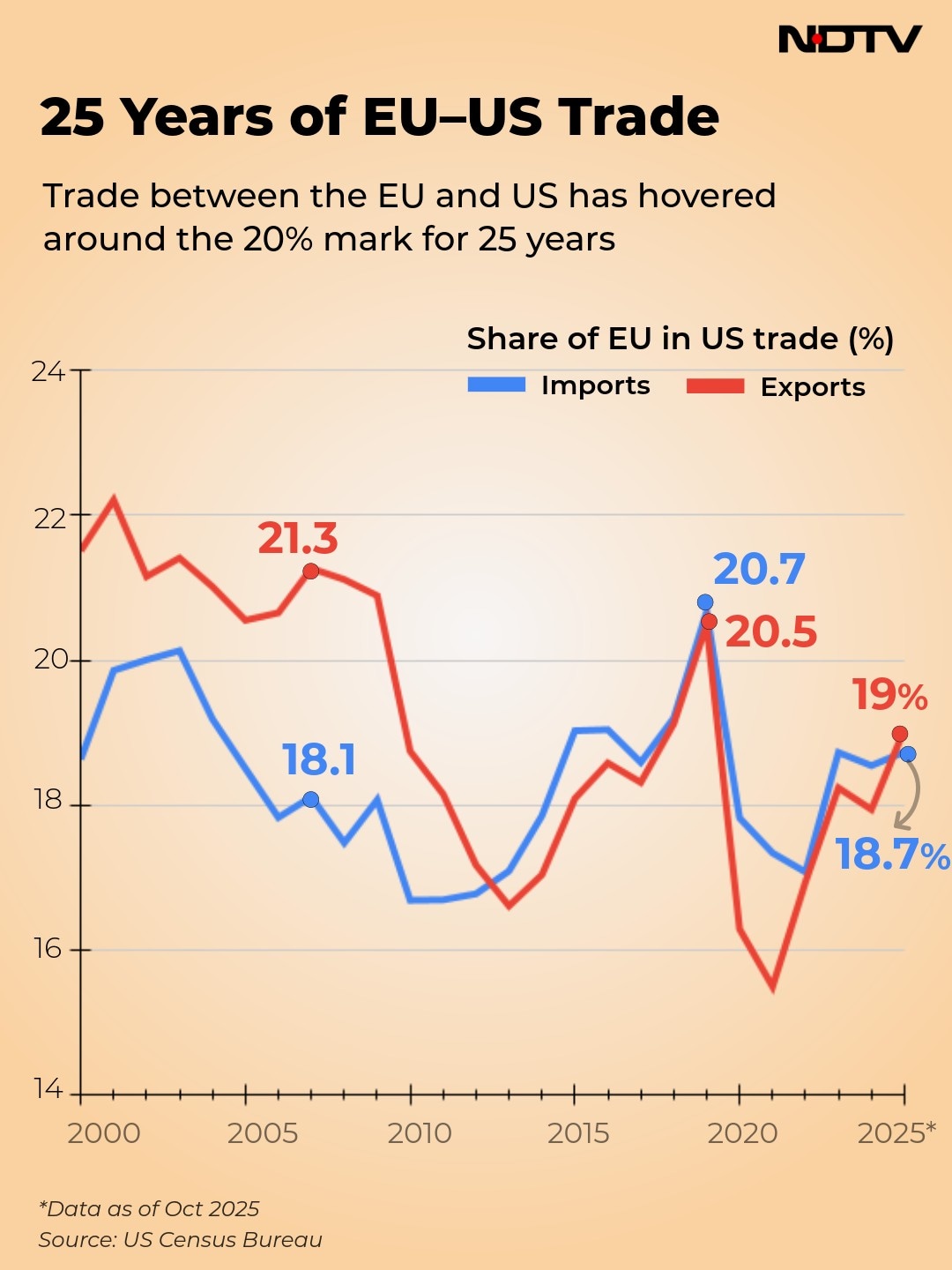
Between 2000 and 2013, the EU's share of US exports was higher than its share of imports. After 2013, the US began importing more from the EU than it exported. Imposing a sweeping tariff now, particularly one linked to political pressure over Greenland, risks disrupting a relationship that is both economically balanced and strategically vital.
Europe's Response: Retaliation on the Table
The EU has already reacted sharply. Brussels has paused ratification of the July 2025 EU-US trade framework, calling the tariff threat incompatible with ongoing economic cooperation.
Officials are also considering using the Anti-Coercion Instrument (ACI)-Europe's so-called "trade bazooka." If activated, it could:
Restrict US companies' access to EU public tenders.
Impose retaliatory tariffs worth tens of billions.
Potentially trigger a full-fledged trade dispute between two of the world's largest economies.
Meanwhile, EU leaders are staking out their positions publicly. European Commission President Ursula von der Leyen declared on X:
"Together we stand firm in our commitment to uphold the sovereignty of Greenland and the Kingdom of Denmark."
I spoke to @SecGenNATO, @EmmanuelMacron, @Keir_Starmer, @bundeskanzler and @GiorgiaMeloni.
— Ursula von der Leyen (@vonderleyen) January 18, 2026
Together we stand firm in our commitment to uphold the sovereignty of Greenland and the Kingdom of Denmark.
We will always protect our strategic economic and security interests.
We…
In the UK, also hit by Trump's tariff announcement, Prime Minister Keir Starmer issued multiple statements underscoring that Britain would act strictly in its national interest. In his latest response, posted after Trump's tariff declaration, he said:
"Our position on Greenland is very clear - it is part of the Kingdom of Denmark and its future is a matter for the Greenlanders and the Danes."
As Prime Minister, I will always act in the United Kingdom's national interest. pic.twitter.com/ZkveFmD1R1
— Keir Starmer (@Keir_Starmer) January 19, 2026
Why the Tariffs Matter
A 10% initial tariff rising to 25% will hit both sides hard:
For the US, it raises input costs for industries linked to EU supply chains.
For Europe, it threatens major export sectors like auto, machinery, aerospace, and pharmaceuticals.
For global markets, it injects uncertainty into a relationship that anchors transatlantic stability.
Greenland may be the reason given. But the impact will be felt across jobs, manufacturing, investments, and strategic cooperation. The US and Europe have weathered trade tensions before, but this time the trigger is geopolitical, not economic-and the consequences could be far wider.
Track Latest News Live on NDTV.com and get news updates from India and around the world


