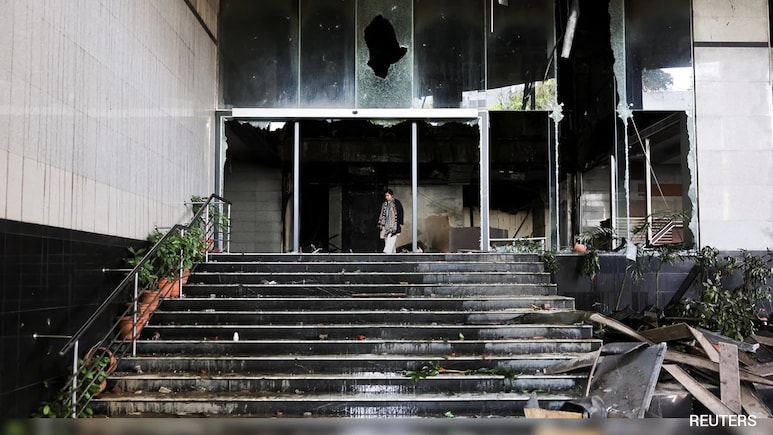
While Bangladesh's interim leader, Muhammad Yunus, faces criticism as his country descends into chaos, his government has fallen back on a recurring anti-India narrative. This sentiment has been fanned by the Yunus administration since he assumed leadership in August 2024, following the ouster of former Prime Minister Sheikh Hasina.
Bangladesh's foreign ministry today called Indian High Commissioner Pranay Verma for a meeting amid protests outside its missions in India, including those in New Delhi and Kolkata. Verma has received multiple summons since Yunus took oath as the chief adviser of the interim government of Bangladesh.
The power transition has seen India-Bangladesh ties nosedive as Yunus redirected Dhaka's foreign policy, pushing for reconciliation with Islamabad at the expense of historic ties with New Delhi.
Also Read | Younger Brother Or Frankenstein's Monster? Delhi-Dhaka 54 Years On
Yunus' Comments On Northeast And PM Modi's Response
Since August 2024, the government led by Muhammad Yunus has resorted to anti-India rhetoric on several occasions. A notable instance occurred during Yunus' visit to China in March 2025, where his comments regarding India's Northeast drew a sharp response from New Delhi.
"The seven states in the eastern part of India, called the 'Seven Sister' states, are completely landlocked. They have no way to reach the ocean. We (Bangladesh) are the only guardian of the ocean for the entire region," Mr Yunus told an audience in China. He added, "This opens up a huge possibility for China-this could become an extension of the Chinese economy. Build things, market them, take them back to China, or export to the rest of the world."
The next month, Prime Minister Narendra Modi and Yunus met on the sidelines of the BIMSTEC Summit in Bangkok. Prime Minister Modi raised India's concerns regarding the safety of minorities in Bangladesh and urged Dhaka to avoid "rhetoric that vitiates the environment."
Release Of Anti-India Terrorists From Jail
Shortly after Yunus took charge, Mufti Jashimuddin Rahmani, head of the Ansarullah Bangla Team (ABT) - an Al-Qaeda-inspired terrorist group - was released from prison. Rahmani had been convicted of the murder of blogger-activist Ahmed Rajib Haider and is a known supporter of Al-Qaeda in the Indian Subcontinent (AQIS).
The regional security implications were highlighted earlier in January 2025, when the Assam Police's Special Task Force (STF) arrested several ABT members, recovering arms, explosives, and incriminating documents. In November 2024, the Assam Police launched Operation Praghat following intelligence regarding clandestine anti-national activities directed by Md Farhan Israk, a close associate of Rahmani. Rahmani has since reappeared at public protests, making inflammatory anti-India statements following the killing of radical leader Sharif Osman Hadi.
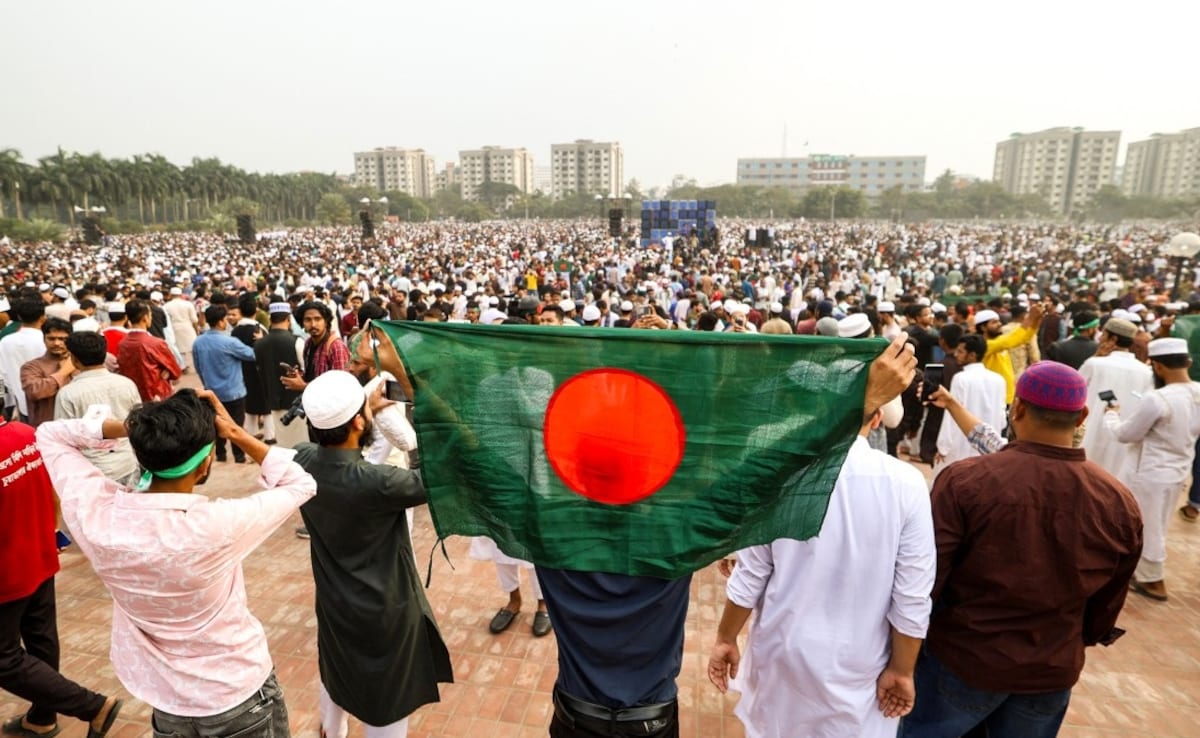
A mourner holds Bangladesh's national flag during Sharif Osman Hadi's funeral. (Credit: AFP)
Blaming India for Law and Order Failures
Days after the attack on Hadi, the Yunus administration requested that India hand over the alleged shooters. New Delhi strongly rejected claims that the attackers had any connection to India.
"India has never allowed its territory to be used for activities inimical to the interests of the friendly people of Bangladesh," the Ministry of External Affairs stated.
Now, investigators in Bangladesh admitted to having no concrete evidence that the suspects crossed the border. Special Branch Chief Khandaker Rafiqul Islam and Detective Branch Chief Shafiqul Islam confirmed in a press conference that they have no specific information regarding the suspected killer's whereabouts or last known location.
Also Read | Story Of 2 Decembers: 2025 Feels Different From 1971 For India, Bangladesh
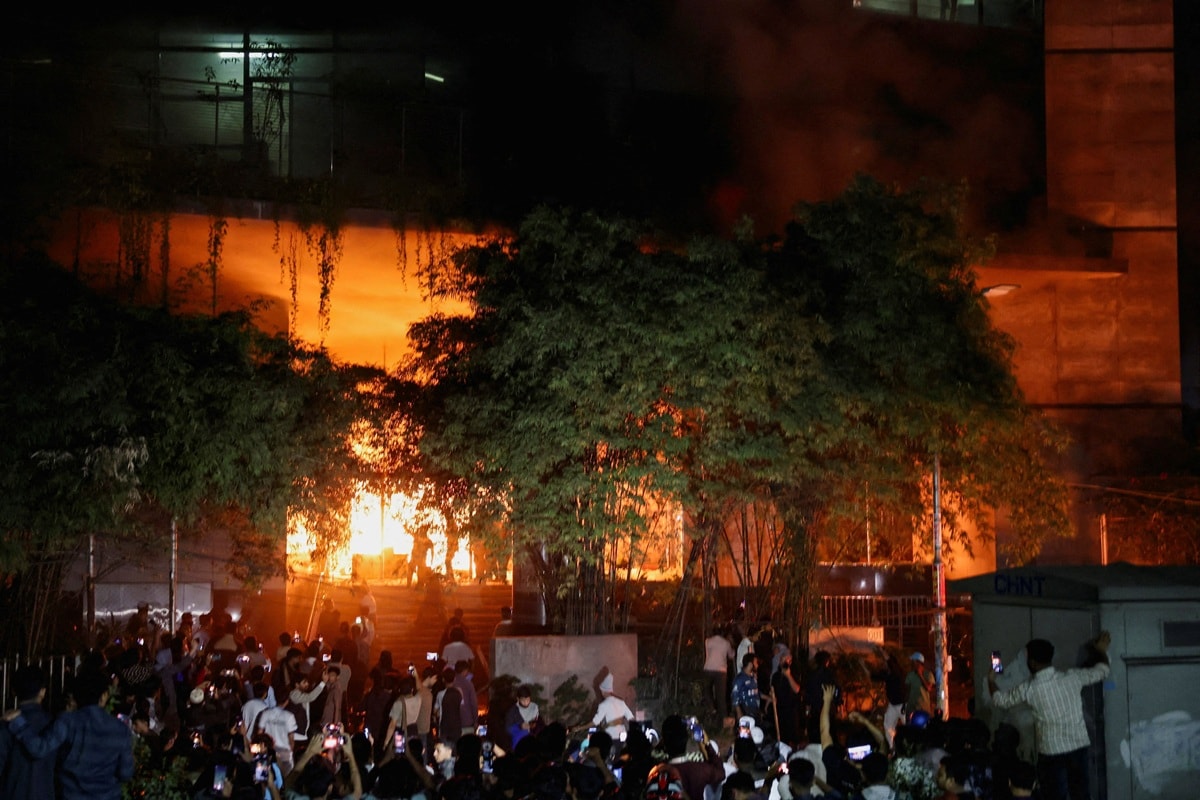
People set fire to The Daily Star newspaper office building following the death of Sharif Osman Hadi.
Photo Credit: Reuters
Rapprochement With Pakistan
Yunus has placed significant emphasis on strengthening ties with Pakistan to boost mutual cooperation. He has advocated for closer people-to-people bonding through youth and cultural exchanges. Yunus also invited top Pakistani military officials to Bangladesh; former diplomats, who have studied the India-Bangladesh relationship, have attributed the current wave of anti-India sentiment to a "Pakistan hand" influenced by these shifting dynamics.
Frequent attacks on minorities have also been reported since the Yunus administration took over.
Opinion | Why The Anti-India Rage In Bangladesh Makes Little Political Sense
Attacks On Indian Establishments
India has been compelled to close visa application centres in Bangladesh's Chittagong, Rajshahi and Khulna due to a worsening security situation. This followed a protest march by the radical group "July Oikya" near the Indian High Commission, which demanded the return of Sheikh Hasina to face trial.
While Foreign Affairs Advisor Touhid Hossain claimed that a student leader's threat to "sever India's seven sisters" does not reflect official policy, the domestic situation remains volatile.

Supporters block the Shahbagh Square as they protest the death of Sharif Osman Hadi.
Photo Credit: Reuters
Yunus Faces Criticism At Home
The Bangladesh Nationalist Party (BNP), the main opposition, has blamed the interim government for the deteriorating law and order.
"Because of the failure of the government, the law-and-order situation has deteriorated," BNP Secretary General Mirza Fakhrul Islam Alamgir said in Dhaka. While the BNP welcomed the announcement of elections for 12 February 2026, it urged the Yunus administration to focus on creating a conducive atmosphere.
The BNP has also announced a seat-sharing agreement with Jamiat Ulama-e-Islam (JUI) Bangladesh. Unlike the pro-Pakistan and radical Jamaat-e-Islami (JeI) Bangladesh, the JUI focuses on traditional Islamic law, whereas the JeI maintains a staunchly anti-India stance rooted in its historical origins.
Track Latest News Live on NDTV.com and get news updates from India and around the world


