Story Of 2 Decembers: 2025 Feels Different From 1971 For India, Bangladesh
The death of radical leader Sharif Osman Hadi resulted in an unsubstantiated allegation against India behind the killing, and the Indian High Commissioner to Bangladesh was summoned.
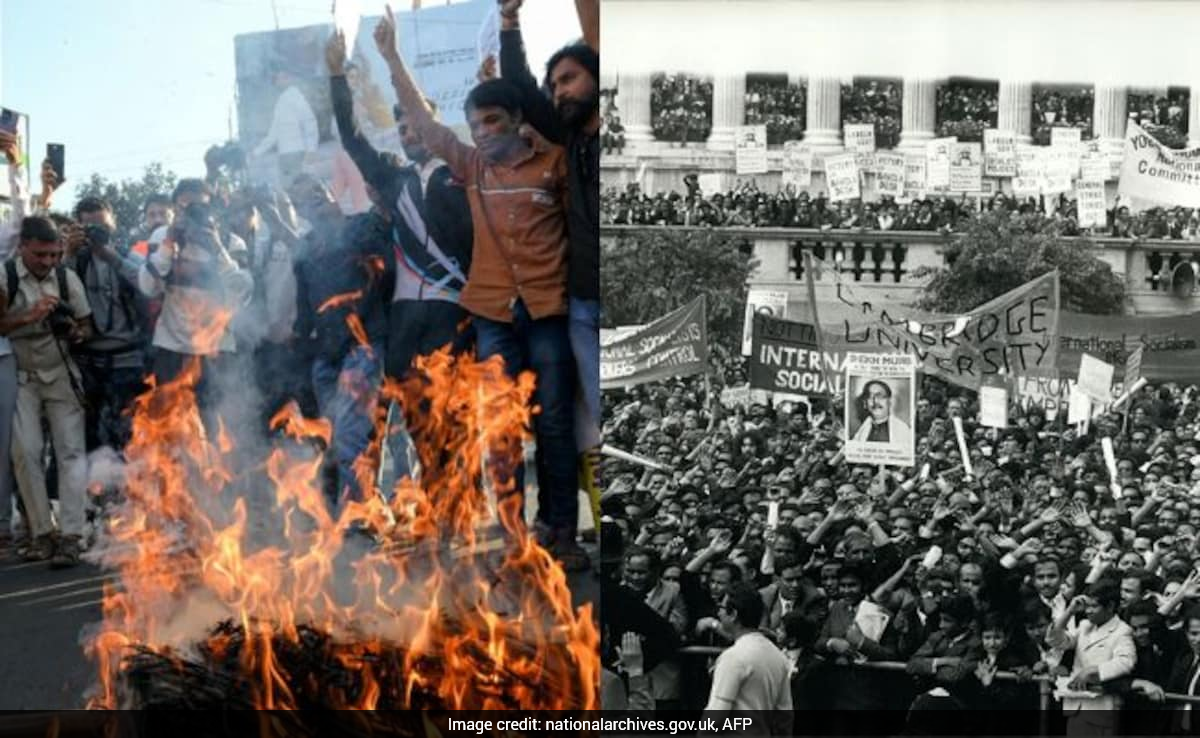
"What in the devil's name is happening here?" Pakistan's military dictator, Yahya Khan, exclaimed when the election results in December 1970 gave the Awami League a majority in the National Assembly, winning 160 of the 162 seats in East Pakistan. Khan was furious, and what followed in the coming months was the denial of legitimacy to the election results, a crackdown on dissent in East Pakistan and the death of over three million Bengalis at the hands of the Pakistani Army.
A year later, on December 16, 1971, over 90,000 Pakistani troops surrendered in Dhaka, and Bangladesh was born out of the blood of thousands of freedom fighters and Indian soldiers who died in the war. Over 50 years after the 1971 Liberation War, December 2025 does not feel the same for both countries, as anti-India protests have brought Bangladesh to the cusp of mass unrest, unlike the one seen in 1971.
What Is Happening?
An anti-India student leader, Sharif Osman Hadi, who played a pivotal role in mobilising protesters during the 2024 protests, was shot in the head and died of his wounds in Singapore last week. The death of Hadi resulted in an unsubstantiated allegation against India behind the killing, and the Indian High Commissioner to Bangladesh was summoned. Mass protests and arson followed Hadi's death.
Read more: Behind Bangladesh Leader's Rise: Anti-India Stance And Extremists' Support
Following his death, a Hindu man, Dipu Chandra Das, was lynched and burned alive in Bangladesh's Mymensingh over blasphemy allegations, resulting in a diplomatic row between the two countries.
On December 18, 2025, the Parliamentary Standing Committee on External Affairs in India tabled a report, calling the deterioration of relations since 2024 the greatest strategic challenge for India in Bangladesh since 1971 due to five reasons: Generational discontinuity, collapse of the 1971 consensus, rise of new political forces, rise of Islamic radicalism, and strategic realignment with Pakistan and China.
Bangladesh Tilting Towards Pakistan
Muhammad Yunus has been steering Bangladesh away from India towards Pakistan. This includes several visits by Pakistani generals to Bangladesh. Last month, a delegation from Pakistan's military production sector met Bangladesh's Army Chief General Waker Uz Zaman. This comes amid Bangladesh's plans to seek more defence cooperation from Pakistan. Dhaka wants its fighter pilots to get training from Pakistani pilots.
The Pakistan Air Force provided crucial logistical support to the Pakistani Army during Operation Searchlight in 1971, a brutal crackdown ordered by West Pakistan on its citizens in the East. Over 400,000 women were victims of sexual assault. The crackdown by Pakistan was so brutal that an American diplomat in Dhaka, Archer Blood, wrote a Telegram to US President Nixon and his Secretary of State Henry Kissinger, denouncing support for Pakistan. Blood called the crackdown a "genocide".
When An American Diplomat Stood Up Against Nixon-Kissinger To Save Dhaka
But in October this year, Chairman of Pakistan's Joint Chiefs of Staff Committee (CJCSC), General Sahir Shamshad Mirza, met Muhammad Yunus during his visit to Dhaka to discuss trade and defence cooperation. Pakistani spy agency ISI's top official, Maj Gen Shahid Amir Afsar, also visited Bangladesh in January this year.
Latest reports suggest Pakistan and Bangladesh are expected to sign a mutual bilateral defence agreement, expanding military contracts and strategic coordination.
Pakistan has never apologised to Bangladesh for the events of 1971.
A 1974 report states that Pakistan issued a public apology to Bangladesh. However, in 2009, Islamabad's foreign office said in the 1974 tripartite agreement between India, Pakistan, and Bangladesh, they regretted the incidents but did not apologise. Therefore, analysing these events as regular domestic developments in Bangladesh would be a gross error of judgment.
Pakistan's Chief of Defence Forces, Field Marshal Asim Munir, who has threatened India with nuclear war, is eyeing strategic depth against India, and Bangladesh is the key.
The events this month in Bangladesh are an outcome of a deep-rooted anti-India sentiment over New Delhi's protection of Sheikh Hasina after her ouster last year. The attack on Prothom Alo and the Daily Star - Bangladesh's top media organisations - over their alleged pro-India stance, earlier this week, explains the standing committee remarks - "Greatest strategic challenge since 1971".
Explained: Key Events That Forced 93,000 Pakistani Troops To Surrender In 1971
December 1971 and 2025
The tilt toward Pakistan and anti-India sentiment has come along with a rise in Islamic fundamentalists in the mainstream. Jamaat-e-Islami Bangladesh was banned by Sheikh Hasina, but after her ouster, it was uplifted. Historically, Jamaat has been involved in Bangladesh's politics. However, it was suppressed by Hasina's Awami League.
The group is radical in its views and is often viewed as pro-Pakistan, and is accused of collaborating with the Pakistani army in 1971. For example, Islami Chhatra Shibir, the student wing of Jamaat, and a violent extremist outfit, recently won two student council elections. The group was banned on campuses for its views.
The struggle for independence, which began in 1970, was a fight between Bengali nationalism in the east and Urdu nationalism in the west. It was a contest between identities, which culminated in the creation of a new country. The events that took place earlier this week are examples of an institutionalised anti-India rhetoric that finds space in Yunus' administration.
On December 16, when Muhammad Yunus paid tributes to those who fought for independence, the National Citizen Party (NCP), which has close ties with Yunus, threatened the northeast states of India.
Read more: Anti-India Remarks From Bangladesh Ahead Of 1971 Pakistan War Victory Anniversary
Therefore, December 2025 is not the same as December 1971 - when 3,800 Indian soldiers were killed, and several thousand were wounded, to liberate Bangladesh. The shared memory of sacrifice that once anchored the two nations close to each other is drifting away as the Yunus-led Bangladesh attempts to rewrite its history.
-
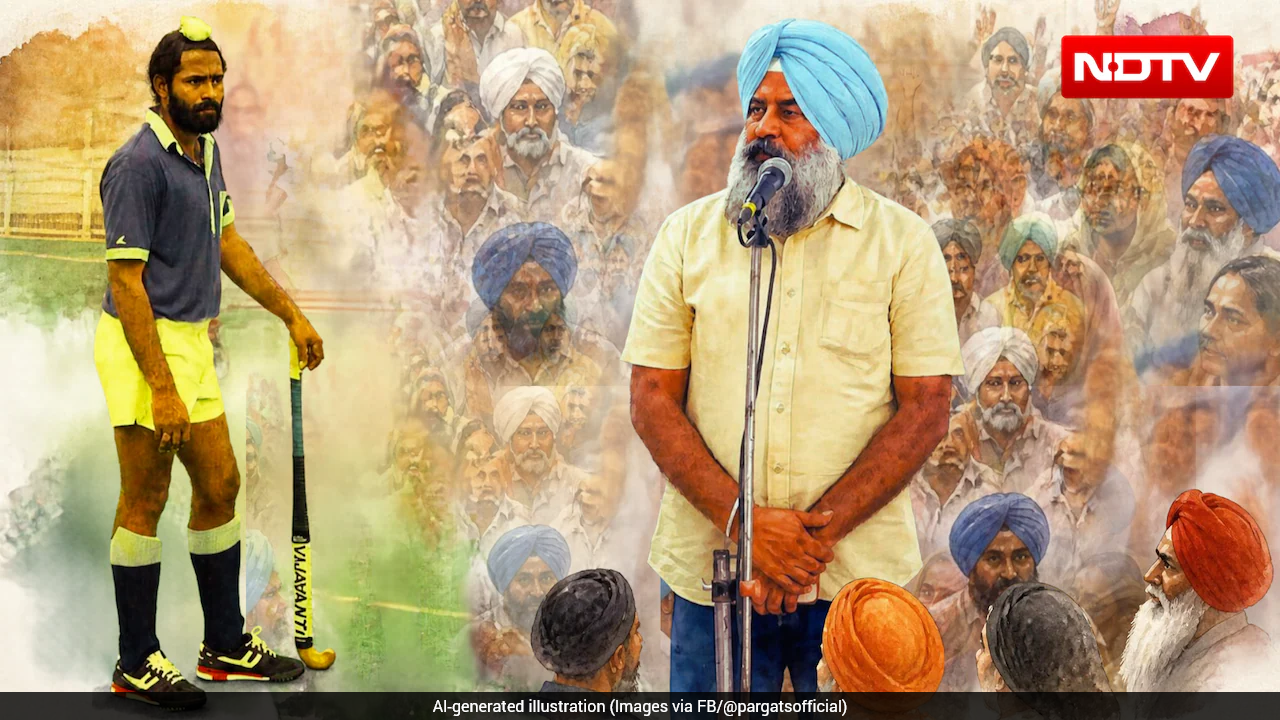
Congress Falls Back On A Fullback: Where Pargat Singh Fits In The Punjab Poll Play

Vijay Inder Singla, a Hindu face, was reportedly the frontrunner before the Congress replaced one Jat Sikh with another as its Punjab unit chief. How far does such arithmetic work in the state's politics? Pargat's appointment holds some of the answers.
-
Why Doesn't Congress Boycott If Polls Are "Fixed"? Answer Lies Beyond Rahul Gandhi's "Distraction" Quip
The starkest demand for a boycott has come from outside the political Opposition, from the Cockroach Janta Party. But does a boycott help? Here's what research, examples, and expert analysis tell us.
-
'Sully' To Gimli, Sioux To Patna: When Pilots Got It Unbelievably Right
Captain Smit Machchhar fought off his co-pilot after being stabbed and opened the cockpit door, saving 174 people.
-
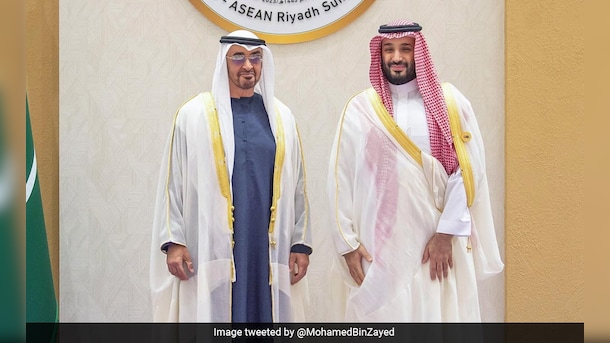
Opinion | Are Saudi Arabia And UAE Reuniting Again After 10 Years?
On Tuesday, the UAE's Vice President, Deputy Prime Minister and Chairman of the Presidential Court, Mansour bin Zayed, met Saudi Crown Prince Mohammed bin Salman.
-
Opinion | 'Lies, Damned Lies, Statistics': On The Controversy Around India's GDP Growth Figures
The debate is less about a single figure than about a decade-long erosion of trust in official statistics.
-
Opinion | Why India Cannot Keep 'Overestimating' Its Value To Washington
Some of India's value to Washington came from the tension between the US and China. That is changing now.
-
Opinion | India Has A 'Lobbying' Problem In Washington, And It Has Come Back To Haunt It
While the EU, Japan, the UK and South Korea secured quick deals, India's efforts were getting drained in prolonged negotiations and the wrong kind of lobbying.
-
India Is Getting Old Before Getting Rich, Will Turn 'Aged' In 16 Years: Moody's
Countries with the steepest fertility declines today will age the fastest in the coming decades. India's drop has been steep.
-
Opinion | Why Does Trump Want To Sell Arms To A US 'Adversary'? Inside His Strange Bargain
Trump's aides maintain that no such offer had been made. But the story points to a larger strategy