A leader of Bangladesh's National Citizen Party (NCP) has warned that Dhaka could shelter forces hostile to Delhi and help sever India's “seven sisters”—a term used to describe the country's northeastern states-- from India. The provocative remarks from student-led NCP leader Hasnat Abdullah came as Bangladesh celebrated its 55th Victory Day on Monday.
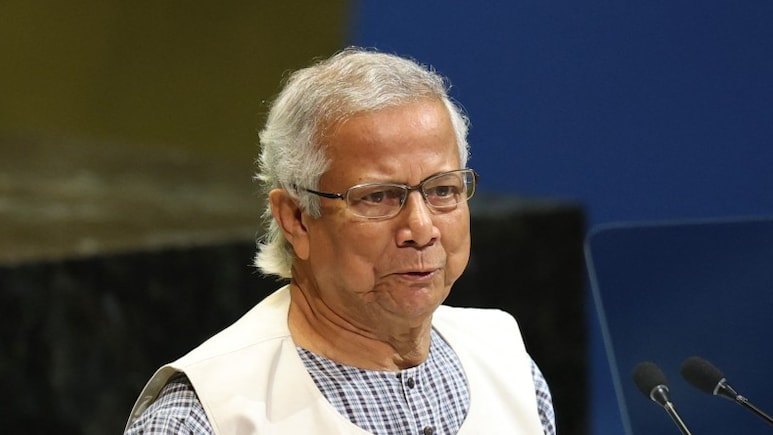
On the occasion, Chief Adviser Professor Muhammad Yunus paid rich tributes to the martyrs of the Liberation War by placing a wreath at the National Memorial in Savar, on the outskirts of Dhaka. The day was also observed as Vijay Diwas in India, marking the end of the 1971 India-Pakistan war, where Indian forces and Bangladesh's Mukti Bahini secured victory, leading to East Pakistan's liberation and the birth of Bangladesh.
The solemn moment comes at a time when Bangladesh is in a flux with radical Islam on the rise and attempts to wipe out the legacy of 1971 and a complete detachment from India and affinity towards Pakistan, which was responsible for the torture, rape and murder of lakhs of Bangladeshis during the liberation war.
Several anti-India statements continue to emanate from political platforms in Bangladesh, including provocative ones about India's northeast, which were initially triggered by Muhammad Yunus's comments on the region.
Provocative Anti-India Remarks From Bangladesh
Nobel Laureate Yunus, who shares close ties with the student-led National Citizens Party (NCP), has been pushing for closer ties with Pakistan at the cost of distancing Bangladesh from India. Radical Islamic elements in NCP, which came into existence as an offshoot of the violent protests in Bangladesh in August last year that led to Sheikh Hasina's ouster, have continued to make provocative anti-India statements.
"Seven Sisters will be separated from India," NCP leader Hasnat Abdullah said at a protest rally organised by Inqilab Mancha against those involved in the attack on Osman Hadi, doubling down on preposterous claims that the accused are being backed by India.
India, meanwhile, dismissed the allegations, with the Foreign Ministry asserting, "We expect that the interim government of Bangladesh will take all necessary measures for ensuring internal law and order, including for the purpose of holding peaceful elections."
About Bangladesh's Liberation War
On 16 December 1971, as many as 93,000 Pakistani soldiers surrendered to India, as the Indian Army and the Mukti Joddhas (freedom fighters) of Bangladesh pulled off a brilliant military victory, leading to the birth of Bangladesh as an independent country. The day, also celebrated as Bijoy Dibosh in Bangladesh, honours the sacrifices of soldiers and commemorates this decisive moment in South Asian history.
But since the Muhammad Yunus regime took charge of Bangladesh, a concerted effort has been made to wipe out the legacy of the liberation war and erase memories of India's contribution in the creation of Bangladesh. Anti-India elements like Abdullah continue to make remarks threatening conflict with India.
"I want to say clearly to India that if you shelter forces who do not respect Bangladesh's sovereignty, potential, voting rights and human rights, Bangladesh will respond," Hasnat Abdullah said, adding, "If Bangladesh is destabilised, the fire of resistance will spread beyond borders."
Abdullah's statements are not isolated but part of a larger recent trend to try and attempt to discredit and blame India for internal politics as forces backed by radical Islam push for a larger engagement with Pakistan, which was responsible for the death and torture of lakhs of Bangladeshis.
These forces backed Pakistan during the liberation war, and under the Yunus regime, critics say, they have been emboldened as attacks on minorities, not just Hindus but also others like Sufis and Ahmadiyyas, have increased.
Track Latest News Live on NDTV.com and get news updates from India and around the world


