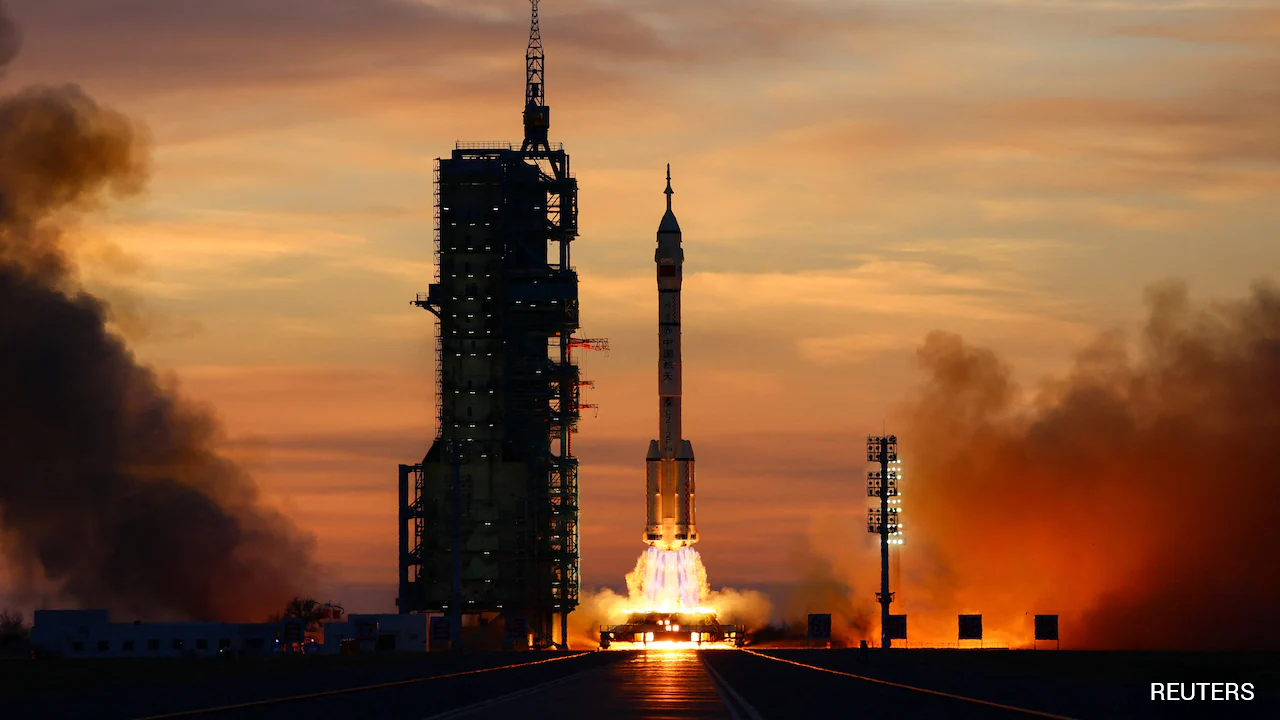
Pakistan entered a new era of space exploration on Wednesday as its first astronaut successfully lifted off aboard a Chinese spacecraft bound for the Tiangong Chinese space station, marking a historic moment for the country and a significant milestone in China's growing international space programme.
At 5:48 am IST, a Long March 2F rocket thundered off the launch pad at the Jiuquan Satellite Launch Centre in the vast Gobi Desert, carrying Pakistani Air Force astronaut Muhammad Zeeshan Ali along with two Chinese taikonauts -- Tang Hongbo and Wu Yi. Chinese officials declared the launch a "complete success" as the Shenzhou spacecraft safely entered its planned orbit.
For Pakistan, it was a moment decades in the making.
As the rocket rose into the dawn sky, millions of Pakistanis witnessed their nation become one of the few countries in the world to send one of its citizens on an orbital space mission. More importantly, it marked the first time a Pakistani astronaut was headed to live and work aboard a space station.
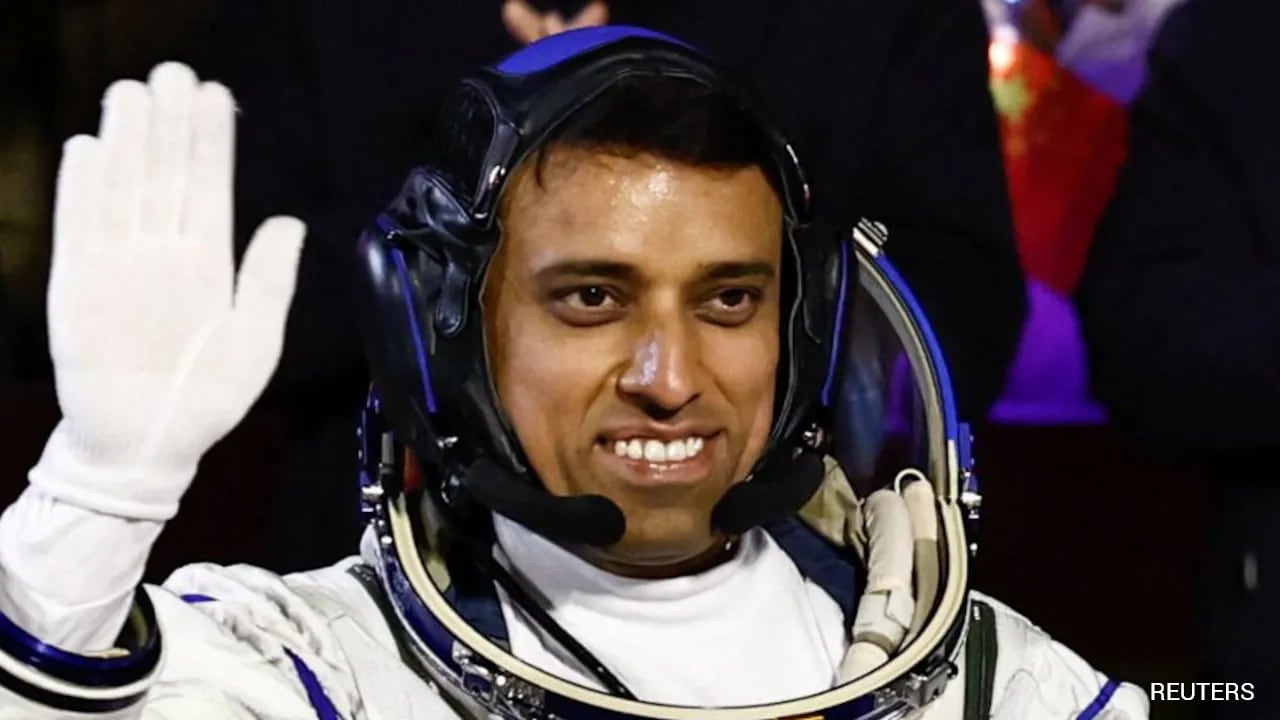
Pakistani astronaut Muhammad Zeeshan Ali waves during a see-off ceremony before taking part in the Shenzhou-24 spaceflight mission to China's Tiangong space station.
The successful launch represents a giant leap from where Pakistan stood only three years ago. In 2023, entrepreneur and adventurer Namira Salim became the first Pakistani to travel to space aboard a Virgin Galactic suborbital tourism flight. That journey lasted only a few minutes beyond the edge of space before returning to Earth.
The mission launched today is fundamentally different.
Muhammad Zeeshan Ali is not a space tourist. He is travelling to an orbiting space station hundreds of kilometres above Earth where he will spend about a week conducting scientific experiments in microgravity and participating in educational outreach activities.
For Pakistan, the distinction is profound. The country has now joined the exclusive group of nations whose citizens travel to an orbital space station and participate directly in a government sponsored human spaceflight programme.
The achievement is also a landmark for China.
Since completing the Tiangong space station five years ago, Beijing has repeatedly stated that it wanted the orbiting laboratory to become a platform for international cooperation. Wednesday's launch transformed those ambitions into reality.
For the first time, China has opened the doors of its space station to a foreign astronaut.
The flight demonstrates Beijing's growing confidence in its human spaceflight capabilities and signals its intention to position Tiangong as an alternative centre for international research and cooperation in low Earth orbit.
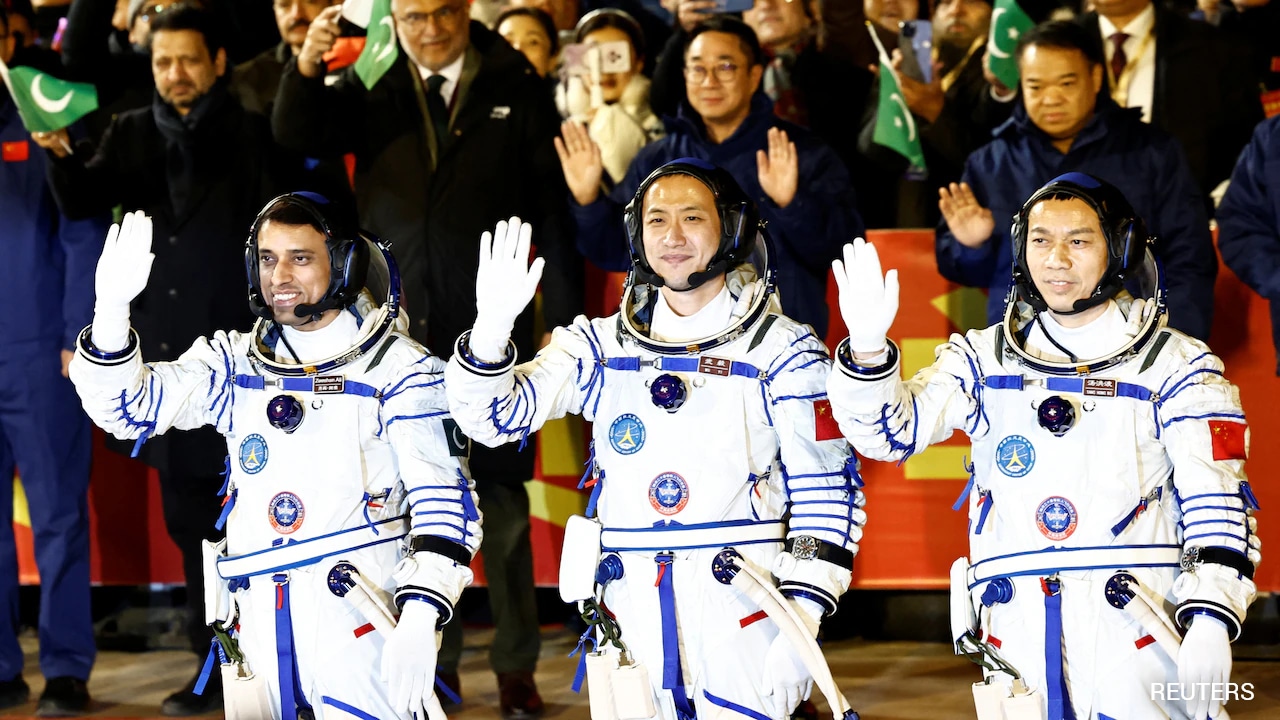
Chinese astronauts Tang Hongbo, Wu Yi and Pakistani astronaut Muhammad Zeeshan Ali take part in a see-off ceremony before taking part in the Shenzhou-24 spaceflight mission to China's Tiangong space station, at Jiuquan Satellite Launch Center, near Jiuquan, Gansu province, China.
The Tiangong space station, whose name means "Heavenly Palace," has become the crown jewel of China's space programme. Built after China was excluded from participation in the International Space Station programme, the orbiting laboratory now hosts long-duration missions, scientific research and advanced technology demonstrations.
By welcoming a Pakistani astronaut aboard, China has taken a significant step toward transforming Tiangong into a multinational outpost.
READ | "Big Diplomatic Signal From Pakistan": China Hawk Decodes Upcoming Shenzhou-24 Space Trip
The mission also highlights the deep and steadily expanding space partnership between China and Pakistan.
Over the past decade, the two countries have broadened cooperation in satellite technology, communications, Earth observation and remote sensing. Human spaceflight has now emerged as the most visible and symbolic expression of that partnership.
The successful launch is being viewed in both countries as evidence of a relationship that extends far beyond traditional diplomatic and economic ties.
For Pakistan, the road to this achievement required years of preparation.
Officials say around 200 candidates initially applied for the astronaut programme before the field was narrowed to two finalists, Muhammad Zeeshan Ali and Khurram Daud, both from the Pakistan military.
The selected astronauts underwent extensive training in China beginning in 2025. The programme included spacecraft operations, emergency procedures, survival training, scientific experiment protocols and intensive physical conditioning.
Only a day before launch, Zeeshan Ali was confirmed as the astronaut who would make the historic journey.
Now he is on his way to becoming Pakistan's first citizen to live and work in orbit.
Beyond the symbolic value, the mission carries important scientific objectives.
During his stay aboard Tiangong, the Pakistani astronaut is expected to participate in a series of microgravity experiments. Such research helps scientists understand how materials, biological systems and physical processes behave in space, knowledge that can contribute to future technologies and long duration exploration missions.
The mission is also expected to inspire students and researchers across Pakistan.
Human spaceflight has long demonstrated an extraordinary ability to ignite public interest in science and technology. Images of a Pakistani astronaut floating inside a space station and conducting experiments hundreds of kilometres above Earth are certain to capture imaginations across the country.
The achievement inevitably invites comparisons with India, which became the first South Asian nation to send a citizen into space when Wing Commander Rakesh Sharma flew aboard the Soviet Soyuz T-11 mission in April 1984.
Sharma's eight days aboard the Salyut 7 space station became one of the defining moments in India's scientific history.
Pakistan's orbital astronaut mission comes more than four decades later, but it also reflects how dramatically the global space landscape has changed.
In the Cold War era, only the United States and the Soviet Union possessed the capability to routinely send humans into orbit. Today, international partnerships allow nations to participate in human spaceflight without independently developing every element of the complex infrastructure required.
Pakistan's mission is a striking example of that new reality.
For China, the mission sends an equally powerful message.
As the International Space Station approaches the later stages of its operational life, Beijing is positioning Tiangong as a destination for international astronauts, scientific collaborations and research projects. The inclusion of a Pakistani astronaut demonstrates that China's vision for the station extends beyond national prestige and toward broader international participation.
For Pakistan, however, the significance is deeply personal on its 75th anniversary of Pakistan and China co-operation.
The successful launch is more than a technological achievement. It is a statement of national ambition.
A country that only recently celebrated its first journey to the edge of space now has an astronaut travelling toward an orbital laboratory where he will live and work alongside professional space farers.
As Shenzhou continues its journey toward Tiangong, Pakistan can celebrate a moment that will be remembered for generations. The successful lift off of Muhammad Zeeshan Ali has secured the nation's place in the history of human spaceflight and opened a new chapter in Pakistan's expanding space journey.
Today, Pakistan did not simply send an astronaut into space. It took a leap into the future along with its all-weather friend China. The world gets another way to access space.
Track Latest News Live on NDTV.com and get news updates from India and around the world


