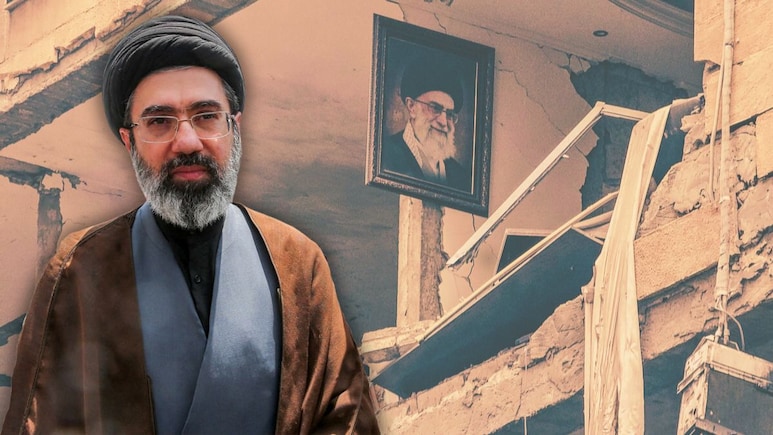
- Iran’s Supreme Leader ordered a ceasefire after agreeing to a two-week truce with the US
- Iran stated the ceasefire does not mean the war is over and remains ready to respond
- Iran proposed a 10-point plan including controlled Hormuz passage and US troop withdrawal
Iran's Supreme Leader Mojtaba Khamenei has instructed all its military units to stop firing after agreeing to a two-week ceasefire with the United States. But, at the same time, Tehran made it clear that this is not the end of the war.
In a statement read on the state-run Islamic Republic of Iran Broadcasting (IRIB), Khamenei said: "This is not the end of the war but all military branches should follow the Supreme Leader's order and cease their fire."
Iran's "Hands On Trigger" Warning
Iran made it clear that the ceasefire does not imply the end of the war and that its hands remain upon the trigger in case the enemy - the US or Israel - acts in any way.
In a statement released after the ceasefire announcement, Iran's Supreme National Security Council said: "It is emphasised that this does not signify the termination of the war... Our hands remain upon the trigger, and should the slightest error be committed by the enemy, it shall be met with full force."
Also Read | "If Attacks Are Halted": Iran Accepts Ceasefire With US, To Reopen Hormuz
Iran's 10-Point Proposal
The US and Israel launched a joint strike against Iran on February 28, killing Supreme Leader Ayatollah Ali Khamenei on the first day of the war. Over the past 39 days, numerous people across several countries have been killed in the conflict.
Thanking the people of Iran for their sacrifices, Iran's Supreme National Security Council said: "Now we give the great nation of Iran the good news that nearly all the objectives of the war have been achieved, and your brave children have brought the enemy to historic helplessness and lasting defeat."
The US had sent a 15-point proposal to Iran, seeking a ceasefire and received a revised 10-point proposal as a basis for negotiations. Sharing the details of the proposal, Iran said it emphasised fundamental points such as "controlled passage through the Strait of Hormuz in coordination with Iran's armed forces; the necessity of ending the war against all components of the Axis of Resistance; the withdrawal of US combat forces from all bases and positions in the region; establishing a safe transit protocol in the Strait of Hormuz that guarantees Iran's dominance according to the agreed protocol; full payment of damages to Iran according to estimates; the lifting of all primary and secondary sanctions and resolutions of the Board of Governors and the Security Council; the release of all of Iran's blocked assets and properties abroad; and finally, the approval of all these items in a binding UN Security Council resolution."
Iran made it clear that it will accept the end of the war once the details are finalised in the negotiations, "given the acceptance of the principles set forth in the 10-article plan."
Full Statement of the Supreme National Security Council :
— True Promise - الوعد الصادق ✪🇮🇷 (@IRTruePromise) April 7, 2026
[PART-1]
Good news to the dear nation of Iran! Nearly all the objectives of the war have been achieved.
The noble people of Iran should know that, thanks to the sacrifices of their children and their historic presence on…
Tehran confirmed that negotiation talks will be held in Islamabad on Friday, April 10, and will last two weeks, subject to extension based on the agreement of both parties.
"During this period, it is essential to maintain complete national unity and to continue victory celebrations with strength," it added.
Calling it the "enemy's surrender on the battlefield", Iran said that if the ceasefire translates into a decisive political achievement in the negotiations, it will celebrate a "great historic victory", else it will fight until all its demands are met.
[Part-2]
— True Promise - الوعد الصادق ✪🇮🇷 (@IRTruePromise) April 7, 2026
These negotiations will begin in Islamabad, Pakistan on Friday, April 10th [21 Farvardin], with complete distrust of the American side.
Iran will allocate two weeks for these negotiations. This period can be extended with the agreement of both parties.
During this… https://t.co/8m46DjwnWF
What Trump Said On Ceasefire
Trump on Tuesday night (local time), hours before the deadline to attack Iran's power plants and bridges, announced ceasefire, saying he had accepted Pakistan's proposal.
Calling it a "double-sided ceasefire", Trump said the US has "already met and exceeded all military objectives, and are very far along with a definitive Agreement concerning long-term peace with Iran, and PEACE in the Middle East."
Trump added that the US received a 10-point proposal from Iran, and believes it is a "workable basis on which to negotiate."
"Almost all of the various points of past contention have been agreed to between the United States and Iran, but a two week period will allow the Agreement to be finalized and consummated," Trump said, adding "it is an honor to have this longterm problem close to resolution."
The announcement, however, came with a caveat. Trump said the ceasefire was "subject to the Islamic Republic of Iran agreeing to the COMPLETE, IMMEDIATE, and SAFE OPENING of the Strait of Hormuz."
Track Latest News Live on NDTV.com and get news updates from India and around the world


