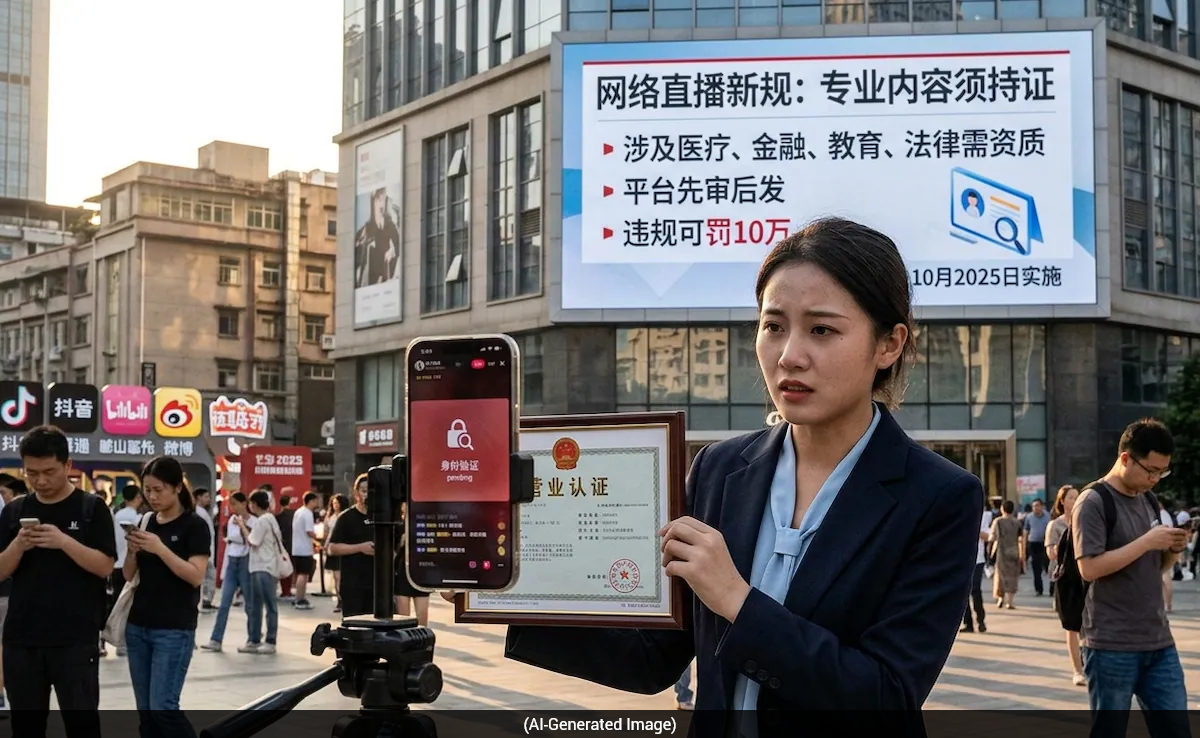
In October 2025, the Cyberspace Administration of China introduced sweeping new rules for the creator economy. If you are an online influencer in China and you publish content on medicine, finance, education or law, you must now hold professional credentials such as a degree, licence or certification.
In simple terms: no degree, no permission to speak
According to Dexerto, platforms including Douyin, Bilibili, and Weibo must now check creators' credentials before their content goes live. Influencers must clearly cite studies or data when they use them in videos. They also have to label any AI-generated material within their content.
The punishment for breaking these rules is serious. Failure to comply could result in hefty fines of up to 100,000 yuan, which equals roughly $14,000, with platforms bearing the responsibility for enforcement, as per Moneywise. Accounts can be suspended or permanently deleted.
Medical products, supplements, and health foods can no longer be promoted through educational content, targeting covert promotions often disguised as advice.
Writing in Forbes Magazine, technology analyst Tim Bajarin noted that this move reflects a broader global problem. The internet created a world where anyone with confidence and a camera could claim to be an expert on money, medicine or law - often with dangerous results. China's response has been direct: professionalise the influencer economy or shut it down.
According to digital policy observers, this legislation is one of China's most comprehensive efforts to formalize influencer activity and may serve as a model for future online content governance worldwide. Critics call it censorship. Supporters call it accountability. Either way, the influencer game in China will never be the same.
Track Latest News Live on NDTV.com and get news updates from India and around the world


