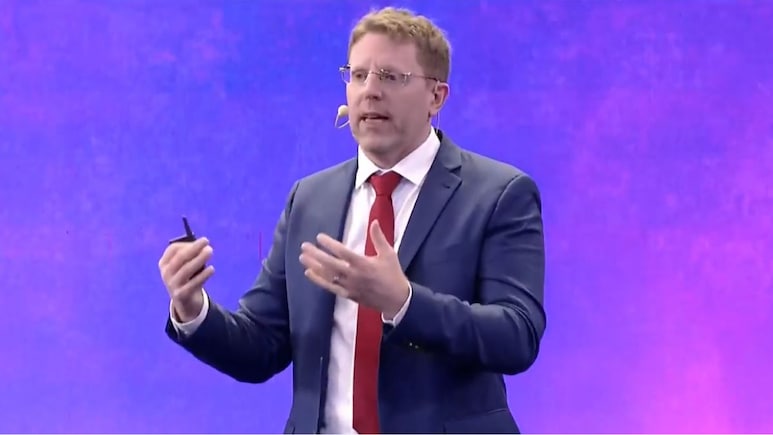
The advent of Artificial Intelligence (AI) has brought chaos in our daily applications, but that's changing rapidly, said Neil Thompson, director of the FutureTech Research Project at MIT's Computer Science and Artificial Intelligence Lab, at the NDTV World Summit 2025.
Thompson cited examples like misuse of deepfakes to carry out fraud and incidents like navigation apps being unable to retrieve real-time information in some cases. Current models give errors at times since the capabilities are not good enough to be autonomous, he said.
NDTV World Summit 2025: Live Updates
"AI is a big departure from traditional IT systems. If you ask Excel to multiply some numbers, it's going to be perfect. But if you ask it what you want for dinner, it's not going to be very good. But with AI, you got a different pattern. If you ask AI to multiply numbers, it will usually get it right, but not always. But if you ask what to have for dinner, good or bad, it will give an answer," said Thompson.
He explained what leads to such errors: "Traditional IT systems that are 100% correct can be stacked one upon another, and you keep getting 100% results. But when you stack the AI systems that aren't perfect, errors are going to stack as well. I call this the AI's garden arranging path."
But will we be able to control the systems to do what we want once they become more capable?
"Unfortunately, we don't have evidence. As these systems become more capable, it becomes easier for them to circumvent some of the things we want them to do," he said. "Smarter AI systems can more easily bypass controls," he added, calling on policymakers to allot more funds to study AI systems.

Track Latest News Live on NDTV.com and get news updates from India and around the world


