Iran has named Mojtaba Khamenei as the country's next Supreme Leader, days after his father, Ayatollah Ali Khamenei, was killed in a joint attack by the US and Israel. Mojtaba, a mid-ranking cleric who had not been heard from publicly since the Iran war began, had long been considered as a contender for the post - a decision that US President Donald Trump had termed "unacceptable". LIVE UPDATES
"By a decisive vote, the Assembly of Experts appointed Ayatollah Seyyed Mojtaba Hosseini Khamenei as the third Leader of the sacred system of the Islamic Republic of Iran," a body of 88 clerics charged with choosing the new leader said in a statement issued late last night.
Who is Mojtaba Khamenei?
Mojtaba Khamenei, the 56-year-old son of Ayatollah Ali Khamenei, is a low-profile cleric who has spent most of his career outside public office but close to power, working within the Office of the Supreme Leader. He was often seen as a 'gatekeeper' to his father and 'powerbroker' rather than a public political figure with a formal portfolio.
Born in 1969 in the northeastern Iranian city of Mashhad, Mojtaba is the second-eldest son of Ali Khamenei - among six children. He studied under religious conservatives in the seminaries of Qom, Iran's centre of Shi'ite theological learning, and has the clerical rank of Hojjatoleslam.
However, despite decades in seminary circles, he has not attained the rank of Ayatollah - which has been a recurring point of debate among senior clergy for his appointment as Iran's Supreme Leader.
While Mojtaba rarely appeared prominently in public life, he gradually built his influence within the political and clerical establishment. He began attracting public attention only in the late 1990s, by which time his father's authority as Supreme Leader was firmly established. He even bears a strong resemblance to his father - wearing the black turban of a 'sayyed'.
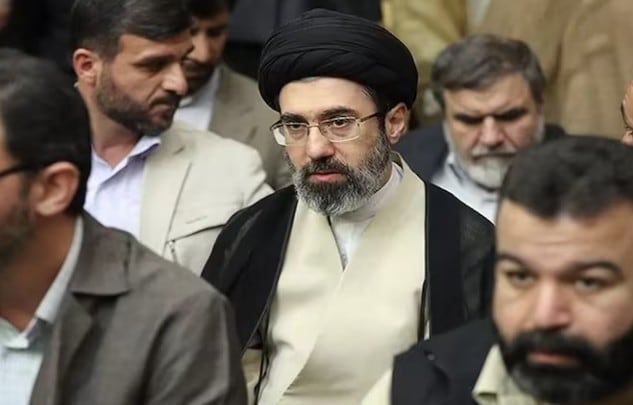
At the age of 17, Mojtaba briefly served in the Iran-Iraq war. During this time, he forged ties with key figures who later rose within Iran's security and intelligence apparatus.
Over time, Mojtaba's reputation centred on two key features - his close relationship with Iran's security establishment, particularly the Islamic Revolutionary Guard Corps (IRGC) and its hardline networks, and his strong opposition to reformist politics and Western engagement.
Mojtaba has never held a formal position in the Islamic Republic's government.
US sanctions on Mojtaba Khamenei
In 2019, the US imposed sanctions on Mojtaba, accusing him of acting in an official capacity on behalf of the Supreme Leader despite holding no formal government position. According to the US Treasury Department, Ayatollah Ali Khamenei had previously delegated some of his responsibilities to Mojtaba to "advance his father's destabilising regional ambitions and oppressive domestic objectives".
Controversies around Mojtaba Khamenei
Mojtaba had become a target for criticism during the unrest over the death of a young woman in police custody in 2022, after she was arrested for allegedly breaching the Islamic Republic's strict dress codes.
In 2024, a video was widely shared in which he announced the suspension of Islamic jurisprudence classes he was teaching at Qom, fuelling speculation about the reasons.
Mojtaba was also widely believed to have been behind the sudden rise of hardliner Mahmoud Ahmadinejad, who was elected president in 2005. Four years later, Mojtaba backed Ahmadinejad when he won a second term in a disputed election, which resulted in anti-government protests.
Mehdi Karroubi, a moderate cleric who contested the election, had written a letter to Ali Khamenei at the time objecting to what he alleged was Mojtaba's role in supporting Ahmadinejad. Ali Khamenei, however, had rejected the accusations.
Mojtaba's personal life
Mojtaba Khamenei married Zahra Haddad-Adel, the daughter of a prominent hardliner - the former parliament speaker Gholamali Haddad-Adel, in 2004. The couple has three children together, though not much information about them is available publicly.
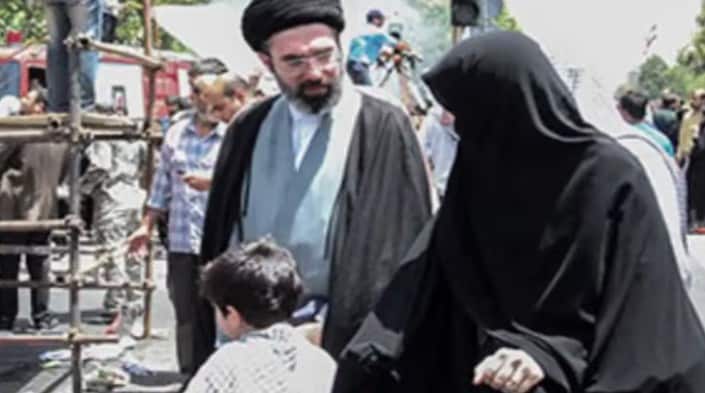
Add image caption here
Photo Credit: REUTERS
According to reports, Mojtaba and Zahra's marriage strengthened the ties between her father and the Khamenei family, cementing her husband's connections with Iran's political circles.
Zahra was killed in the recent strikes in Tehran.
Mojtaba's personal empire
Mojtaba has allegedly built a large international property and investment network and invested millions of dollars in Western countries, a report by Bloomberg said.
Mojtaba's net worth is not known publicly, but reports suggest he is a multi-millionaire.
According to reports, he has bank accounts in Switzerland, a luxury property in the United Kingdom worth more than $138 million and shipping businesses in the Persian Gulf. He also reportedly owns several luxurious properties in some of the most elite neighbourhoods of London and a luxury villa in Dubai. He also reportedly owns luxury hotels across Europe.
How different would Mojtaba be from his father?
Ayatollah Ali Khamenei was considered a figure of the revolutionary generation, whose authority depended on ideological legitimacy, decades spent amassing and consolidating power, and his ability to arbitrate between competing factions.
Mojtaba, on the other hand, is often portrayed as a product of the security establishment, rather than a public theologian or statesman. He is known more for his networks than for his speeches or religious authority.
This would suggest that the shift would be from a leader who balanced institutions to one who may lean more heavily on the IRGC - deepening an existing trend toward the securitisation of Iranian politics.
(With inputs from PTI, Reuters)
Track Latest News Live on NDTV.com and get news updates from India and around the world


