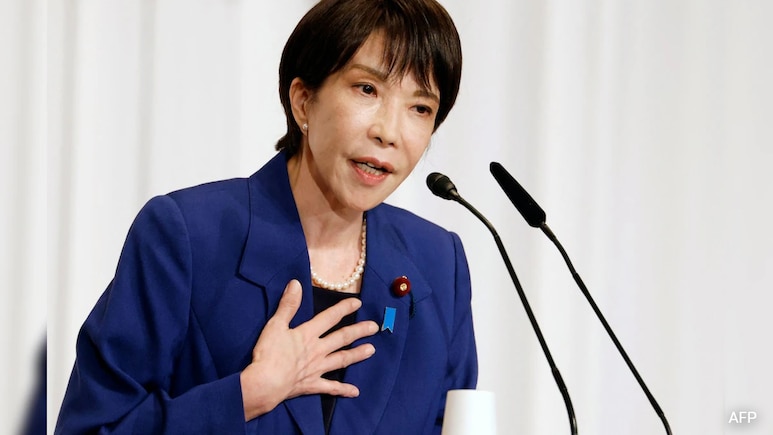
Japanese Prime Minister Sanae Takaichi stayed away from Tokyo's controversial Yasukuni Shrine on Saturday, apparently seeking to avoid further strains in relations with China and South Korea as Japan marked the 81st anniversary of its World War II surrender.
Takaichi, however, did not mention her country's wartime past in Asia or express remorse for it in a speech at the ceremony, and the defense minister and other political representatives visited the shrine.
The Yasukuni Shrine, which commemorates over 2.4 million people who died in wars, became controversial after enshrining 14 convicted World War II Japanese war criminals. China and South Korea say visits by Japanese officials to the shrine show a lack of remorse over Japan's wartime atrocities.
Japan invaded and occupied large parts of Asia before and during World War II, committing atrocities that included mass killings, forced labor and the sexual enslavement of women. Millions died during Japan's wars and colonial rule.
Japan has embraced a pacifist ethos in the decades since its defeat. But memories of Japan's colonial rule and atrocities still run deep, and leaders and the public in China and South Korea closely watch how Japanese leaders confront the country's past.
Takaichi mourned the victims of major devastation in Hiroshima, Nagasaki and Okinawa, as well as those who perished in overseas battlefronts, and thanked them for their sacrifice as the "foundation of Japan's peace and prosperity today."
"Japan, since the end of the war, has consistently contributed to global peace and prosperity. We will never let the tragedy of the war be repeated," she said in her address at Nippon Budokan, located a short walk away from Yasukuni.
Defense Minister Shinjiro Koizumi, three other Cabinet ministers and three executives from Takaichi's governing Liberal Democratic Party visited the shrine earlier Saturday. A nonpartisan group of dozens of lawmakers also prayed there.
The secretary general of Takaichi's Liberal Democratic Party, Shunichi Suzuki, said he prayed at Yasukuni on behalf of Takaichi and brought cash offerings that Takaichi made as party leader. He did not disclose the amount.
"I renewed my war-renouncing resolve and will continue to fulfill Japan's postwar responsibility as a peace-loving nation," Koizumi, who has regularly visited the shrine, said on X after his visit Saturday. He is the son of a popular former prime minister, Junichiro Koizumi, who enraged China with a visit to Yasukuni on Aug. 15, 2006.
China's Foreign Ministry protested the visits, saying the Japanese politicians' true intentions were to "change the verdict on the war criminals, cover up Japan's war crimes, distort the historical facts and pave the way for accelerating militarization."
It urged Japan to do "serious soul searching" on history and make a clean break with militarism.
Tensions between Japan and China escalated in November when Takaichi said a Chinese attack on Taiwan could constitute "a survival-threatening situation" for Japan requiring the use of force. The comments enraged Beijing.
South Korea's foreign ministry also criticized the Japanese politicians' visits and offerings as "an anachronistic act that disregards history." The ministry urged Japan to face its history and demonstrate remorse.
South Korean President Lee Jae Myung struck a different tone in a speech Saturday marking the 81st anniversary of Korea's liberation from Japanese colonial rule. He stressed that his administration favors "pragmatic diplomacy."
"Korea-Japan cooperation is now more important than ever," he said.
Japanese emperors have shunned Yasukuni since its 1978 inclusion of war criminals as "martyrs," and have expressed regrets over Japan's wartime past, though in a nuanced way.
Emperor Naruhito, in an address Saturday at the ceremony, said he hopes the ravages of war will never be repeated while "reflecting on our past and bearing in mind the feelings of deep remorse."
Addressing concerns of fading memories of wartime history, Naruhito said he hoped the memories of the suffering during and after the war will be passed down to younger generations.
Takaichi has resisted acknowledging Japan's wartime aggression. She has denied that coercion was used against Korean laborers and that women were held as sex slaves for Japanese troops. She was previously part of a campaign to remove references to wartime sexual slavery, known as "comfort women," from school textbooks.
She has said she is from a postwar generation that bears no responsibility for Japan's past actions and has no intention of apologizing.
The country has faced revisionist pushback since the 2010s under nationalistic former Prime Minister Shinzo Abe. Takaichi says Abe is her political mentor.
Since 2013, Japanese prime ministers have stopped apologizing to Asian victims for wartime atrocities, under a precedent set by Abe.
Descendants of the war dead also gathered at Yasukuni early Saturday to honor their fallen ancestors.
Mariko Shinoda, 56, whose grandfather died as a Kamikaze pilot, said she visited Yasukuni with her mother as a child every year on Aug. 15. Kamikaze pilots departed on their one-way missions saying, "Let's meet at Yasukuni," her mother told her.
"To me, Yasukuni is where every spirit gathers, and that's where you get to see them on Aug. 15," Shinoda said.
(Except for the headline, this story has not been edited by NDTV staff and is published from a syndicated feed.)
Track Latest News Live on NDTV.com and get news updates from India and around the world


