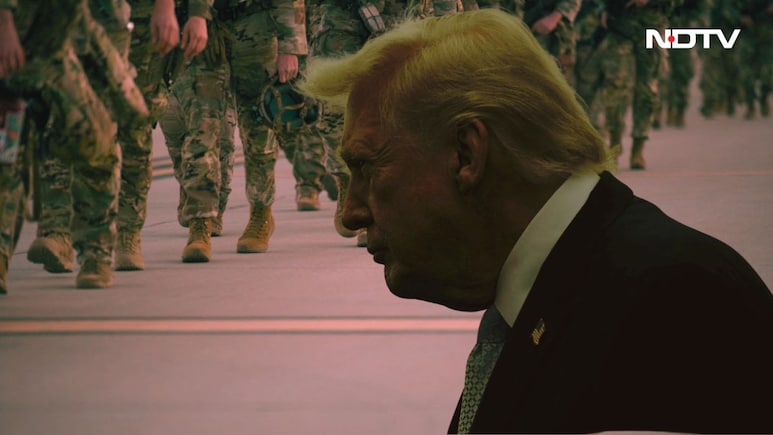
- US troops surge to Middle East as Trump seeks ceasefire with Iran by Friday deadline
- Trump paused strikes since March 23 while 5,000 Marines join 50,000 US forces in region
- Options include capturing Kharg Island and raiding Iran’s enriched uranium stockpile
US President Donald Trump's sudden push for a ceasefire with Iran appears increasingly aimed at buying time as thousands of US troops race toward the Middle East ahead of his self-declared Friday deadline.
Trump has paused military strikes for five days since 23 March, even as reinforcements surge into the region. Two Marine units, roughly 5,000 personnel in total, are currently en route, joining more than 50,000 American forces already deployed across the Middle East.
"If a deal were not agreed to by Friday," Trump told reporters, "then we'll just keep bombing our little hearts out."
US officials say the president is still weighing aggressive military options even as he talks up a possible ceasefire, according to a report by the Telegraph.
Plans under consideration include the capture of Kharg Island, the strategic hub through which Iran exports about 90% of its oil, as well as a raid targeting Iran's stock of highly enriched uranium. Analysts have also pointed to other possible targets such as Qeshm, Kish and Hormuz Islands, which host key Iranian military and economic assets.
The arrival of the 31st Marine Expeditionary Unit gives Trump, for the first time in this conflict, the option of launching a full-scale ground operation alongside continued airstrikes.
The USS Tripoli is due to reach the Gulf on Friday carrying around 2,200 Marines, according to the Wall Street Journal. A second unit, the 11th Marine Expeditionary Unit from California, left last week aboard the USS Boxer and could reach the theatre by mid-April.
Meanwhile, Tehran has told mediators that it has already been deceived twice by Trump's calls for negotiations and that "we don't want to be fooled again". Iranian officials have demanded compensation for US strikes and a guarantee that any ceasefire will be permanent.
Iran's Foreign Minister Abbas Araghchi has insisted that Washington must lift sanctions before Iran reopens the Strait of Hormuz, which was a concession the US previously reserved only for a verified rollback of Iran's nuclear programme.
Meanwhile, the Islamic Revolutionary Guards Corps has told Arab intermediaries that it plans to charge all vessels transiting the Strait of Hormuz, mirroring Egypt's model in the Suez Canal. With Iran having demonstrated that it can disrupt global oil flows, mediators say the regime is unlikely to accept terms that do not leave it with greater leverage than before the war.
If Trump orders the seizure of Kharg Island, the 31st Marine Expeditionary Unit could insert Marines by sea or air. US airstrikes have already cratered the island's runways, meaning helicopters or F-35B jets capable of landing on rough terrain would be required for the first wave. Engineers would then attempt to repair the landing strips to bring in reinforcements and supplies, potentially using C-130 cargo aircraft, though any such operation would leave US forces vulnerable to Iranian missile fire.
Despite heavy US bombardment, some of Iran's hardened missile stockpiles have survived, and Tehran's strike accuracy has improved in recent days even as total launches have declined. Pentagon officials warn that any ground assault could come at a significant human cost.
Track Latest News Live on NDTV.com and get news updates from India and around the world


