Emirates is operating flights to Dubai that are near-empty in some cases as travellers avoid the Persian Gulf, highlighting the challenges for the world's largest international airline to restore its network amid a protracted war.
Flights from destinations in the US and continental Europe have been impacted the hardest, with planes returning from Prague or Budapest only about 5% to 10% occupied, according to data compiled by the Dubai-based airline that was reviewed by Bloomberg.
Several aircraft returning from New York flew with only a fifth of the tickets sold, and at least one flight during the past week departed with fewer than 35 passengers on an Airbus SE jumbo A380 jet that ordinarily seats close to 500. Departures from Chicago operated with half-empty cabins, according to the documents.
Flights leaving Dubai show a very different pattern, as many people depart the city on the reduced number of planes available. Emirates then flies the jets back to its hub with low occupancy.
The airline also has to deal with several thousand no-shows every day on outbound flights, according to one memo, underscoring the complexities in running an operation that ordinarily includes hundreds of daily flights that are nearly full. The company is offering refunds and flexible rescheduling for flights until the end of the month.
Emirates said in a statement it will continue to restore its network at pace, provided it can do so safely. Given the circumstances, current inbound occupancy is unsurprisingly light, an official said in response to questions. The company said it doesn't comment on specific route occupancy.
Before the war, the airline operated about 500 flights out of Dubai International on a normal day - about half of which were departures - a figure that had fallen to 71 takeoffs on March 16, according to data by Flightradar24.
While passenger demand is slim, the company is also loading cargo into its aircraft, providing another stream of revenue and an inflow of perishable goods, in particular. Emirates is putting an emphasis on operating Boeing Co. 777 planes because they have more optimal cargo capacity than the Airbus A380.
The Strait of Hormuz is effectively closed, making the flights one of the few ways to import supplies.
The state-owned carrier has seen its operations severely disrupted by the threats from Iranian missiles in its airspace. Several drone incidents in the vicinity of the airport caused some damage and minor injuries at the hub since the war in Iran started.
In the early hours of Tuesday, The United Arab Emirates announced a full airspace closure for around two hours as the Gulf nation intercepted attacks from Iran. The General Civil Aviation Authority said the decision was to ensure the safety of flights and air crew, and safeguarding the country's territory.
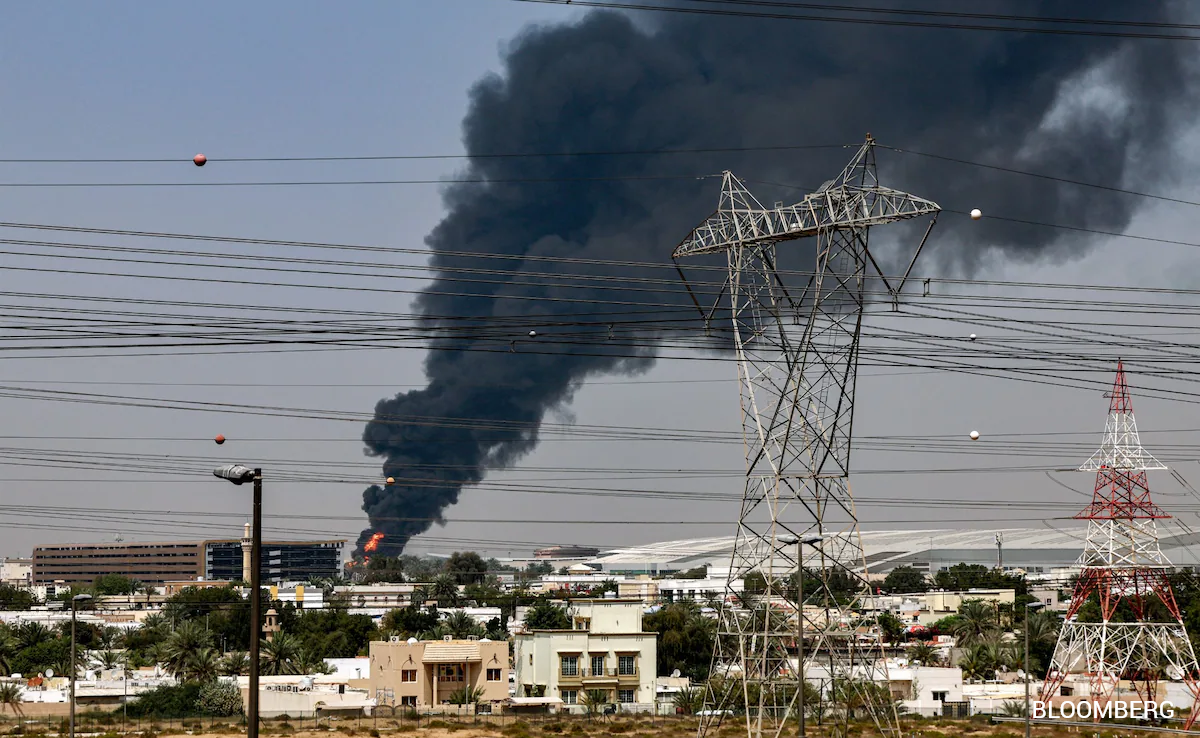
On Monday, Emirates suspended operations for more than seven hours following a fuel-tank fire at Dubai International Airport caused by a drone incident. Flights on the limited schedule resumed later in the day.
Etihad Airways and Qatar Airways, the other major regional airlines, have also resumed a thinned-out service, with a focus on getting out stranded customers. Emirates is the largest carrier in the region and has ramped up operations from Dubai since the war started at a faster pace than competitors.
Emirates is offering at least six times as many flights as Qatar Airways, the No. 2 Gulf carrier. At the same time, some Emirates aircraft remain out of position in Europe and China.
On one flight from Paris, Emirates carried about 25 passengers on an Airbus A380 with a high-density layout that typically accommodates about 600 people, the documents show. That passenger count is almost the same as the number of crew typically needed on an aircraft that size.
Traffic out of London Heathrow has fared slightly better, with about 20% of tickets sold, though well below the near-full occupancy Emirates typically enjoys on its dozen daily services from the UK capital.
Forward bookings on inbound flights are at only about a third of capacity, according to one of the memos, a far lower-than-typical figure given the aviation industry is heading into the busy Easter season.
Emirates President Tim Clark hasn't spoken publicly about operations or how the airline is managing the situation. The airline has provided updates of its services online, and Emirates now runs daily flights along corridors that are considered safe.
Track Latest News Live on NDTV.com and get news updates from India and around the world


