Iran's supreme leader, Ayatollah Ali Khamenei, was the target of Saturday's joint Israeli-US strikes on Tehran, Israel's public broadcaster reported, as per news agency AFP.
"Iranian Supreme Leader Khamenei and President Masoud Pezeshkian were among the targets of the attack," the state broadcaster reported.
As Trump Declares Khamenei Dead, When Was Iran's Supreme Leader Last Seen?
Initial strikes reportedly took place near the offices of Supreme Leader Ayatollah Ali Khamenei. Reuters reported that the 86-year-old leader was not in Tehran and had been transferred to a secure location at the time. LIVE Updates
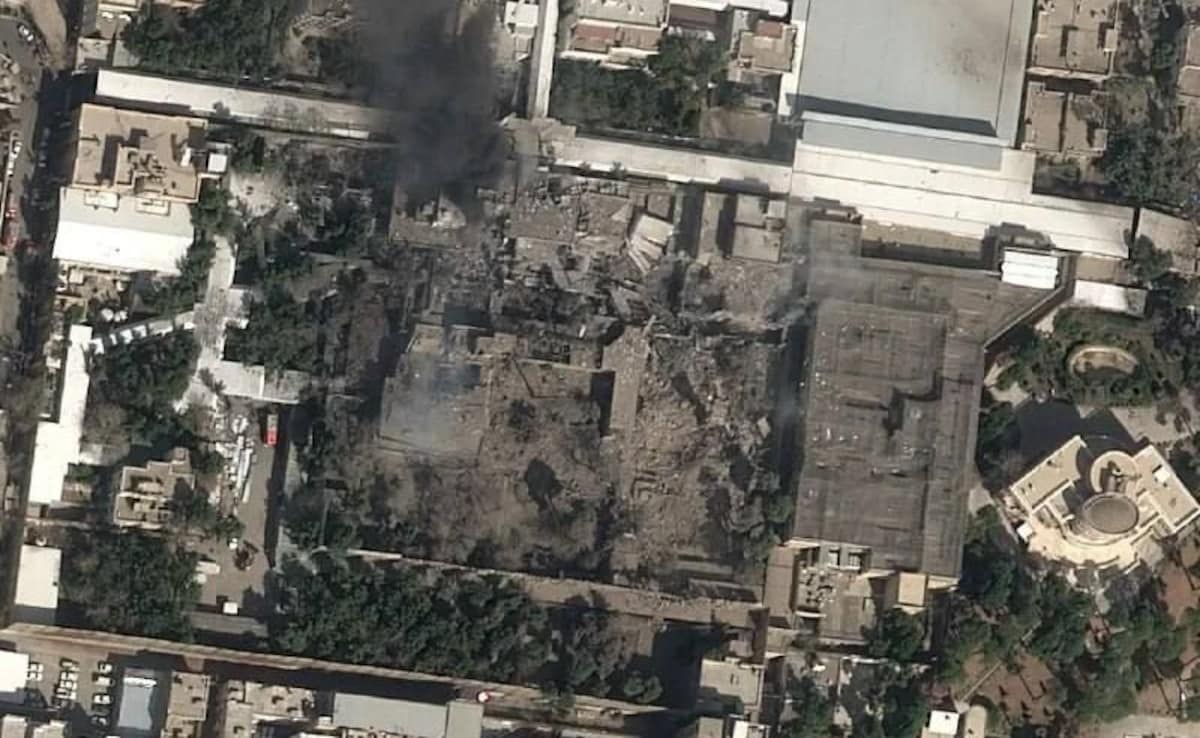
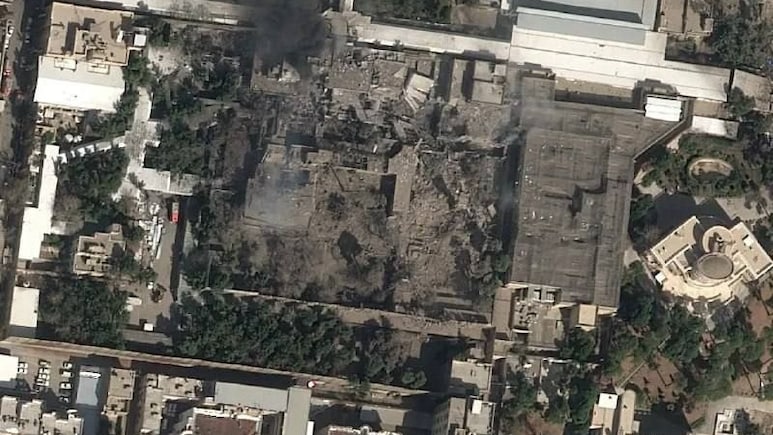
Satellite image shows massive damage near Khamenei's house in Tehran. (Source: The New York Times)
Meanwhile, Iran's President Masoud Pezeshkian is alive, Iranian state news agency IRNA reported, citing a source close to the presidency. Pezeshkian “is in good health,” IRNA said in a post on Telegram, shortly after the strikes.
Iran and Israel traded missiles on Saturday morning after Tel Aviv, with the help of the US, launched a preemptive attack on Tehran. The Israeli military, in a statement, said that an "additional barrage of missiles" was launched toward Israel.
Sirens Heard In Israel
"The Aerial Defence Array is currently identifying and intercepting threats. Sirens were sounded in several areas across the country following the identification of missiles launched from Iran toward Israel. At this time, the IAF is operating to intercept and strike threats where necessary to remove the threat," it said in a post on X.
Explosions In Gulf states
The conflict's ripple effects were felt across the Gulf after emergency sirens sounded in Bahrain following a missile threat targeting the headquarters of the US Navy's Fifth Fleet, according to the country's interior ministry.
Explosions were also heard in the UAE's Abu Dhabi and Dubai, Qatar's Doha, and Saudi Arabia's Riyadh.
All these Middle East cities host American troops.
In Abu Dhabi, the UAE Air Force and the US Air Force share the Al Dhafra Air Base. Dubai's Jebel Ali Port is the US Navy's largest port of call in the Middle East that regularly hosts American aircraft carriers and other vessels.
In Doha, the 24-hectare Al Udeid Air Base is the forward headquarters for US Central Command.
The US reportedly has over 2,000 soldiers in Saudi Arabia, with some of them being stationed roughly 60 km south of Riyadh, at Prince Sultan Air Base. The base supports US Army assets, including Patriot missile batteries and Terminal High Altitude Area Defence systems.
Qatar said it successfully intercepted the "attacks" targeting it.
"No damage has been reported, according to the initial field assessment. No casualties or material damage were recorded in residential areas," the Ministry of Interior said in a statement on X.
It also urged the public to avoid approaching, touching, or moving any unidentified objects or debris.
Saudi Arabia condemned "in the strongest terms the treacherous Iranian aggression".
It said strikes were the "blatant violation of the sovereignty" of the United Arab Emirates, Bahrain, Qatar, Kuwait, and Jordan.
It also warned Tehran of "grave consequences".
What Trump Said About The Strikes?
US President Donald Trump announced "major combat operations" in Iran shortly after Israel, with the help of the US, launched strikes on Tehran. According to the Republican leader, the objective is to "defend the American people by removing imminent threats from Iran".
Calling Iran the world's "number one state sponsor of terror", Trump said, "For 47 years, the Iranian regime has chanted, Death to America, and waged an unending campaign of bloodshed and mass murder, targeting the United States, our troops, and the innocent people in many, many countries. The regime's proxies have continued to launch countless attacks against American forces stationed in the Middle East in recent years, as well as US naval and commercial vessels in international shipping lanes."
"It was Iran's proxy, Hamas, that launched the monstrous October 7th attacks on Israel, slaughtering more than 1,000 innocent people, including 46 Americans, while taking 12 of our citizens hostage. It was brutal, something like the world has never seen before," he added.
What Iran Said About The Strikes?
Iran's foreign ministry wasted no time issuing a furious response in English, branding the US and Israeli strikes as "criminal military aggression" carried out while peace talks were still alive. "The renewed military aggression of the United States and the Zionist regime against Iran is being committed while Iran and the United States were in the midst of a diplomatic process," the ministry said.
"Now the Iranian people are proud that they did everything necessary to prevent war. Now is the time to defend the homeland and confront the enemy's military aggression," the statement read. "Just as we were ready for negotiations, we have been more prepared than ever for defense. The armed forces of the Islamic Republic of Iran will respond to the aggressors with authority," it added.
Iran also turned to the wider world for support, urging the United Nations and the international community to "firmly condemn this act of aggression and take urgent and collective action to confront it, which has undoubtedly exposed the peace and security of the region and the world to an unprecedented threat."
Track Latest News Live on NDTV.com and get news updates from India and around the world


