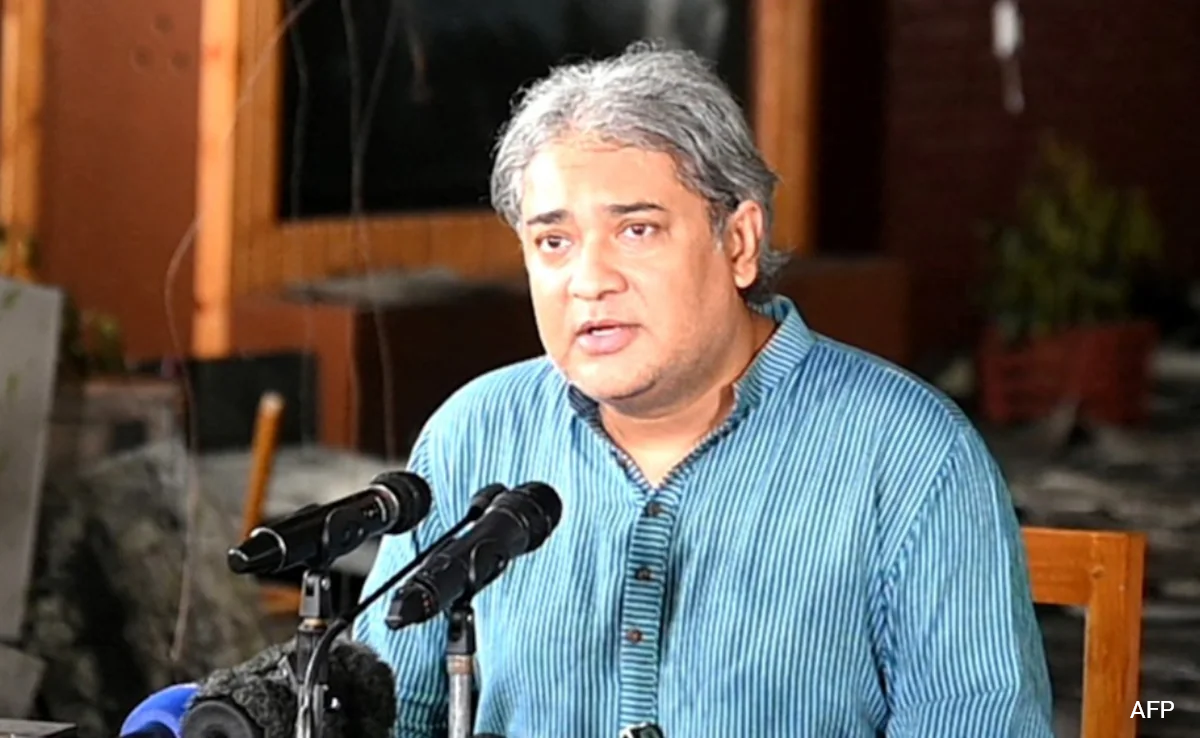
The trial against Bangladesh's former Prime Minister Sheikh Hasina was "scripted" and a "sham", claimed Mohammad Ali Arafat, the South Asian nation's former information minister. The Awami League leader, who is considered a close aide of Hasina, alleged that the interim government led by Nobel laureate Mohammed Yunus is trying to turn Bangladesh into "East Pakistan".
Hasina was sentenced to death in absentia on Monday for her deadly crackdown on student protesters last year. The verdict by the International Crimes Tribunal - a court that Hasina set up to try war crimes from Bangladesh's 1971 war for independence from Pakistan - marked a dramatic turn for a political career that began when she avoided death during the 1975 coup because she happened to be in Europe.
"This is a scripted, sham trial... The entire proceeding was controlled by Muhammad Yunus and his administration," he said while talking to NDTV.
Arafat claimed that Bangladesh has fallen into the hands of "jihadists" who are being "headed" by interim chief Muhammad Yunus.
"The country has gone into the hands of the jihadists, and Yunus is heading them. We have to defeat the entire group with the help of people, politically. We have no reason to do anything about this tribunal verdict. Jammat-e-Islami has infiltrated into administration. They have captured it," he said.
#NDTVExclusive | "Entire proceeding was controlled by Muhammad Yunus and his administration": Mohammad Ali Arafat, Former Information Minister, Sheikh Hasina's Cabinet to @AdityaRajKaul pic.twitter.com/QLrrhA87XS
— NDTV (@ndtv) November 17, 2025
The former minister claimed that through the trial, which he claimed was scripted, the Yunus government was "creating narrative and drama to show to the world."
"At its core, they are trying to radicalise the country. They are trying to turn Bangladesh into East Pakistan. For Yunus to continue to grab his power, he needs support, and he is deriving this from the jihadists," he said.
Despite criticism of her years in power, Hasina, 78, was credited with turning around the economy and the massive garments industry of the Muslim-majority nation of 170 million, while winning international praise for sheltering Rohingya Muslims fleeing persecution in neighbouring Myanmar. But her downfall - she was ousted less than seven months after winning a fifth term as leader - was the protests that began over job quotas and swelled into a movement demanding her removal.
Arafat further claimed that the nationwide elections in Bangladesh, which are set to take place in February next year, were already "rigged" and their outcome was already decided.
"Yunus is going ahead with a rigged election. The outcome is decided. They are blocking not only the Awami League but also other progressive parties. Awami League has more than 20 million active members and is the biggest party in Bangladesh. Awami League is the reason why Bangladesh came into being. If you want to suppress this group, there will be a natural ramification. There will be a backlash. It did not work out in 1971. It will not work out now," he added.
Hasina was ousted on August 5 last year and fled to India. Bangladeshi Nobel Peace Prize laureate Muhammad Yunus took over as the head of an interim government three days after her fall. Yunus vowed to punish Hasina and banned the activities of her Awami League party.
Yunus said his interim government would hold the next elections in February, and that Hasina's party would not get a chance to contest the race.
Hasina's Rise And Fall In Bangladesh
Born in 1947 in the southwest of the country, which was then East Pakistan, Hasina was the eldest of five children. After getting a degree in Bengali literature from Dhaka University in 1973, she gained political experience as a go-between for her father and his student followers.
Exiled to India after the coup, she returned in 1981 and was elected head of the Awami League, Bangladesh's oldest political party and a force in the struggle for independence. Hasina joined political foe Khaleda Zia, chief of the rival Bangladesh Nationalist Party, to lead a popular uprising for democracy that toppled military ruler Hossain Mohammad Ershad in 1990.
But the alliance did not last. The bitter rivalry between the two - called the "battling begums", using an Urdu honorific for prominent women - went on to dominate Bangladeshi politics for decades.
Hasina first led the Awami League to victory in 1996, serving a five-year term, then regained power in 2009, never to lose it again.
Bangladesh has been in political turmoil since the end of Hasina's autocratic rule, and violence has marred campaigning for elections expected in February 2026. The United Nations says up to 1,400 people were killed in crackdowns as Hasina tried to cling to power, deaths that were central to her trial.
Track Latest News Live on NDTV.com and get news updates from India and around the world


