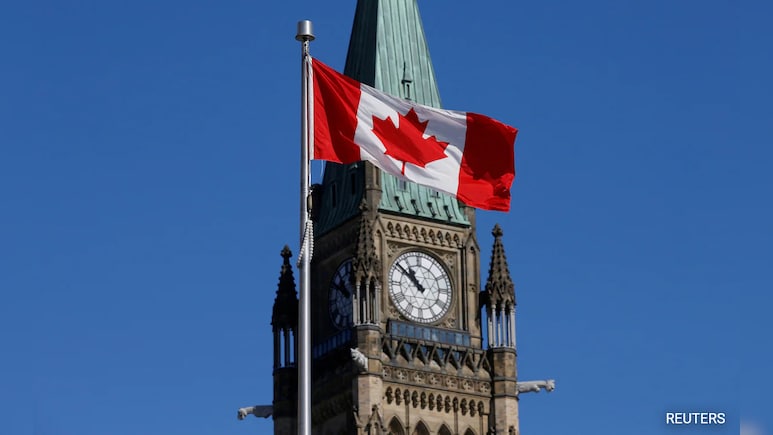
Immigration to Canada dropped sharply in 2025, revealing a rare non-pandemic drop since 2015. Compared to 2024, immigration to Canada dropped 19 per cent, with 393,530 new immigrants entering the country compared to 483,655 the year before, the National Post reported, citing the latest federal government data accessed by the Association for Canadian Studies (ACS).
The immigration data comes as Canada's overall population has flatlined, with the country adding only 47,098 people in the second quarter of 2025, a population increase of 0.1 per cent.
Canada's Immigration Patterns In 2025
The steepest decline in immigration came in Atlantic Canada and the Prairie provinces.
Quebec recorded a slight uptick, and the north experienced a modest increase in immigration.
Refugees recorded the highest decline, followed by economic and family-sponsored immigrants.
Permanent resident admissions to Canada were also down in 2025, with applications from Iran and Afghanistan registering the most significant decline at 33.3 per cent and 33.1 per cent, respectively. Applications fell from China (29.6 per cent), Pakistan (25.7 per cent ), Eritrea (25.7 per cent) and India (22.5 per cent).
However, permanent residency applications from France, Ukraine and Cameroon recorded an increase.
International student permits dropped over 25 per cent in 2025 compared to 2024, with 131,010 fewer new permits for foreign students. India represented the steepest decline, dropping 50 per cent last year, from 188,175 to 94,605.
Temporary foreign workers (TFW) admitted to Canada also dropped 12 per cent from 190,945 to 168,245.
Jack Jedwab, president of the Montreal-based ACS, told the National Post, “With immigration being the sole source of population growth, the unevenness of the reductions implies that some parts of the country will face greater population decline than others.”
The data highlighted that government policy is the major determinant of immigration levels in the country, with Justin Trudeau's election in 2015 becoming a key point. From 2016 to 2024, immigration surged to an average annual rate of 15 per cent from 4 per cent in 2000-2015, a Fraser Institute Study revealed.
Canada's New Aim
In its 2026-2028 Immigration Levels Plan last year, Canada promised to bring “a return to sustainable immigration levels,” according to the Department of Immigration, Refugees and Citizenship Canada (IRCC). The goal is to reduce Canada's temporary population to less than five per cent of the total population by the end of 2027.
Targets for new temporary resident arrivals have been set at 385,000 in 2026, 370,000 in 2027 and 2028.
Track Latest News Live on NDTV.com and get news updates from India and around the world


