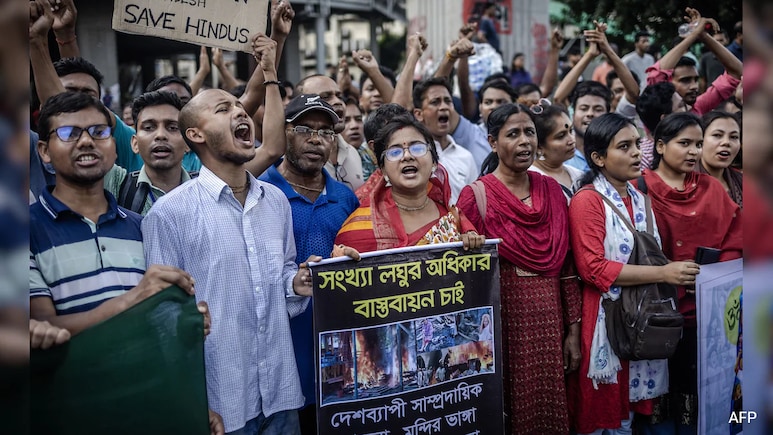
As Bangladesh approaches its 13th National Parliamentary Election, a wave of brutal communal violence against religious minorities, particularly Hindus, has spread fear across the country, raising serious questions on the Muhammad Yunus-led interim government to protect vulnerable communities and uphold basic human rights.
According to a statement issued today by the Bangladesh Hindu Buddhist Christian Unity Council, at least 51 incidents of communal violence were recorded in December alone. These include 10 murders, 23 cases of looting and arson, 10 incidents of robbery and theft, four cases of detention and torture on false blasphemy charges, one attempted rape, and three incidents of physical assault. Homes, temples, and businesses belonging to minority communities have been systematically targeted.
The violence has continued unabated into January. On January 2, paddy crops belonging to Satyaranjan Das in Lakshmipur were set ablaze. On January 3, businessman Khokon Chandra Das was hacked to death in Shariatpur after being attacked and set on fire. The same day, armed criminals carried out coordinated robberies in Chattogram and Cumilla, taking families hostage and looting gold, silver, and cash.
On January 4, gold trader Shubho Poddar was tied up while his shop was looted of nearly 30 bhori of gold ornaments. That same day, in a particularly horrific incident in Kaliganj, Jhenaidah, a 40-year-old Hindu widowed woman was gang-raped, tied to a tree, had her head shaved, and was subjected to severe torture.
The following day, January 5, Rama Pratap Bairagi, an ice factory owner in Jashore, was publicly murdered by gunfire and throat-slitting. In Narsingdi, grocery shop owner Moni Chakraborty was stabbed to death. Many more incidents, the Council warns, remain unreported.
Despite the scale and brutality of the violence, minority leaders say the interim government led by Nobel laureate Muhammad Yunus has failed to take visible, effective action. There has been no sign of decisive nationwide security measures, no emergency protection plan for vulnerable communities, and no clear accountability for the perpetrators.
"The minorities of this country are living in fear and uncertainty," the Council said in its statement, warning that these attacks appear aimed at intimidating minorities and preventing them from voting freely in the upcoming election.
Against this backdrop, an eight-member delegation of minority leaders met BNP Acting Chairman Tarique Rahman in Dhaka on January 3, seeking political assurances and presenting an eight-point list of demands related to security, justice, and equal rights. The delegation included representatives from Hindu, Buddhist, Christian, and welfare organisations. They briefed him in detail about the ongoing violence and the deep anxiety gripping minority communities.
Tarique Rahman reportedly emphasised the need to restore law and order and promised that citizens' rights must be protected regardless of religion or ethnicity. However, minority leaders note that political meetings cannot substitute for immediate state action.
Human rights observers warn that the current situation reflects a dangerous breakdown of the rule of law.
"The government's silence and inaction are emboldening the perpetrators," said a senior community organiser in Dhaka. "Without urgent intervention, this violence will only escalate."
As Bangladesh stands at a critical political crossroads, the ongoing persecution of minorities has become not only a human rights crisis but also a test of the interim government's credibility.
Track Latest News Live on NDTV.com and get news updates from India and around the world


