
- Dhuandhar Falls in Bhedaghat, Madhya Pradesh, features a 30m waterfall
- That creates a mist-like smoke due to Narmada River’s force through a narrow gorge.
- Visitors enjoy boat rides, cable cars, temples, and marble rock views year-round.
Imagine standing near a waterfall so powerful that its roar can be heard from kilometres away, creating a massive cloud of mist that looks like smoke rising from the river. That's Dhuandhar Falls, quite literally the "fall of smoke." Located in Bhedaghat near Jabalpur, Madhya Pradesh, this spectacular waterfall on the holy Narmada River has been mesmerising visitors for centuries. The name Dhuandhar comes from "Dhuan" (smoke) and "Dhar" (flow). When the Narmada squeezes through a narrow marble gorge and plunges 30 metres down, the impact creates millions of water droplets that hang in the air like smoke. Often called the "Niagara Falls of India," Dhuandhar combines the raw power of cascading water with the elegance of white marble rocks. It's a complete experience involving boat rides through marble canyons, cable car rides, ancient temples, and landscapes that'll make your camera very happy.
Also Read: 5 Best Glaciers in the World: Comprehensive Travel Guide for Indians
The Science Behind the Mist

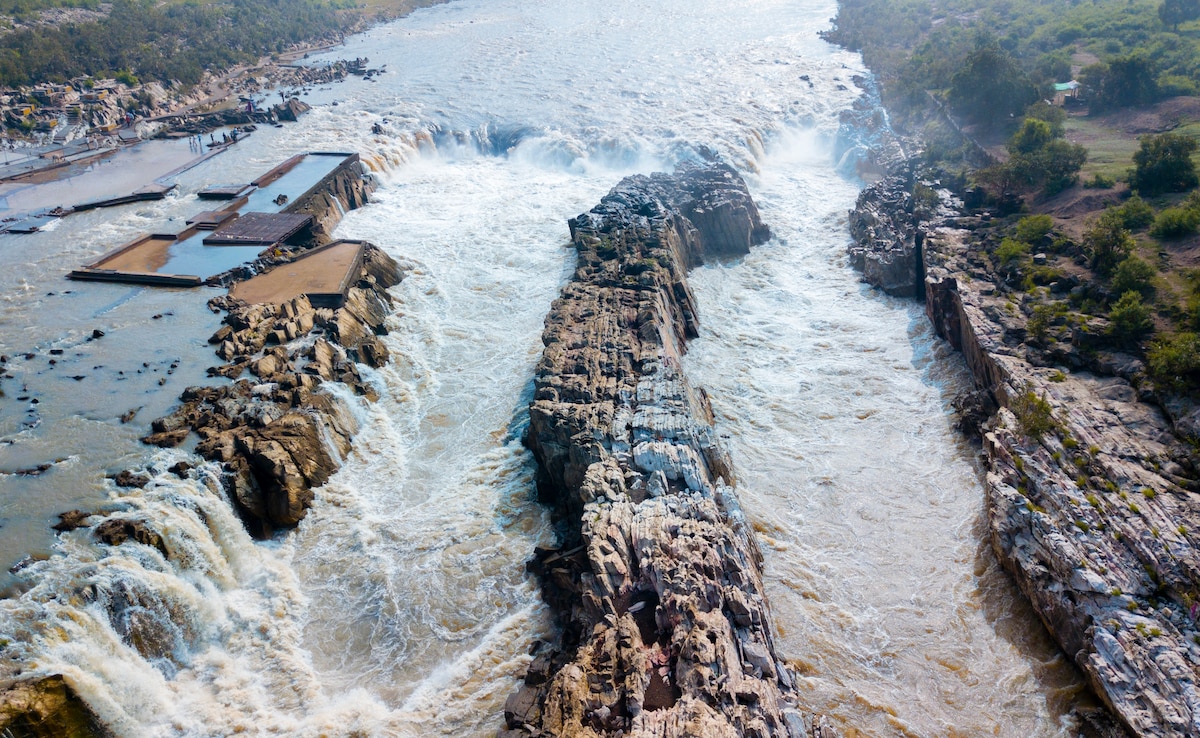
The mist isn't just scenic—it's physics in action. The Narmada flows wide upstream but encounters a narrow gorge barely 18 metres wide at Bhedaghat. Forced through this tight passage, the river picks up incredible speed. When this fast-moving water suddenly plunges 30 metres onto hard marble rocks below, the impact breaks it into millions of tiny droplets that hang suspended in the air, creating a thick cloud of mist. From a distance, especially on sunny days, this mist looks exactly like smoke rising from the river.
The mist is thickest during and after monsoon (July-October) when the Narmada is swollen with rainwater. In winter and summer (November-June), water flow is less, the mist is gentler, but views are clearer.
How to Get There
Location: Bhedaghat village, 25 km from Jabalpur city (45 minutes by road)
- By Air: Jabalpur's Dumna Airport has direct flights from Delhi, Mumbai, Indore, Hyderabad. From airport, hire taxi (₹800-1,200).
- By Train: Jabalpur Junction is well connected. From station, take taxi (₹500-800), auto (₹400-600), or city bus (₹30-50).
- By Road: Well connected via NH44 and NH30. From Nagpur (260 km), Bhopal (330 km), Indore (530 km).
Best Time to Visit
- October-March (Winter): Pleasant weather (15-25°C), clear water, moderate mist. Peak tourist season.
- July-September (Monsoon): Falls at most powerful, thick mist, deafening roar. Boat rides sometimes unavailable. Most dramatic experience.
- April-June (Summer): Hot (35-45°C) but less crowded. Gentler water flow.
Best single time: Late October-early November. Strong water flow, cool weather, fresh greenery.
What to Do at Dhuandhar Falls
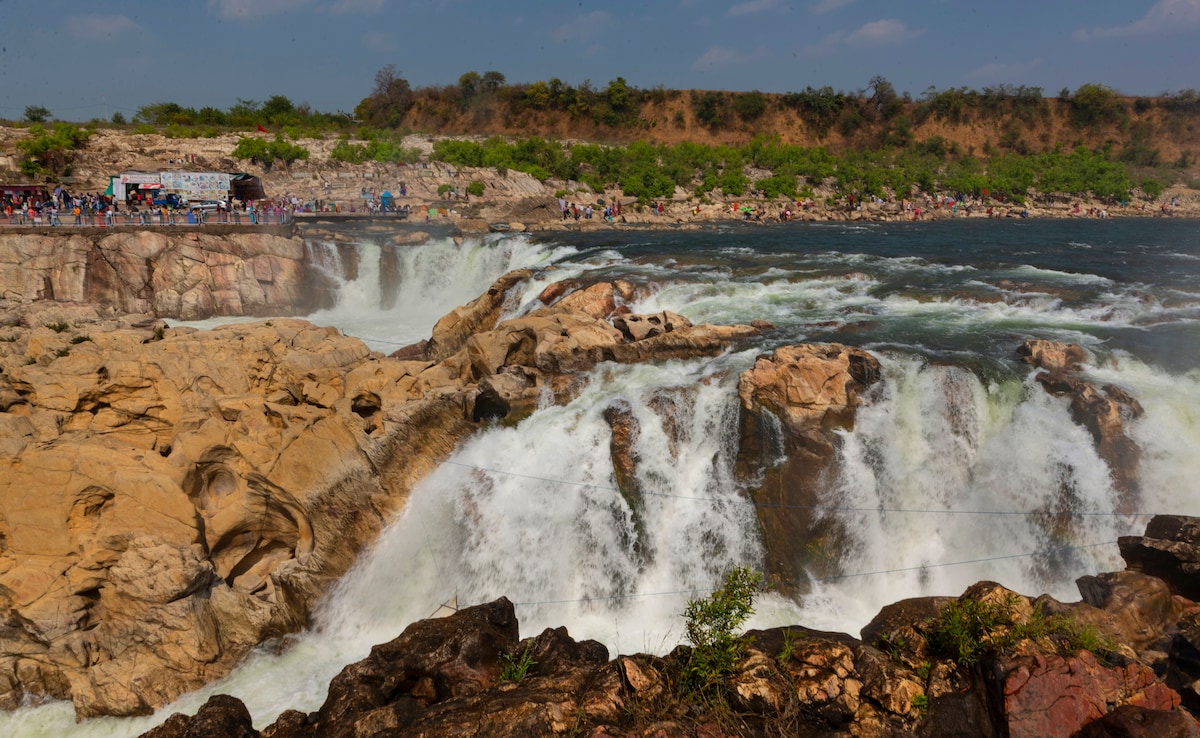
1. View from Multiple Platforms
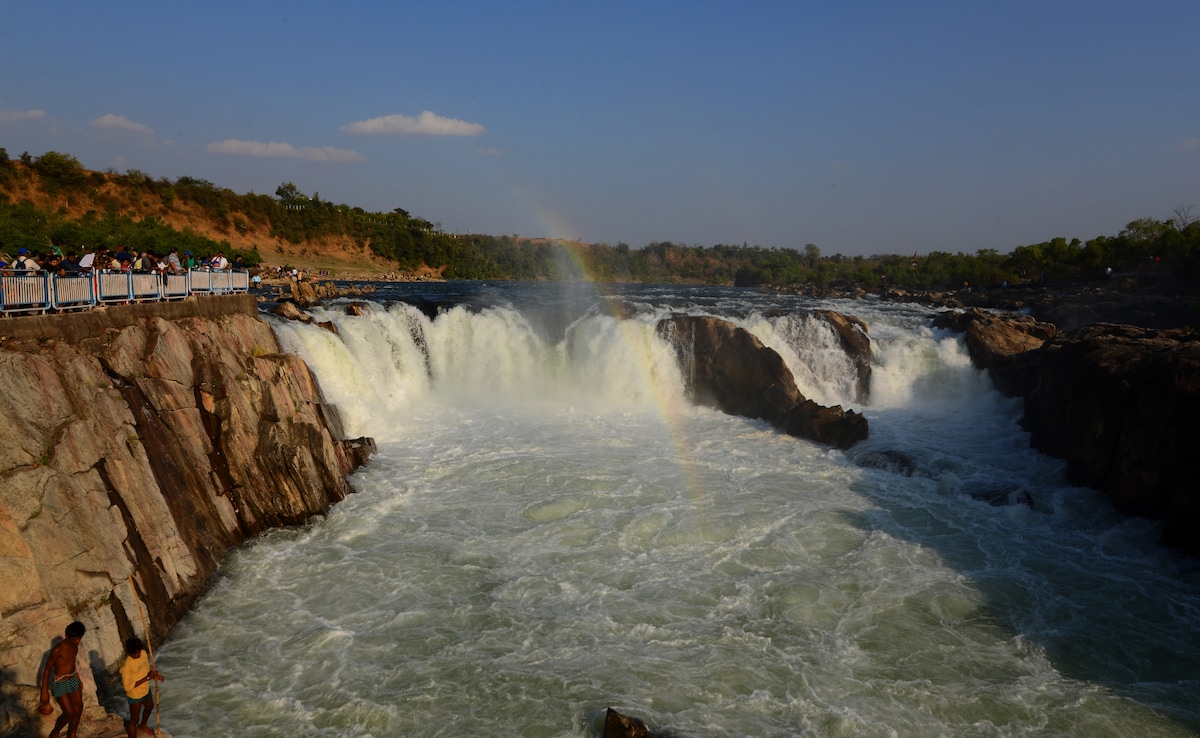
East Bank Platform: Main viewing area right in front of falls. Mist hits your face, roar is loud. Feel the power. Stay behind railings, the current is deadly.
West Bank Platform: Accessed via cable car. Side angle view of falls, panoramic views of marble gorge. Less crowded.
2. Take the Cable Car (Ropeway)
Short 2-3 minute ride crossing over the Narmada and falls. Aerial views of waterfall, marble rocks, entire landscape. Thrilling experience.
- Timings: 8 am-6 pm
- Cost: ₹150-200 (two-way)
3. Boat Ride Through Marble Rocks
The highlight. Boats take you through the Marble Rocks canyon, 3 km upstream from falls. Narmada flows calmly here, flanked by 30-metre-high white and grey marble cliffs. Traditional wooden boats rowed by local boatmen who tell stories and sing folk songs. Marble rocks glow golden-pink at sunset, silvery-white during full moon.
- Starting Point: Panchvati Ghat (2 km from falls)
- Duration: 20-30 minutes
- Cost: ₹100-150 shared, ₹800-1,200 private
- Timings: 7 am-7 pm (closed Mondays)
- Best Time: Early morning or late afternoon
Note: During heavy monsoon, boat rides may be suspended.
4. Visit Chausath Yogini Temple
10th-century circular temple on hilltop overlooking Narmada and marble rocks. Its circular design believed to have inspired India's Parliament House. Views from top show entire marble gorge, Narmada, and Dhuandhar Falls. About 150 steps up from boat ghat.
5. Shop for Marble Items
Bhedaghat is famous for marble handicrafts. Shops sell marble statues, decorative items, bowls, all carved from local marble. Bargaining expected.
6. Attend Narmada Aarti
During Narmada Mahotsav (February-March) and Sharad Purnima, beautiful aarti is performed at Panchvati Ghat. Hundreds of diyas floated on river, traditional songs, spiritual atmosphere.
Also Read: Dubai Vs Abu Dhabi: Which City You Should Visit First In UAE
What Else to Explore Nearby
Balancing Rock (10 km): Massive rock balancing on smaller base, defying gravity. Quick 15-minute stop.
Madan Mahal Fort (15 km): 11th-century hilltop fort with panoramic views of Jabalpur.
Bargi Dam (40 km): Pleasant spot for picnics, boating, sunset views.
Practical Information
Entry Fee: No entry to view falls from public platforms. You'll pay for:
- Parking: ₹20-50
- Cable car: ₹150-200
- Boat ride: ₹100-150
- VIP car access: ₹100-200
Timings: Sunrise to sunset (roughly 6 am-6 pm). Go early morning to avoid crowds.
What to Wear: Comfortable walking shoes, quick-dry clothes in monsoon, sunglasses and hat in summer.
What to Carry: Water bottle, light waterproof jacket (you'll get wet), camera, sunscreen, snacks.
Safety:
- Stay behind railings. Current is deadly.
- Don't get too close to water's edge.
- Watch children constantly.
- Surfaces slippery during monsoon.
- Listen to boat guide's instructions.
Where to Stay:
- MPT Marble Rocks (Bhedaghat): Best option, right by Narmada with marble rock views. ₹2,500-4,000/night.
- Jabalpur City: Hotels ranging from budget (₹800-1,500) to mid-range (₹2,500-5,000).
Food: Bhedaghat has small local eateries. For better dining, head to Jabalpur.
Tips for First-Time Visitors
- Combine with Boat Ride: Don't just see falls and leave. Boat ride is equally spectacular.
- Go Early: Arrive by 8-9 am to beat crowds and heat. Better light for photography.
- Sharad Purnima Visit: Time visit to October-November full moon night to witness marble rocks in moonlight.
- Avoid Weekends: Very crowded. Weekdays more peaceful.
- Carry Cash: Many vendors don't accept digital payments.
- Photography: Mist makes dramatic photos but wets cameras. Carry protective cover.
- Allow 3-4 Hours: To experience falls, cable car, boat ride, and temple properly.
Also Read: Videos Of 'Frozen' Niagara Falls Go Viral. How To Experience This Winter Phenomenon
India's “Fall Of Mist”
Dhuandhar Falls isn't just about seeing a waterfall. It's about experiencing the Narmada's power and beauty in a landscape carved by nature over millions of years. It's about feeling the mist on your face and understanding why ancient Indians considered this river sacred. It's about floating through marble canyons that glow in the setting sun and climbing temple steps for views that stretch to the horizon. The combination of the thundering waterfall, pristine marble rocks, calm boat ride, and cultural significance of the Narmada creates an experience that's uniquely central Indian. Whether you're a waterfall enthusiast, photographer, geology nerd, or just someone looking for a weekend getaway different from usual hill stations and beaches, Dhuandhar delivers. So plan that trip to Jabalpur. Stand on those viewing platforms. Let the mist soak you. Take that boat ride. Watch sunset turn marble cliffs golden. And understand why this waterfall has been enchanting visitors for centuries. Because some places are worth the journey. And Dhuandhar Falls, the magnificent "fall of the mist," is definitely one of them.
Track Latest News Live on NDTV.com and get news updates from India and around the world


