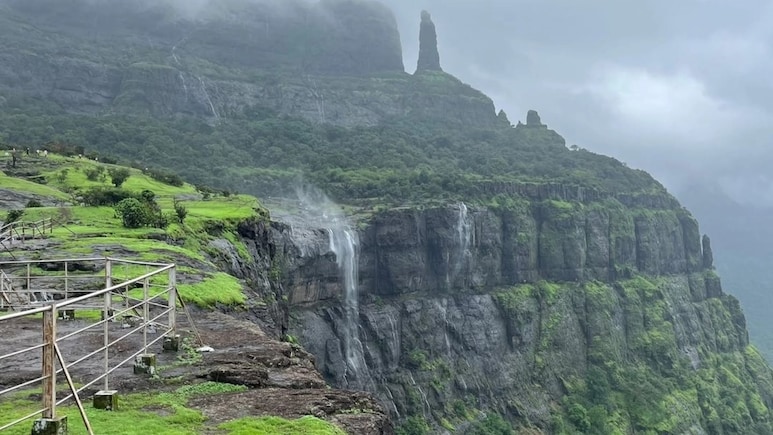
India's monsoon brings no shortage of dramatic sights, from mist-covered hills to roaring waterfalls. But at one spot in Maharashtra, visitors may come across something that looks impossible at first glance. Instead of plunging down a cliff, the waterfall appears to rise into the air. The explanation, however, lies not in magic, but in nature itself.
Also Read: Which Is India's Highest Commercial Airport?
Naneghat Is Home To A 'Reverse Waterfall'
The phenomenon can be seen at Naneghat, an ancient mountain pass near Junnar in Maharashtra's Pune district.
During peak monsoon, visitors may witness what's popularly known as a reverse waterfall. The sight is most commonly seen when periods of heavy rain are accompanied by powerful winds, making it one of the most intriguing monsoon experiences in the Western Ghats.
Why Does The Water Appear To Flow Upwards?
Despite its unusual appearance, there is a simple scientific explanation behind the phenomenon.
Strong winds move through the mountain pass during the monsoon. When these winds strike the falling water with enough force, they push much of it back into the air and break it into fine spray. From a distance, this creates the illusion that the waterfall is flowing upward.
In reality, the water is not moving uphill. Gravity continues to pull it downward, but powerful gusts redirect the falling stream before it reaches the ground.
Monsoon Transforms Naneghat Into A Scenic Getaway
The reverse waterfall may be the main attraction, but it is only one part of Naneghat's monsoon charm. During the rainy season, the surrounding Western Ghats are covered in lush greenery, clouds drift across the hills and several seasonal waterfalls appear along the rocky slopes. The landscape becomes especially popular among trekkers and photographers looking to experience Maharashtra's dramatic monsoon scenery.
Also Read: One Of The Biggest Film Studios In The World Is 'Haunted', And It's In Hyderabad
A Mountain Pass With More Than 2,000 Years Of History
Naneghat is not just a natural attraction. Long before it became a trekking destination, it served as an important trade route connecting the Konkan coast with the Deccan Plateau.
The pass is believed to date back more than 2,000 years and is associated with the Satavahana period. Ancient rock-cut caves and inscriptions found here offer a glimpse into the region's historical significance and its role in trade networks of the past.
Planning A Visit? Keep These Things In Mind
- The reverse waterfall is weather-dependent and cannot be guaranteed.
- The phenomenon is most commonly seen during peak monsoon conditions, when strong winds accompany heavy rainfall.
- Trekking trails can become slippery during the rainy season, so proper footwear is recommended.
- Visitors should avoid standing near cliff edges and follow local safety guidelines.
For travellers looking to experience something a little different during the monsoon, Naneghat offers a rare opportunity to witness a waterfall that appears to defy gravity, set against the dramatic backdrop of the Western Ghats.
Track Latest News Live on NDTV.com and get news updates from India and around the world


