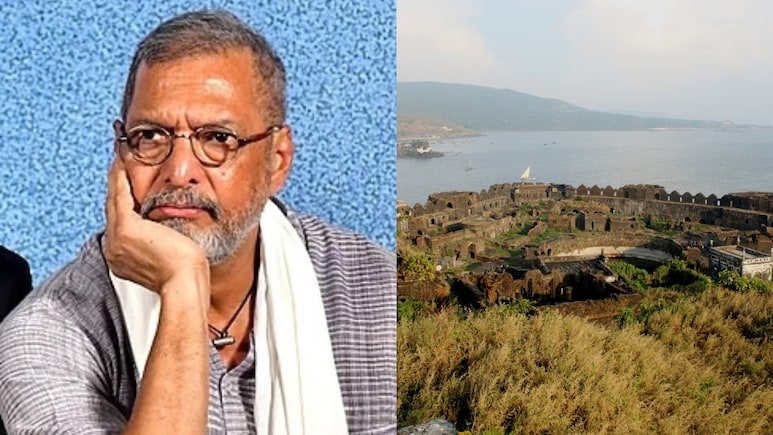
Nana Patekar once told Amitabh Bachchan, "I come from a village, and I will always remain a village man. That's where I feel most at home."
The veteran actor, who died at 75 after suffering a cardiac arrest at his home in Goa, was born in Murud-Janjira in Maharashtra's Raigad district. And his birthplace is home to one of the country's most remarkable sea forts, the Murud-Janjira Fort.
Built on an island in the Arabian Sea, the fort has stood through repeated attempts to capture it. Today, you can take a short boat ride from Rajapuri to reach there.
The Sea Fort Near Nana Patekar's Birthplace
Murud is a coastal town about 150 km from Mumbai. It is known for its beach, the Palace of the Nawab and, most famously, the Murud-Janjira Fort. The fort is not on the mainland. It is located on an oval-shaped island near the beach, surrounded by the Arabian Sea.
Murud-Janjira is the local name for the fort and the area around it. The word "Janjira" comes from the Arabic word "jazira", meaning island.
The stone fortification was built in 1567 AD by Malik Ambar. It later became a stronghold of the Siddis and withstood repeated attempts by the Marathas, Mughals, Portuguese and the English East India Company to capture it. Despite the attacks, the fort remained undefeated.
Also Read: Video: This Railway Station In Assam's Only Hill Town Looks Like A Hidden Paradise
One of the most interesting things about Janjira is its main entrance. It faces Rajapuri on the mainland, but it is difficult to spot from a distance. The entrance becomes visible only when a boat comes close to the fort. There is also a smaller gate facing the open sea, known as the Darya Darwaza.
The Fort Had Everything Its Residents Needed
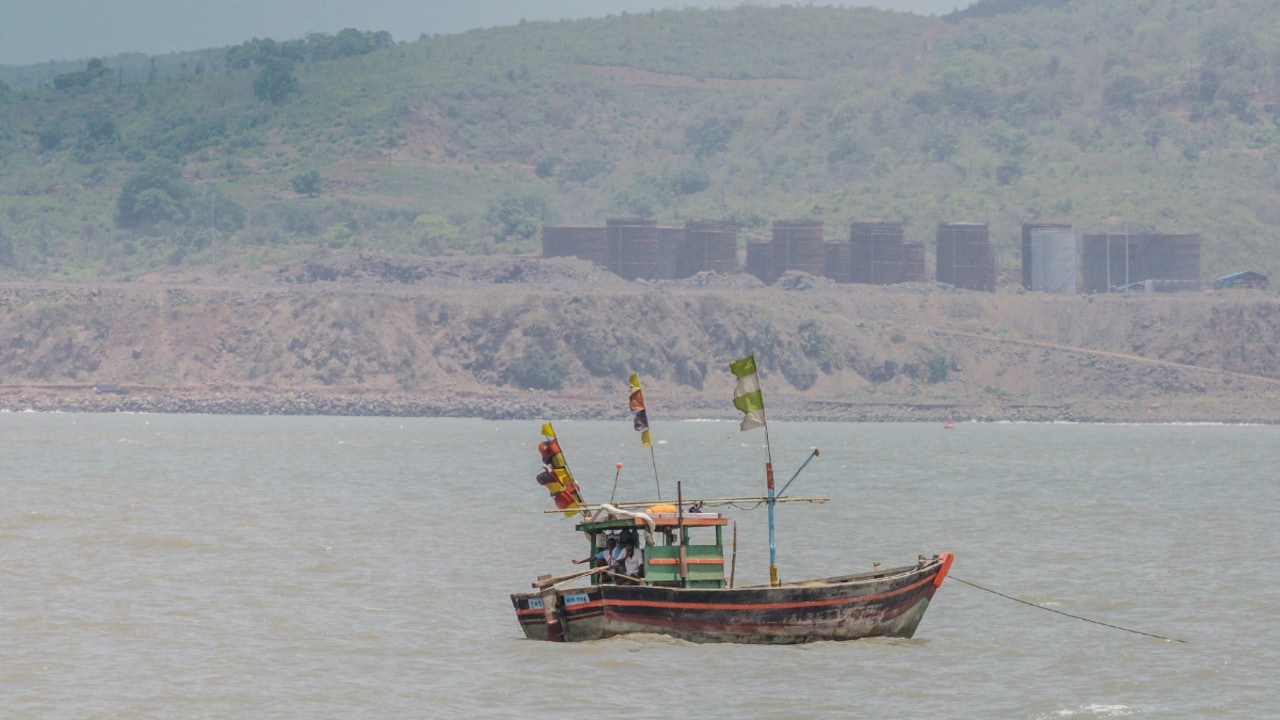
Photo: Wikimedia Commons
Janjira wasn't just important to the military. At its peak, it was a living fort with residential quarters, barracks, a mosque and water sources. Even though it was surrounded by the Arabian Sea, two deep freshwater ponds were also built inside the fort.
Now, much of the fort is in ruins. But these remains still give visitors a sense of the life that once existed here.
The fort's massive cannons are certainly a highlight. Three of them are particularly famous, Kalaal Baangadi, Chavri and Landa Kasam. Kalaal Baangadi weighs more than 22 tonnes and is one of the largest cannons at the fort.
At one point, it is believed, the fort had hundreds of cannons. They were positioned along the walls and played an important role in protecting Janjira from attacks coming by sea.
From Rajapuri, a small coastal village near Murud, the fort is just a 20-minute boat ride away, which definitely adds to the fun. Once you're there, the views of the Arabian Sea from all sides look spectacular.
Track Latest News Live on NDTV.com and get news updates from India and around the world


