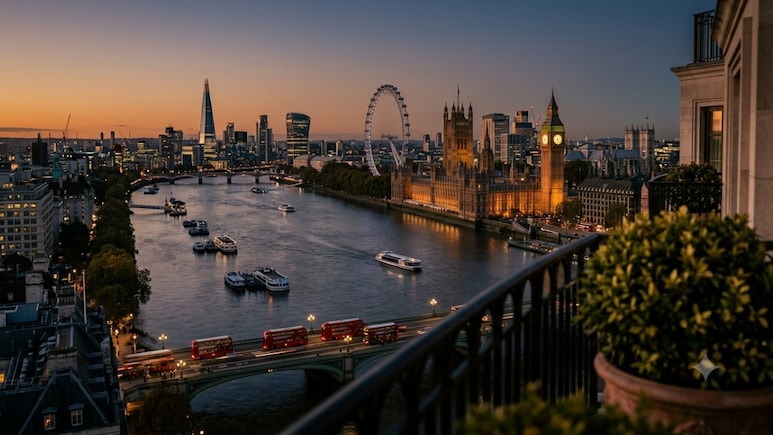
London is a city that refuses to fit neatly into a holiday itinerary. You can spend the morning around Buckingham Palace, have lunch in Chinatown, wander through a market in the afternoon and end the evening over cocktails in Soho. Or forget the landmarks altogether and simply follow whichever street looks interesting. And that's the appeal. The famous London is certainly worth seeing - Big Ben, the red buses, Westminster Abbey, the Thames - but the city becomes far more interesting once you look beyond the postcard version.
There are leafy neighbourhoods to wander through, museums that can easily swallow an afternoon, centuries-old pubs, excellent restaurants and enough shops to make an empty suitcase seem like a very short-sighted decision.
Whether this is your first visit or you're returning for another taste of the capital, here's how to make the most of London.
London Travel Guide At A Glance
- Country: United Kingdom
- Capital: London
- Currency: British Pound Sterling (£)
- Language: English
- Time zone: GMT in winter; BST in summer
- Best time to visit: April to June and September to October
- Ideal duration: 4 to 6 days
- Plug type: Type G
- Getting around: Tube, buses, Elizabeth line, Overground, trains, taxis and walking
- Major airports: Heathrow, Gatwick, Stansted, Luton, London City and Southend
Best Time To Visit London
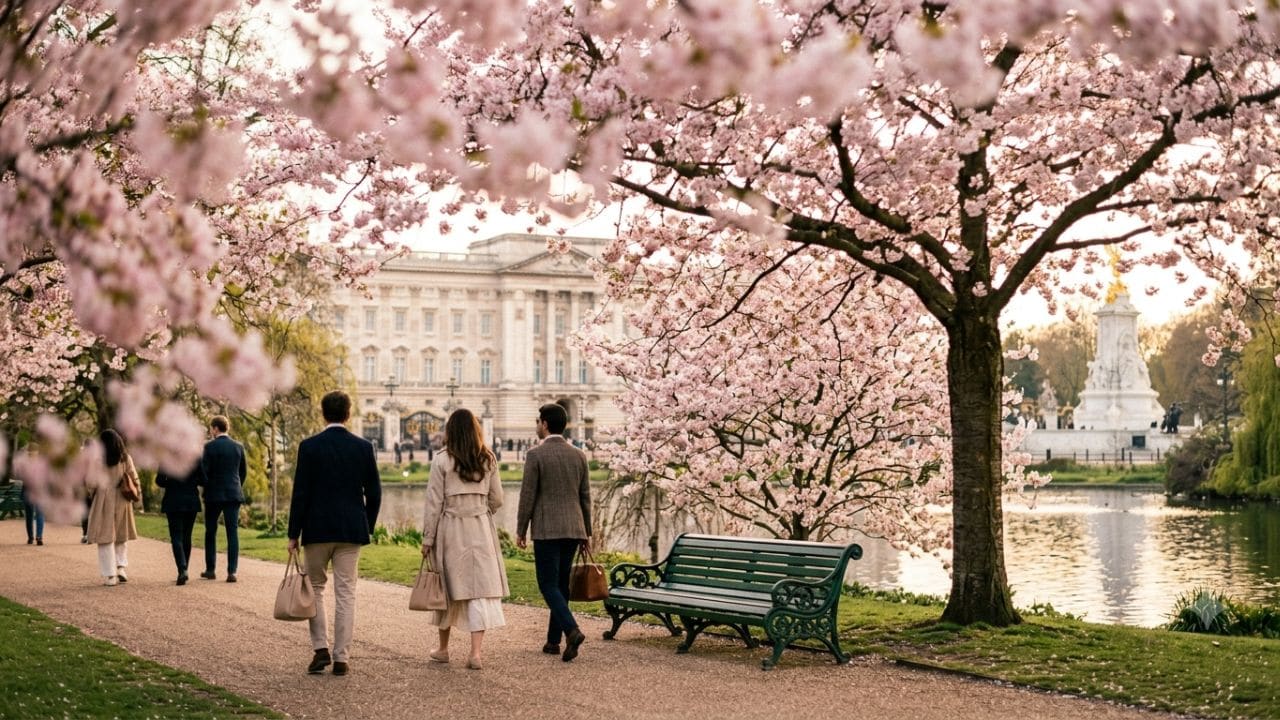
London works in almost every season, although each brings a slightly different version of the city.
April to June brings longer days, spring colour and pleasant sightseeing weather. July and August are the busiest months, but the long daylight hours and packed events calendar make summer an attractive time to visit.
September and October are particularly good for a city break, with cooler temperatures and fewer peak-season crowds.
Winter is colder, but December brings Christmas lights, decorated department stores and plenty of festive atmosphere. January and February are quieter, provided you don't mind the chill.
Whatever the season, pack layers. London's weather has never been particularly interested in sticking to the plan.
Places To Visit In London
1. Westminster And St James's
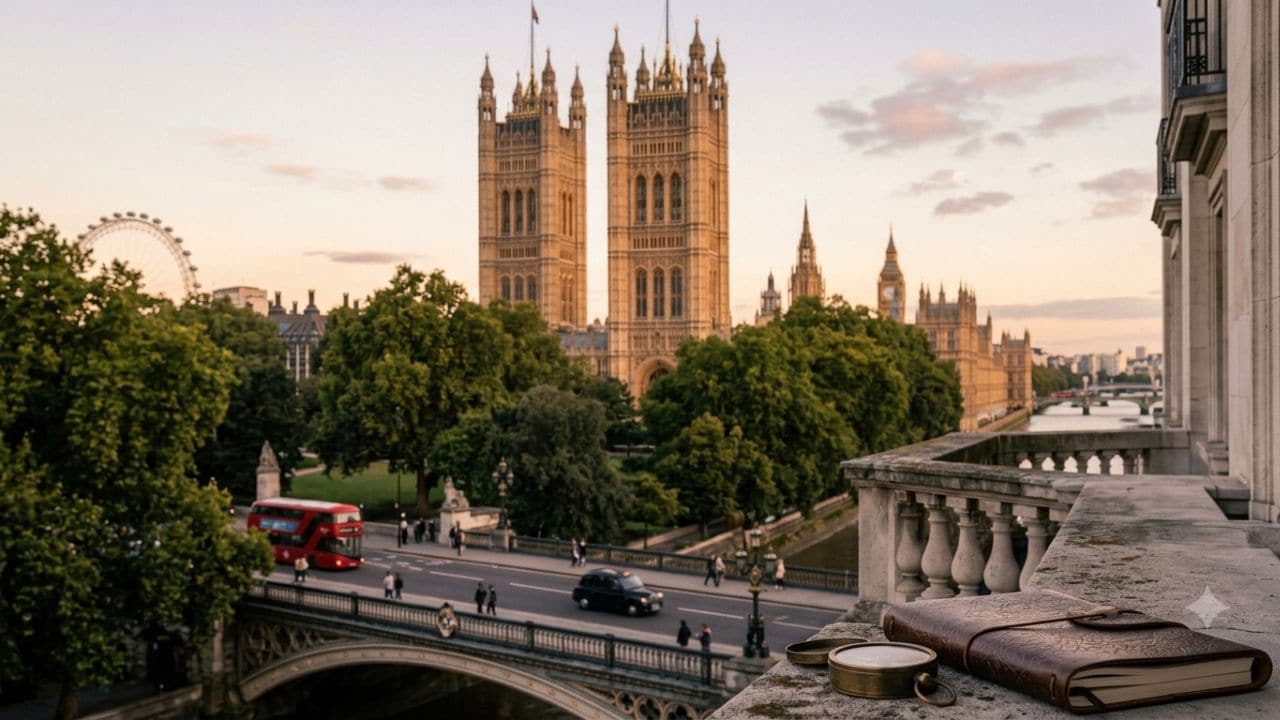
For a first visit, start with the classics. Big Ben, the Houses of Parliament and Westminster Abbey are all here, with Buckingham Palace, St James's Park and Trafalgar Square within easy reach. Walk between the sights rather than simply ticking them off. This is one part of London where the architecture is as much a draw as the landmarks themselves.
2. Tower Of London And Tower Bridge
The Tower of London packs almost a thousand years of royal and political history behind its walls. Nearby Tower Bridge is one of the city's most recognisable sights. Visit the Tower first, then walk along the Thames towards London Bridge and Borough Market.
3. Covent Garden And The West End
Covent Garden has all the ingredients of a classic London afternoon: the piazza, boutiques, restaurants and street performers. The West End's theatres are right on the doorstep. Stay into the evening and the neighbourhood shifts effortlessly from sightseeing to dinner and theatre.
4. Soho
Soho is lively, central and gloriously difficult to categorise. Restaurants, bars, theatres, independent shops and a long LGBTQ+ history all come together here. It's one of the neighbourhoods best enjoyed without an over-planned schedule.
5. South Bank
The South Bank is made for walking. Follow the Thames past the London Eye, Tate Modern and Shakespeare's Globe, with St Paul's and the City rising across the river. Borough Market is close by, making this an easy area to combine with lunch.
6. Notting Hill
Notting Hill's pastel houses may be its calling card, but Portobello Road, independent shops, cafés and restaurants give the neighbourhood plenty of substance beyond the famous film. Take your time here. The quieter streets are often the most charming.
7. Camden
Camden remains one of London's more unconventional neighbourhoods, with markets filled with vintage clothing, independent labels and street food. Pair it with a walk along Regent's Canal or through Regent's Park.
8. Shoreditch And East London
Shoreditch brings together street art, design shops, restaurants, galleries and bars, giving visitors a distinctly contemporary London. It is particularly worth a look once you've had your fill of the traditional sights.
9. Kensington And South Kensington
Three major museums - the V&A, Natural History Museum and Science Museum - make South Kensington an obvious stop for culture lovers and families. The elegant streets, cafés and nearby Hyde Park are reason enough to stay a little longer.
10. Greenwich
Greenwich feels removed from central London without actually being far away. The Royal Observatory, Greenwich Park, Cutty Sark and riverside make it an excellent half-day outing, with one of the city's best skyline views from the park.
Things To Do In London
1. See The Landmarks
Big Ben, Buckingham Palace, Westminster Abbey, Tower Bridge and St Paul's Cathedral may be on every first-timer's list, but they're classics for a reason.
2. Visit A Museum
Choose according to your interests: the British Museum for history, the V&A for art and design, the Natural History Museum and Science Museum for families, and Tate Modern for contemporary art. Don't try to conquer them all. London will still be here tomorrow.
3. Walk Along The Thames
The river is one of the best ways to see London. Walk between Westminster and South Bank, cross Millennium Bridge or continue towards Tower Bridge.
4. Ride The London Eye
It is touristy, but the views make a convincing case. Sunset is particularly lovely when the city begins to light up below.
5. Catch A West End Show
A London evening need not end with dinner. Book a musical, play or comedy show, or look for same-day tickets if you're flexible.
6. Ride A Double-Decker Bus
Take a seat upstairs by the window and let the city pass by. It's sightseeing with a ticket to somewhere.
7. Explore A Market
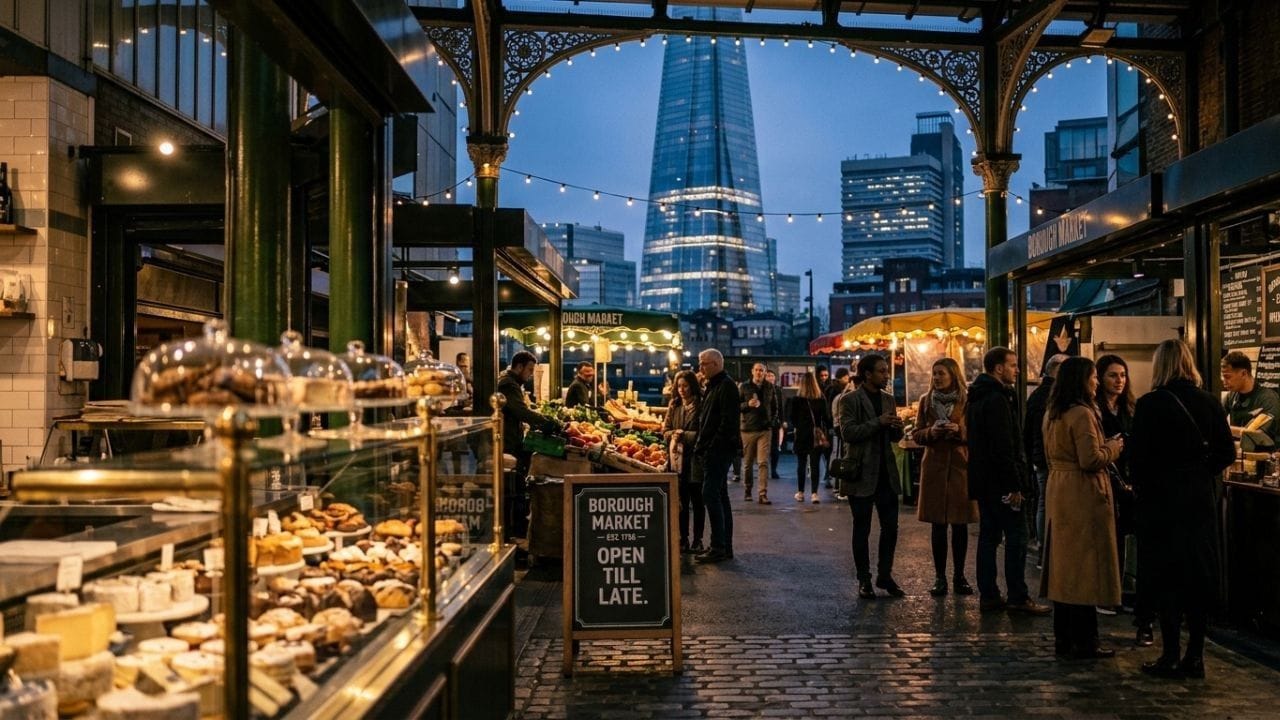
Borough Market is a favourite for food, while Camden, Portobello Road and Spitalfields are better for browsing, vintage finds and a little people-watching.
8. Spend Time In A Royal Park
St James's Park is ideal after Westminster, Regent's Park works well with Camden, while Greenwich Park offers beautiful city views. Hyde Park remains the grand classic.
9. Visit A Palace
Buckingham Palace is the obvious royal landmark, while Kensington Palace offers another glimpse into Britain's royal history and an attractive setting beside Kensington Gardens.
10. Watch A Football Match
For sports fans, a London football match is an experience in itself. Check the fixture calendar before your trip and book ahead where possible.
11. Experience London After Dark
Soho is the classic choice for restaurants, bars and nightlife. Shoreditch and Camden offer a younger, more alternative scene, while Mayfair does cocktails and late evenings with considerably more polish.
Where To Eat In London
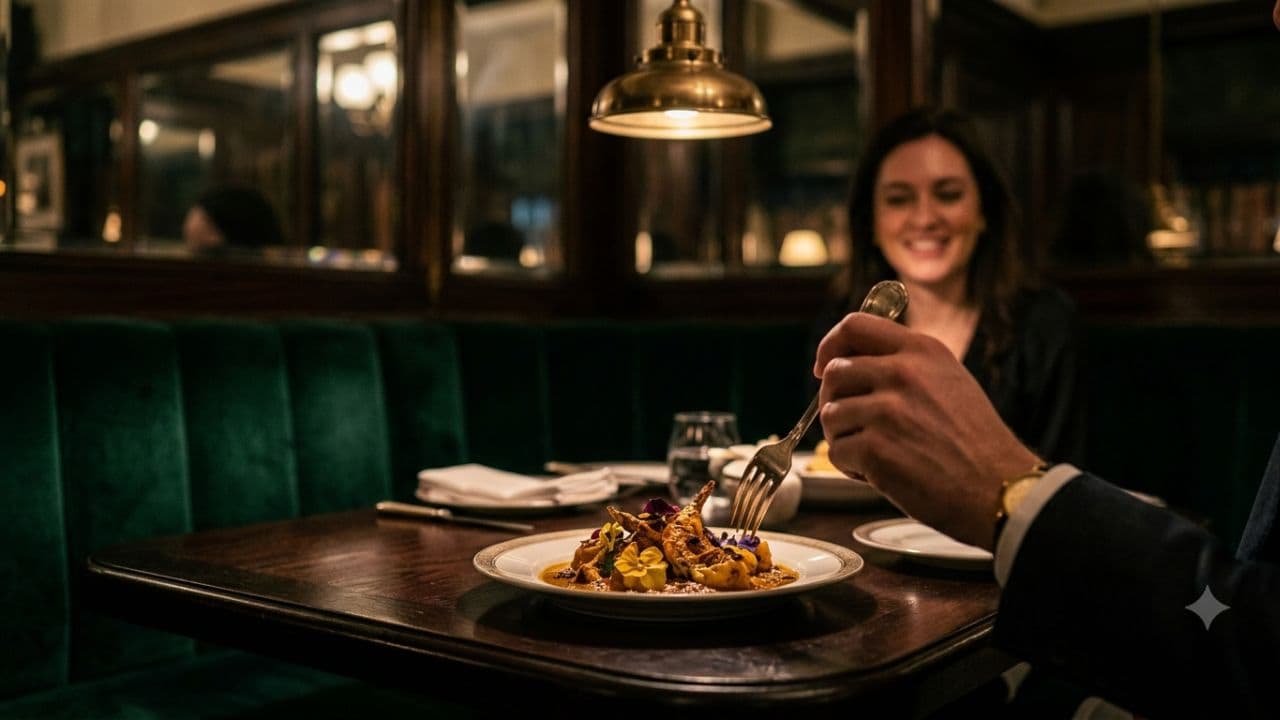
London's food scene is one of its great strengths. British classics sit comfortably alongside Indian, Middle Eastern, Japanese, Chinese, Korean, Caribbean and African cuisines.
You could spend an entire trip eating your way through the city. A more sensible approach is to choose a few restaurants that fit naturally into your sightseeing plans.
Modern British
- The Ledbury, Notting Hill: Refined modern British cooking with a strong seasonal focus.
- St John, Clerkenwell: A London institution known for straightforward British cooking and nose-to-tail dining.
- Rules, Covent Garden: London's oldest restaurant, with a menu rooted in traditional British cooking and game.
Indian
- Gymkhana, Mayfair: Sophisticated Indian cooking in a setting inspired by India's old club culture; it holds two Michelin stars.
- Dishoom, Covent Garden: Bombay-inspired food and atmosphere, particularly popular for breakfast and relaxed meals.
- Gunpowder, Soho: Contemporary Indian small plates drawing on flavours from across the country.
- Kricket, Soho: Modern British-Indian cooking in a lively, casual setting.
- Ambassadors Clubhouse, Mayfair: Contemporary Indian dining with a playful nod to the club culture of the subcontinent.
Classic London
- The Wolseley, Piccadilly: A grand European-style café that's particularly good for breakfast, lunch or afternoon tea.
- The Ivy, West End: A long-standing London favourite with an elegant dining room and broad menu.
- Markets And Casual Eating
- Borough Market: The essential stop for food lovers, with everything from British produce and cheese to international street food and bakeries.
- Mercato Metropolitano: A large, lively food hall with plenty of casual choices.
- Camden Market: Come for street food alongside the area's alternative fashion and market culture.
What To Eat In London
- Fish and chips: The London classic - crisp battered fish, chunky chips and, ideally, plenty of salt and malt vinegar.
- Sunday roast: Roast meat, potatoes, vegetables, gravy and a Yorkshire pudding, usually best enjoyed in a traditional pub.
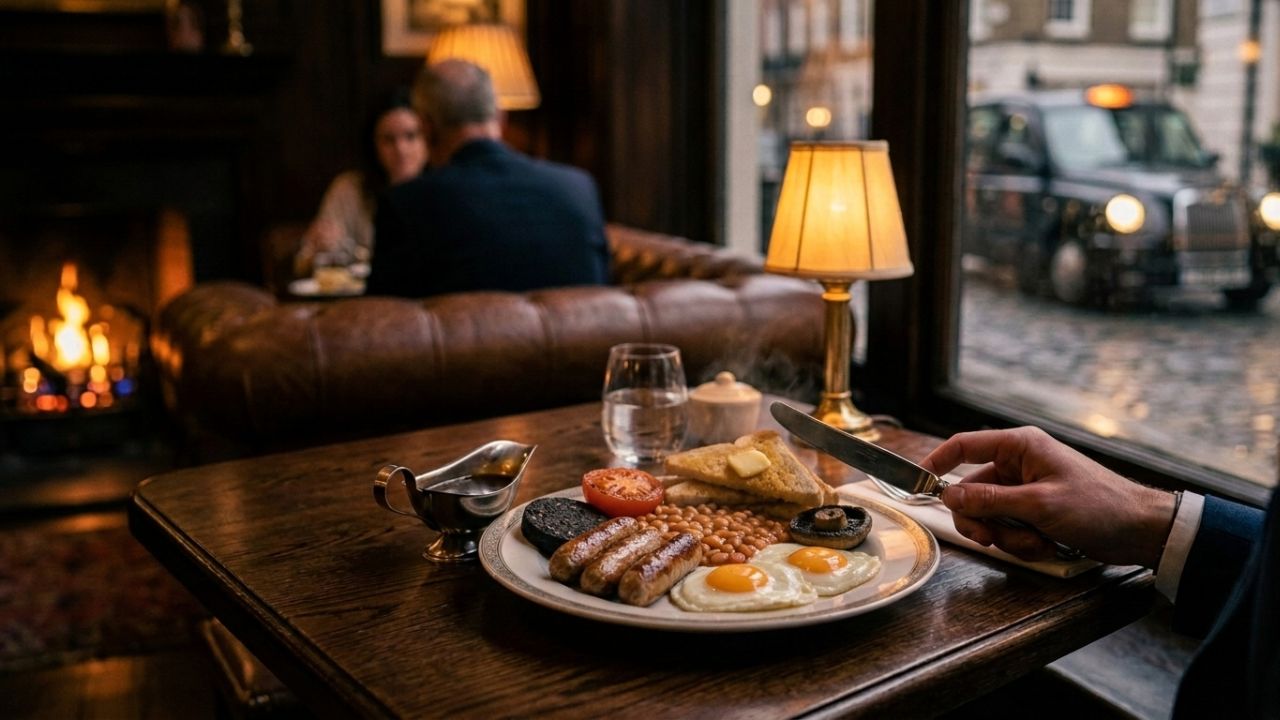
- Full English breakfast: Eggs, bacon, sausages, baked beans, mushrooms, tomatoes and toast - not exactly a light start, but very British.
- Pie and mash: A London comfort-food staple, traditionally served with gravy or parsley liquor.
- Scotch egg: A boiled egg wrapped in seasoned sausage meat and breadcrumbs, often found on pub menus.
- Afternoon tea: Finger sandwiches, scones with clotted cream and jam, cakes and plenty of tea - more of an occasion than a quick snack.
- Sticky toffee pudding: A warm date sponge covered in toffee sauce, usually served with ice cream or custard.
Where To Stay In London
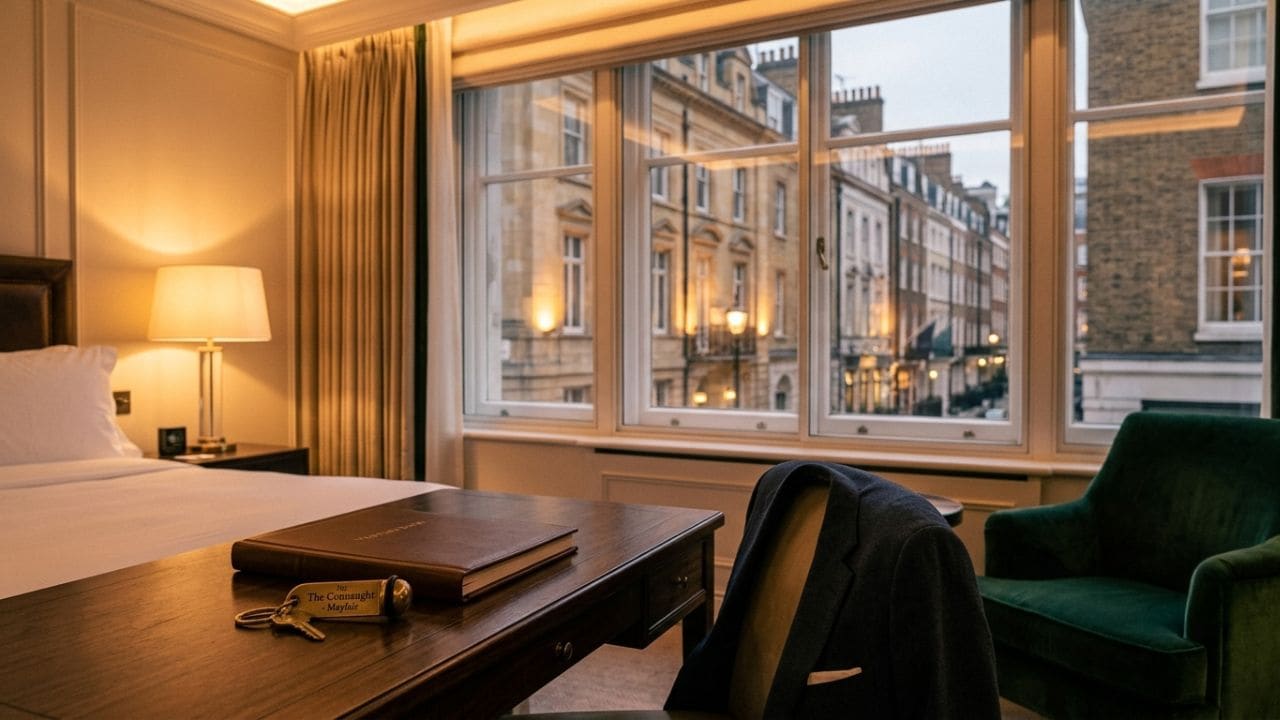
The question isn't simply "Which hotel is best?" It's "Which London do you want outside your hotel door?"
That is often the more useful way to choose. Mayfair gives you polished luxury and designer shopping; Soho puts restaurants and nightlife downstairs; South Kensington is convenient for museums, while Shoreditch offers a more contemporary side of the city.
Luxury Hotels
- The Savoy: A London classic on the Strand, known for its grand interiors, history and impeccable service.
- Claridge's: Mayfair glamour at its most polished, with Art Deco interiors and a famously old-school sense of hospitality.
- The Connaught: Elegant and discreet, with a quieter take on Mayfair luxury.
- The Ritz London: For traditional London grandeur, the Piccadilly landmark remains hard to beat.
- The Dorchester: A long-standing Mayfair institution with classic interiors and highly polished service.
- The Peninsula London: One of the newer luxury addresses, bringing contemporary style to a prime Knightsbridge location.
- Raffles London At The OWO: Housed in the historic Old War Office in Whitehall, this is one of London's more distinctive recent luxury hotels.
Boutique And Design Hotels
- The Soho Hotel: Colourful, stylish and perfectly placed for the West End, restaurants and nightlife.
- Ham Yard Hotel: A characterful Firmdale property with playful interiors and a tucked-away courtyard in Soho.
- Broadwick Soho: A contemporary, design-led address with plenty of personality and a central Soho location.
- The Twenty Two: A more intimate Mayfair hotel with a residential, members-club feel.
- The Hoxton, Shoreditch: A lively choice for travellers who want East London's restaurants, bars and creative scene close by.
Mid-Range Hotels
- The Resident Covent Garden: A smart base for first-time visitors, close to theatres, restaurants and public transport.
- CitizenM London: Compact, modern rooms with a strong focus on design and technology.
- The Resident Kensington: A quieter option near South Kensington's museums, restaurants and cafés.
Budget And Value Hotels
London is not an easy city for bargain accommodation, particularly in central areas. The trick is to prioritise transport links over postcode.
- Point A Hotels: Compact, practical rooms in several well-connected locations.
- Premier Inn: Reliable and straightforward, with numerous properties across London.
- Travelodge: Another no-frills option for travellers who mainly need a convenient place to sleep.
A hotel that is slightly farther out but sits beside a Tube station can often make more sense than a cheaper room that leaves you commuting across London every day.
Best Areas To Stay In London
- For first-time visitors: Covent Garden, Soho, Westminster and South Bank
- For luxury: Mayfair and Knightsbridge
- For nightlife: Soho and Shoreditch
- For families: South Kensington and Paddington
- For shopping: Mayfair, Knightsbridge and Oxford Street
- For restaurants: Soho, Covent Garden and Shoreditch
- For a quieter stay: Marylebone and Bloomsbury
Getting Around London
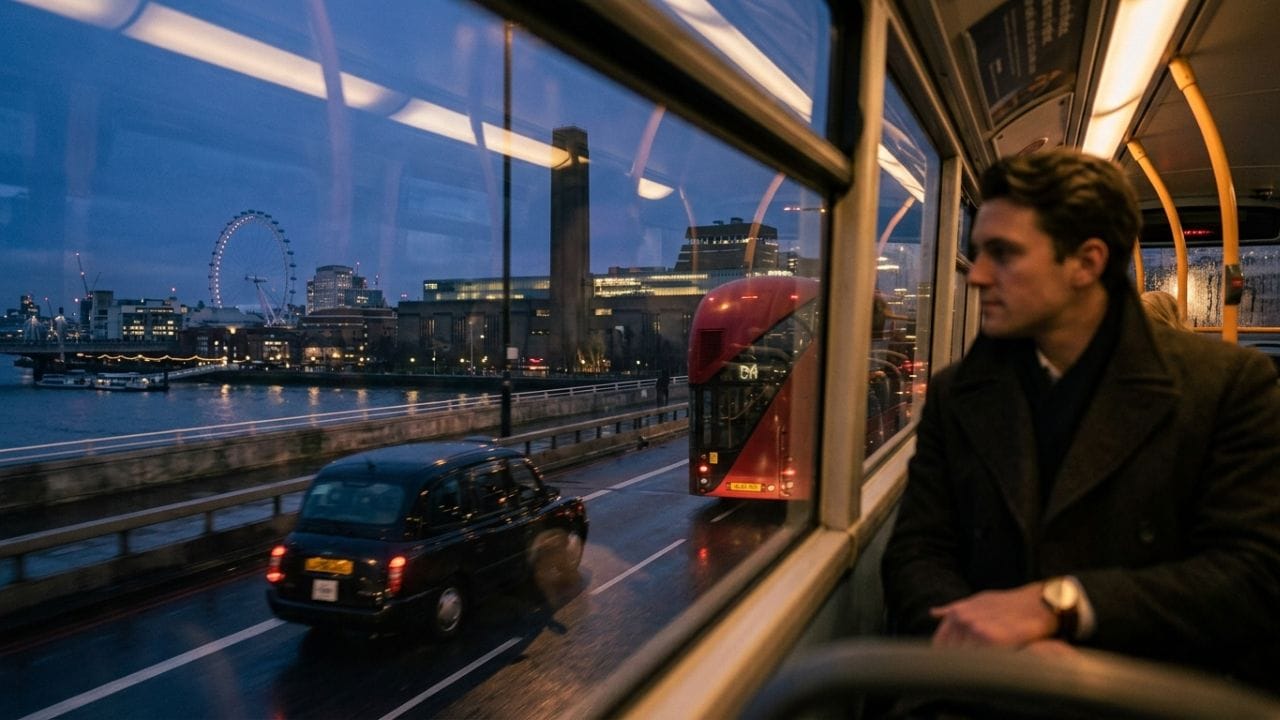
London's public transport network looks complicated on a map and becomes much easier once you've used it.
- The Tube: The Underground is usually the quickest way around central London. Contactless payment is the simplest option for most visitors, with daily and weekly fare caps helping keep costs predictable. Use the same card or device throughout your journeys so the system can recognise your payments correctly.
- Elizabeth Line: The Elizabeth line is particularly useful between Heathrow and central London, with stops including Paddington, Tottenham Court Road and Liverpool Street.
- Buses: London's buses are slower than the Tube but offer something better: a view. If you're not in a hurry, take the upper deck and watch the city go by.
- Walking: Many central attractions are closer than they appear. Walking between them is often the best way to notice the architecture, cafés, shops and small details that don't make it into guidebooks.
Getting From London's Airports To The City
London has six major airports, and the best one depends on where you're staying and which flight works for you.
- Heathrow: The main choice for many long-haul travellers, with Elizabeth line, Piccadilly line and Heathrow Express connections.
- Gatwick: Well connected to central London by rail.
- London City: The most convenient for many central London stays, with DLR connections.
- Stansted: Popular with low-cost airlines, with the Stansted Express running to Liverpool Street.
- Luton: Connected to the rail network via the Luton DART and Luton Airport Parkway.
- Southend: Smaller and farther from central London, but useful for selected routes.
When comparing flights, remember to factor in the journey from the airport. A cheap ticket can become considerably less attractive after a long, expensive transfer.
London Travel Guide For Indian Travellers
Do Indians Need A UK Visa?
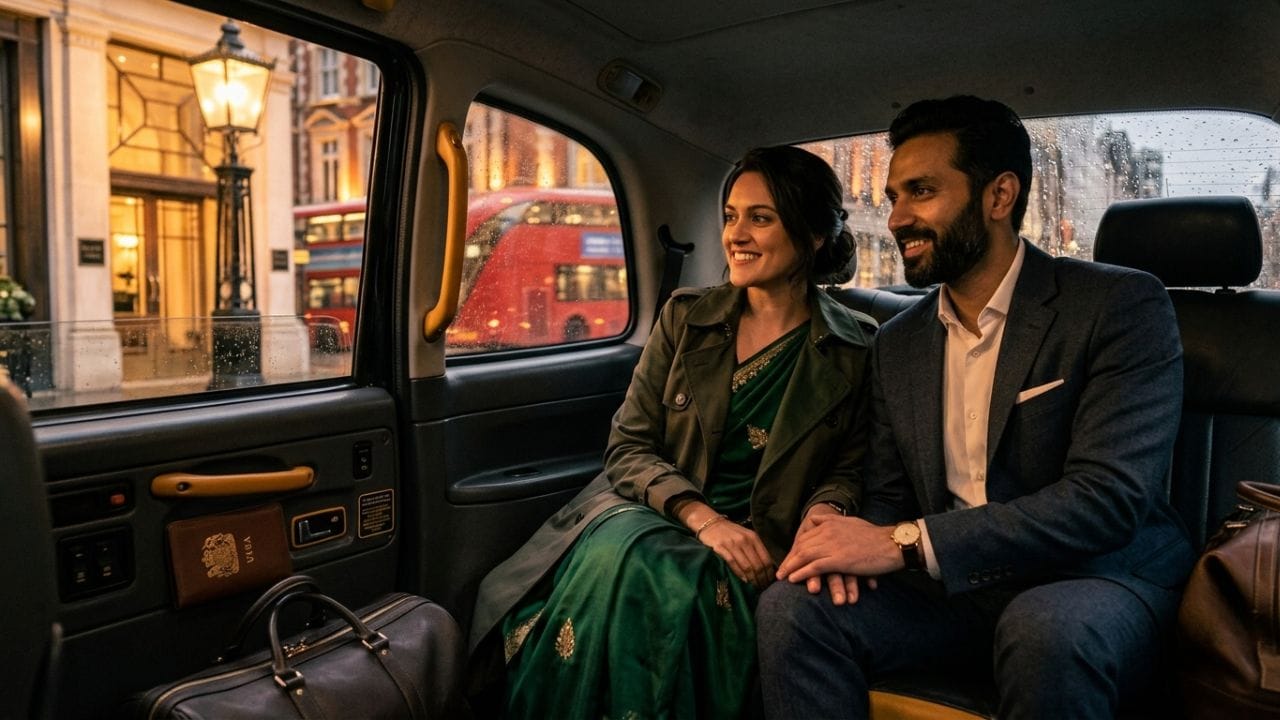
Yes. Indian passport holders currently need a UK visa for tourism.
The Standard Visitor visa is the usual option for holidays and allows eligible visitors to stay for up to six months. Applications are made online and include a biometric appointment at a visa application centre. The current fee for a six-month Standard Visitor visa is £135. Check the latest requirements before applying, as visa rules and fees can change.
What Travellers From Europe Need To Know
The UK has its own immigration system and is outside the Schengen Area. Most EU citizens, other than Irish citizens, currently need an Electronic Travel Authorisation (ETA) for eligible short visits rather than a visitor visa. A Schengen visa does not, by itself, permit entry into the UK.
Travellers From The Americas
US and Canadian passport holders are among those who currently need an ETA for eligible short visits rather than a traditional visitor visa.
Requirements vary by nationality, so travellers should check the current rules before departure.
Money, Cards And Payments
London is almost entirely card-friendly. Contactless cards and mobile payments work across shops, restaurants, cafés and public transport. You don't need to arrive carrying a large amount of cash, although keeping a little on hand is sensible.
If you're travelling from India, check your card's foreign transaction charges and exchange rate before you leave.
Shopping In London
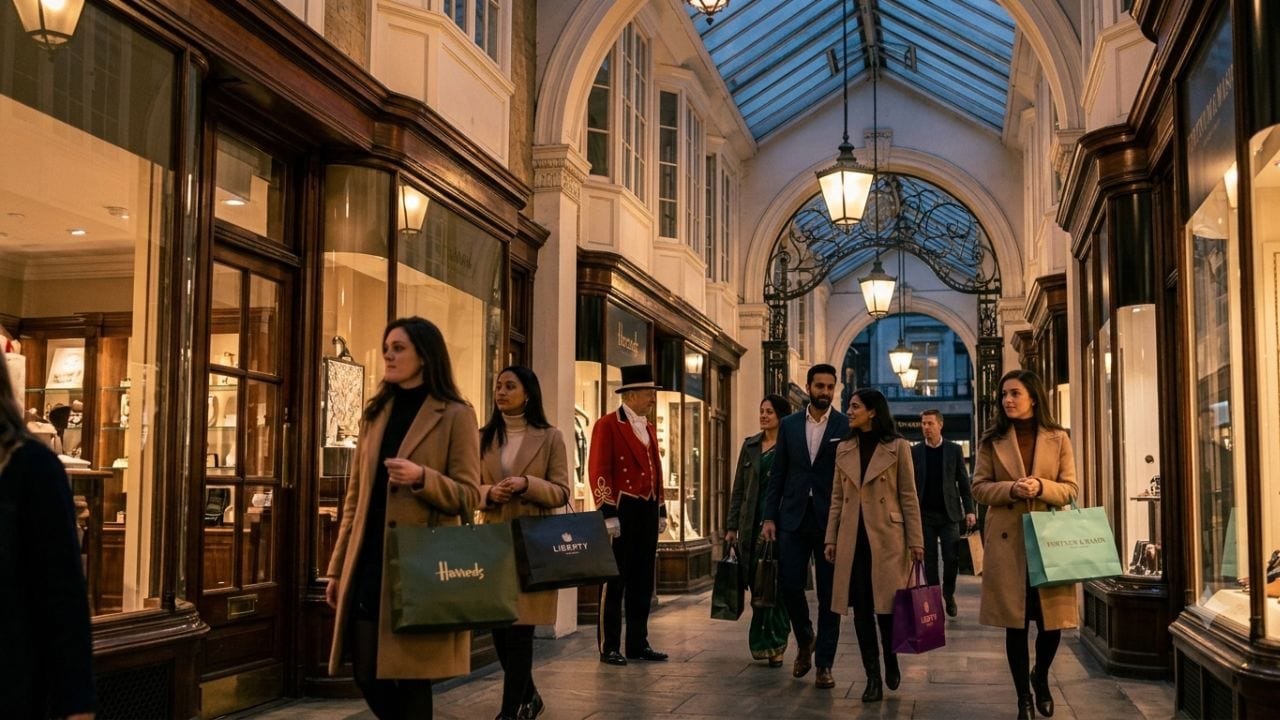
London covers everything from high-street fashion to serious luxury.
- Oxford Street: High-street brands and major department stores.
- Regent Street: Fashion, beauty and flagship stores.
- Bond Street: Luxury fashion and jewellery.
- Harrods: The quintessential Knightsbridge department store.
- Selfridges: Fashion, beauty, food and a little bit of everything else.
- Liberty: Beautiful interiors and a distinctly London character.
- Portobello Road: Vintage, antiques and market finds.
- Camden: Alternative fashion and souvenirs.
- Shoreditch: Independent labels and design-led shopping.
London Travel Tips
- Book popular restaurants ahead. Particularly for Friday and Saturday evenings.
- Reserve major attractions in peak season. It can save valuable holiday time.
- Group sightseeing by neighbourhood. London is enormous; crossing it repeatedly is rarely worth it.
- Stay close to public transport. A convenient Tube station can be more valuable than an extra hotel amenity.
- Carry a light waterproof layer. Even a sunny morning can change its mind.
- Wear comfortable shoes. You will walk.
- Use contactless transport. It is the easiest option for most visitors.
Leave some room in the schedule. London is at its best when you can take a wrong turn, linger over an unexpected coffee, wander through a market or spend an afternoon in an exhibition you hadn't planned on seeing. And don't try to finish the city in one trip. London has too many neighbourhoods, too many stories and too many good reasons to come back.
Track Latest News Live on NDTV.com and get news updates from India and around the world


