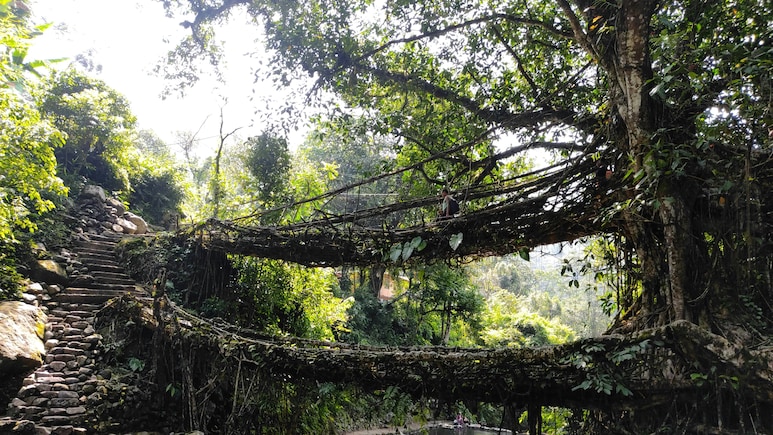
Some of the world's most remarkable architectural wonders were not built with stone, brick, or concrete. In one corner of Northeast India, local communities have spent generations shaping nature itself into functional structures. These unique bridges, created by guiding the roots of living trees across rivers and valleys, have become one of the region's most extraordinary attractions and a symbol of sustainable engineering. Let's find out where you can find these bridges and what makes them so special.
Also Read: Which Waterfall Is The Tallest In The World?
Meghalaya Is Known For Asia's Oldest Living Root Architecture
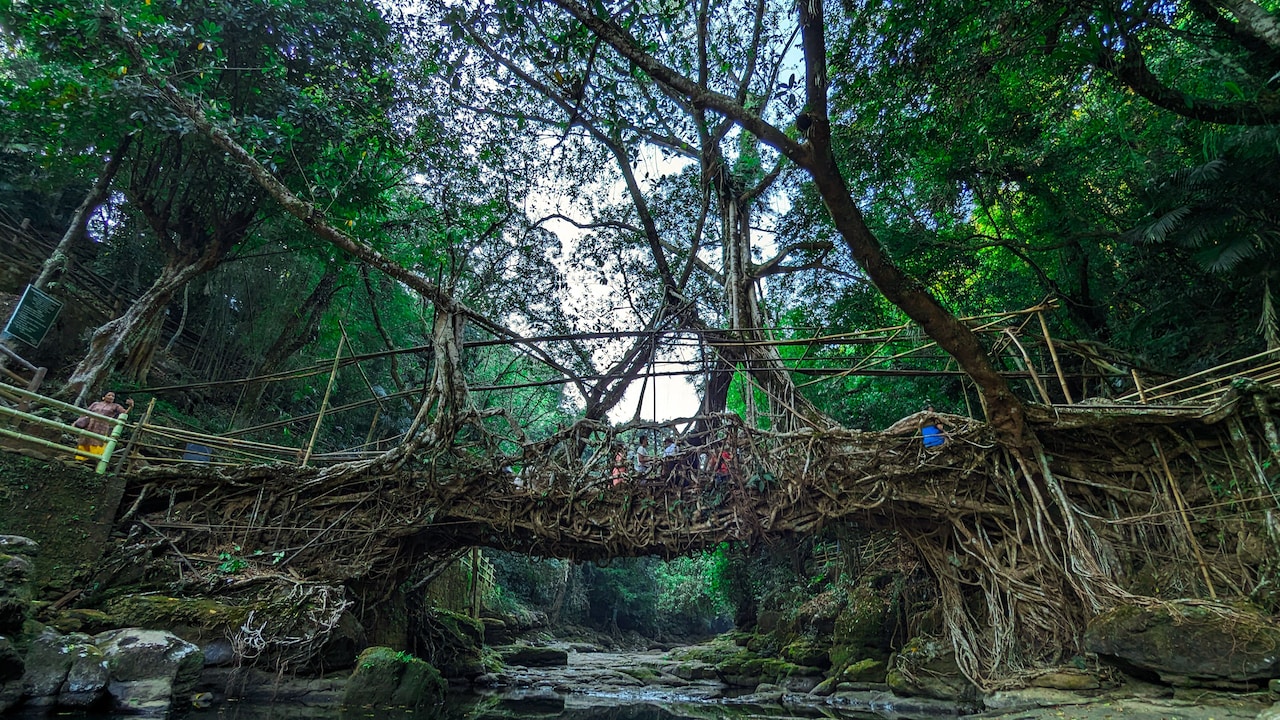
Photo: Pexels
The state of Meghalaya, particularly the Khasi and Jaintia Hills, is famous for its living root bridges - natural structures formed by training the aerial roots of rubber fig trees over streams and ravines. These bridges are often regarded as some of Asia's oldest examples of living root architecture. Unlike conventional bridges, they continue to grow and strengthen over time, making them a remarkable blend of nature and human ingenuity.
How Are Living Root Bridges Created?
The bridges are crafted using the roots of the Indian rubber tree (Ficus elastica). Local Khasi communities guide the roots across rivers using bamboo scaffolding or hollowed-out tree trunks.
Over the years, the roots:
- Grow and intertwine naturally
- Become strong enough to support human weight
- Continue to thicken and strengthen with age
- Adapt to the region's heavy rainfall and humid climate
Some bridges take decades to mature, while others are believed to be well over a century old.
The Most Famous Living Root Bridge
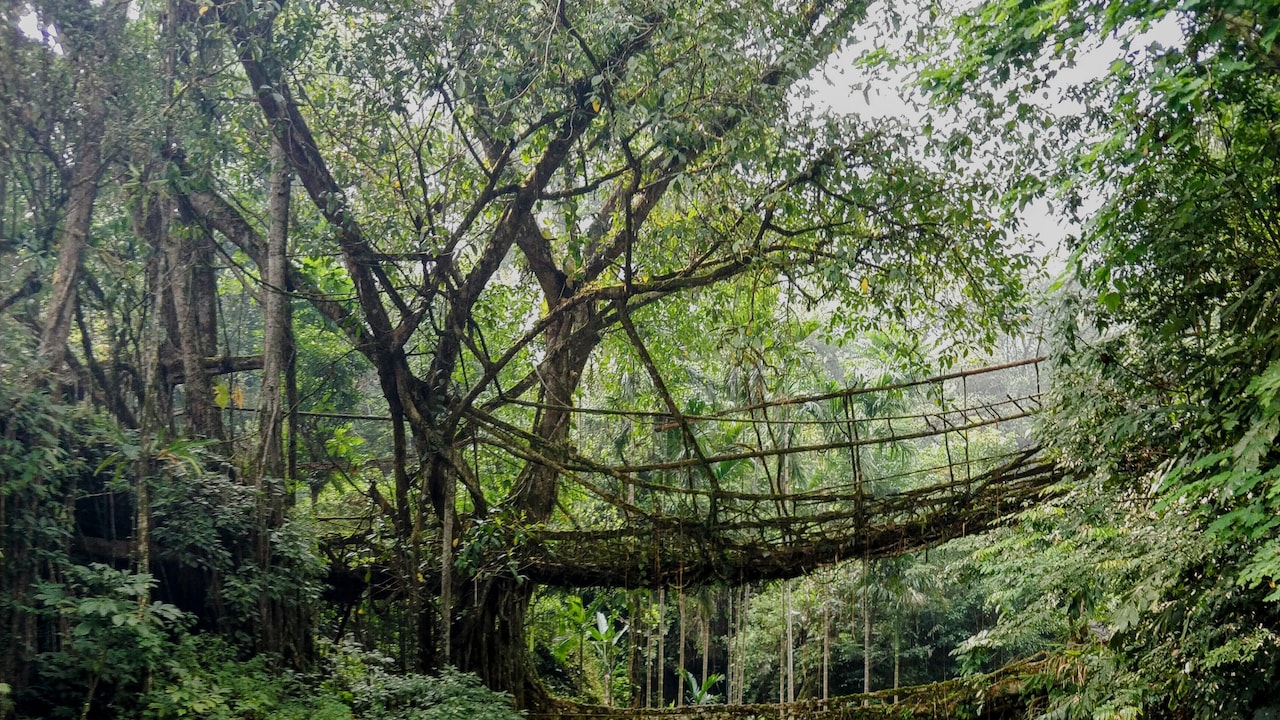
Photo: Pexels
One of Meghalaya's best-known attractions is the Double Decker Living Root Bridge near the village of Nongriat.
What makes it special:
- Two root bridges stacked one above the other
- Surrounded by dense forests and waterfalls
- Accessible through a scenic trek involving thousands of steps
- Considered one of the finest examples of living root architecture in the world
It has become a major draw for trekkers and nature enthusiasts.
Why These Bridges Are So Remarkable
The living root bridges are often celebrated as a model of sustainable design.
Their advantages include:
- Built entirely from living natural materials
- Resistant to flooding and heavy monsoon rains
- Long-lasting and self-strengthening
- Minimal environmental impact compared to modern construction
They showcase how traditional knowledge can work in harmony with nature.
Other Places To Explore In Meghalaya
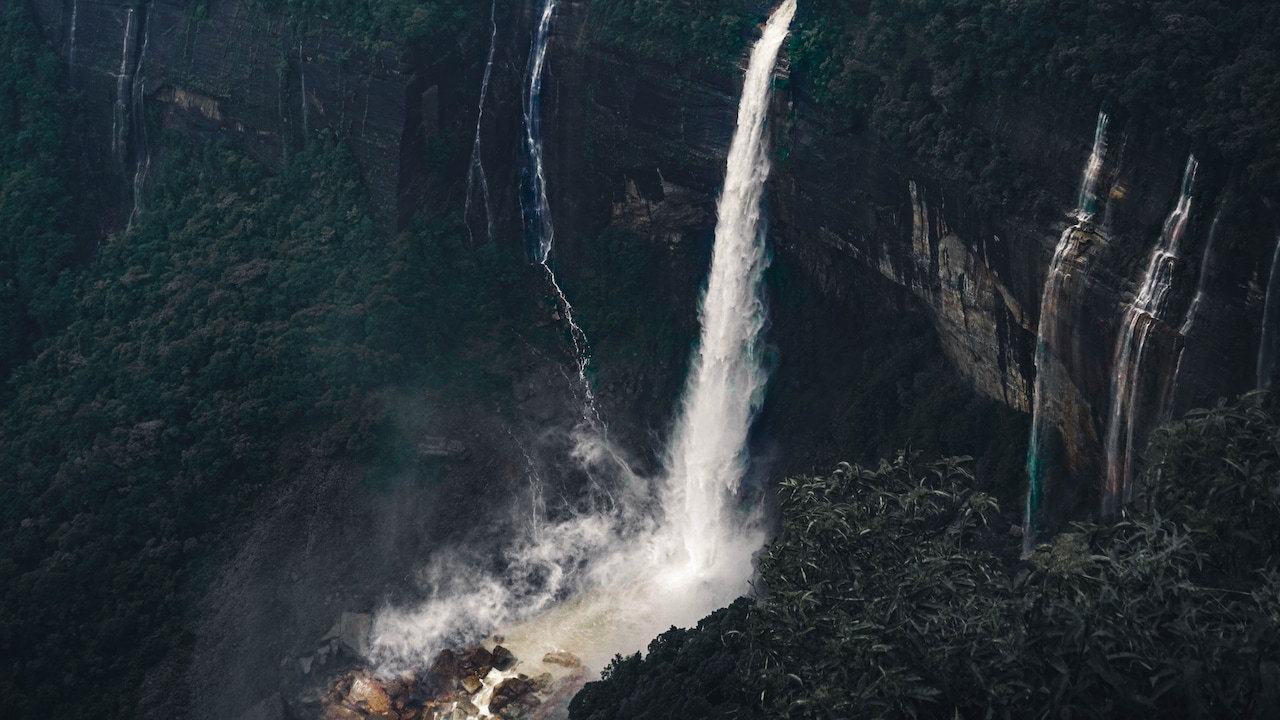
Photo: Pexels
While visiting the root bridges, travellers can also explore some of the state's other natural attractions.
Popular spots include:
- Cherrapunji, famous for its rainfall and waterfalls
- Nohkalikai Falls
- Mawlynnong, often referred to as one of Asia's cleanest villages
- Shillong for culture, cafes, and viewpoints
Together, they make Meghalaya one of India's most distinctive travel destinations.
Also Read: Which Famous City Is Made Up Of 118 Small Islands?
Best Time To Visit
The ideal time to explore the living root bridges is between October and April, when trekking conditions are generally more comfortable and rainfall is lower. The monsoon season offers lush greenery and dramatic waterfalls, though trails can become slippery and challenging.
How To Reach The Living Root Bridges
- By Air: The nearest major airport is in Shillong, while Guwahati offers better connectivity
- By Road: Cherrapunji serves as the main gateway to the region
- By Trek: Reaching many of the famous root bridges requires a hike through forested trails and villages
Meghalaya's living root bridges are far more than tourist attractions-they are living examples of how communities can work with nature to create structures that endure for generations. Their combination of functionality, sustainability, and natural beauty continues to make them one of Asia's most fascinating architectural wonders.
Track Latest News Live on NDTV.com and get news updates from India and around the world


