
You are cruising somewhere above the clouds, miles away from the nearest city, and yet somehow your phone still manages to load Instagram or send a WhatsApp text. It feels a bit unreal, especially when even some hill stations struggle with network. So how does Wi-Fi actually work up there, in the middle of the sky? The answer lies in two clever systems that airlines use to bring internet to aircraft mid-flight.
Also Read: What Really Happens When You Flush The Toilet On A Flight
Here's How Wi-Fi Works On An Airplane

Photo: Unsplash
Airplanes don't create an internet on their own. They connect to it using either ground towers or satellites.
1. Air-to-ground (ATG) system
This works a bit like your mobile network. As the aircraft flies, it connects to a network of towers on the ground that point signals upward. The plane constantly switches between towers to maintain the connection. This system is usually faster over land but stops working over oceans or very remote areas.
2. Satellite-based Wi-Fi
This is the more advanced and widely used system today. The aircraft connects to satellites orbiting the Earth. These satellites relay signals between the plane and ground stations connected to the internet. That small hump or dome you sometimes see on top of an aircraft? That is where the antenna sits, constantly communicating with satellites as the plane moves.
How The Signal Reaches Your Phone

Photo: Unsplash
Once the aircraft receives internet from either towers or satellites, it distributes it inside the cabin using onboard routers. So when you turn on airplane Wi-Fi, your device connects to a local network inside the plane, just like it would in a café or at home. The difference is that this network is being fed the internet from far outside the aircraft.
Why Airplane Wi-Fi Can Be Slow
If you have used it before, you already know it is not always the fastest.
That is because:
- The bandwidth is shared between hundreds of passengers
- The signal has to travel very long distances (especially via satellites)
- Weather and location can affect connectivity
Streaming and heavy downloads can be patchy, but messaging, emails, and light browsing usually work fine.
Also Read: Why Do You Hear That 'Ding' On Flights? The Meaning, Explained
Is It Safe To Use Wi-Fi On A Plane?
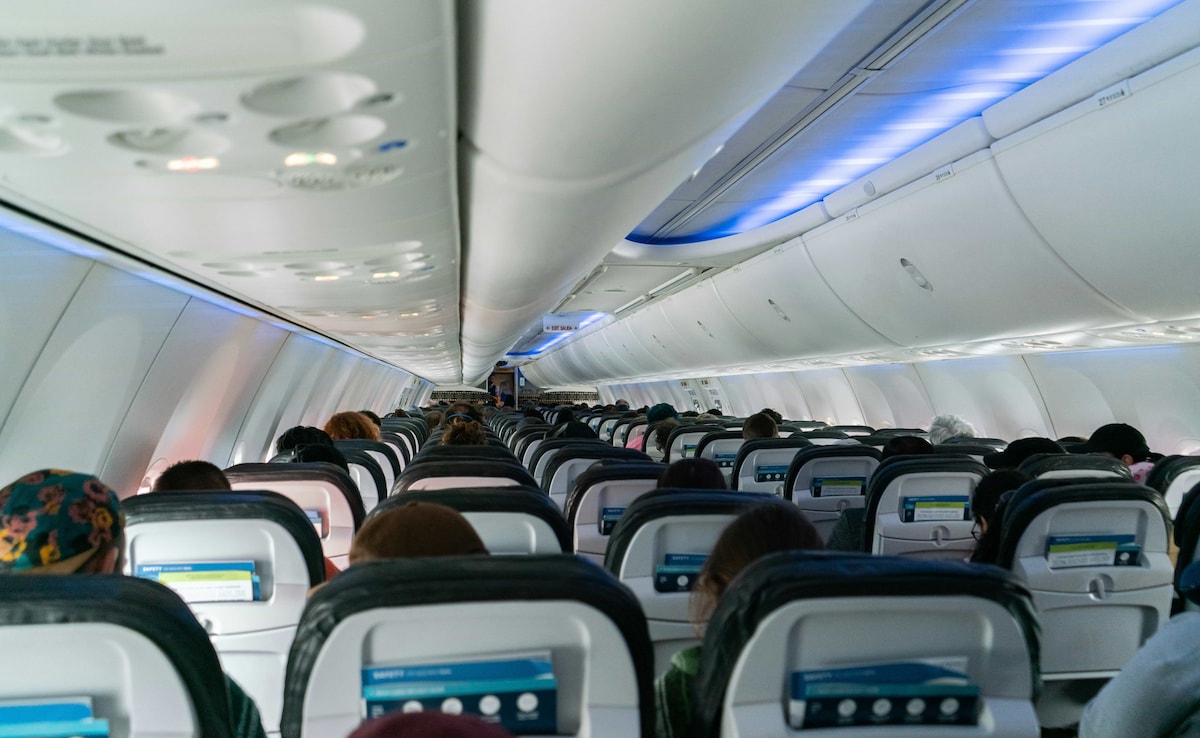
Photo: Unsplash
Yes, airplane Wi-Fi is considered safe. It operates on systems completely separate from the aircraft's navigation and control systems. Aviation authorities strictly regulate these technologies to ensure there is no interference with flight operations.
Airplane Wi-Fi is one of those small modern luxuries that quietly changes how we travel. Whether you are sending a quick “landed safely” text in advance or scrolling through reels somewhere above the Arabian Sea, it makes flying feel a little less disconnected. And the next time you are online at 35,000 feet, just remember, your message has likely travelled from your phone to a router, up to a satellite in space, back down to Earth, and across the internet, all in a matter of seconds.
Track Latest News Live on NDTV.com and get news updates from India and around the world


