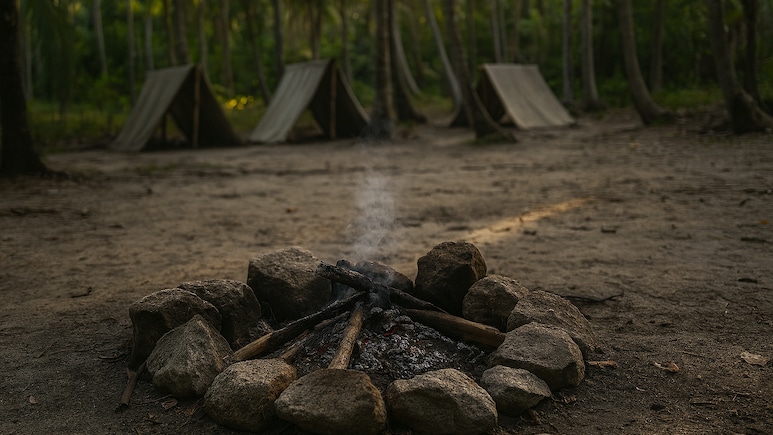
Corporate retreats are often marketed as an opportunity to travel, step away from routine and build stronger teams. But for Plex, a US-based tech company, a 2017 offsite in Honduras became a stark lesson in how ambitious travel ideas can quickly spiral out of control. What was planned as a Survivor-themed adventure ended up involving illness, injuries and serious logistical failures. Nearly a decade later, the trip is remembered not as a bonding experience, but as something employees had to endure.
The story has recently resurfaced after being shared by X user (formerly Twitter) @gabriel_horwitz, who revisited the details of how Plex flew around 120 remote employees to Honduras for a corporate retreat. With a reported budget of about $500,000, the offsite promised adventure and team-building in a tropical setting. Instead, it exposed major gaps in travel planning, health preparedness and on-ground coordination.
Also Read: This Viral Water Bridge In Kerala Is Dreamy, But Tourists Must Not Visit It
Check out the full X post below:
If you haven't read this article, you need to. Plex sent 120 remote employees to Honduras for a Survivor-themed retreat. $500k budget.
— Gabriel (@gabriel_horwitz) April 6, 2026
- CEO ignored "don't eat the vegetables" warnings, got E. coli from a salad, spent the week on an IV nailed to his bedpost while the retreat he… https://t.co/ceiHDe9SSV
Ignoring Local Food Warnings Led To A Major Health Scare
According to the account shared online, problems began almost immediately. Despite being advised locally to avoid raw vegetables, the company's chief executive reportedly ignored the warning and ate a salad. He soon fell seriously ill with an E. coli infection and spent most of the retreat confined to his room, receiving fluids through an IV attached to his bed. While employees took part in activities outdoors, the retreat's organiser remained indoors for much of the trip.
A Tarantula-Eating Challenge That Shocked Employees
One of the first planned "survival" challenges required employees to eat whatever was placed on a covered platter. When one participant lifted the lid, he reportedly found a dead tarantula. He went on to eat it, later describing the experience as deeply unpleasant. The incident set the tone for how far the retreat's challenges were willing to go in prioritising spectacle over comfort or safety..
Extreme Beach Drills And Poor Medical Preparedness
The activities soon escalated. Employees were reportedly put through military-style drills on the beach, led by former Navy SEAL instructors, in extremely high temperatures. During one drill, an employee landed on a fire ant mound while wearing shorts. With limited medical supplies available on site, treatment had to be administered through an injection rather than oral medication. These moments raised questions about medical preparedness during physically demanding group travel experiences.
Accommodation Surprises And A Stranded Island Trip
Unexpected incidents continued even at the hotel. One engineer reportedly had a porcupine fall through the shower ceiling. Hotel staff removed the animal, but offered little explanation afterwards.
The most serious travel disruption came during an island day trip. Employees were flown by small aircraft, with the organisers needing to return more than 100 people before sunset because the runway had no lights. They failed to do so. As a result, the group was stranded overnight, with some employees requiring medical assistance. Exhausted participants reportedly waited in the dark, many still wearing matching company tank tops.
Also Read: Why Are Thousands of Planes Parked In Deserts? The Real Story Behind Aircraft Boneyards
What The 2017 Honduras Retreat Reveals About Corporate Travel Risks
By most measures, the retreat did not go as planned. Safety arrangements were limited, and there was very little backup planning for such a large group travelling in a remote area. Still, many of the people who went on the trip are in touch even years later and continue to talk about what they experienced.
The Honduras trip now serves as a lesson on the importance of proper planning in corporate travel. Trips that involve remote locations, physical activities and large groups need strong safety measures, medical support and an understanding of local conditions to avoid serious problems.
Track Latest News Live on NDTV.com and get news updates from India and around the world


