After 113 Years Of Power, Privilege, Eviction Notice For Delhi Gymkhana Club
Delhi Gymkhana Club has always been more than just a sports or recreation club. Its membership defined people's status in the Delhi high society.
"Pickled in Rum...
sinful, ginful, rum-soaked (women &) men,
Survive for three score years and ten,
And some of them, though very few,
Stay pickled till they're 92!"
Renowned author and life-time member Khushwant Singh's humourous and satirical take on the patrons of the Delhi Gymkhana Club at the ripe age of 92.
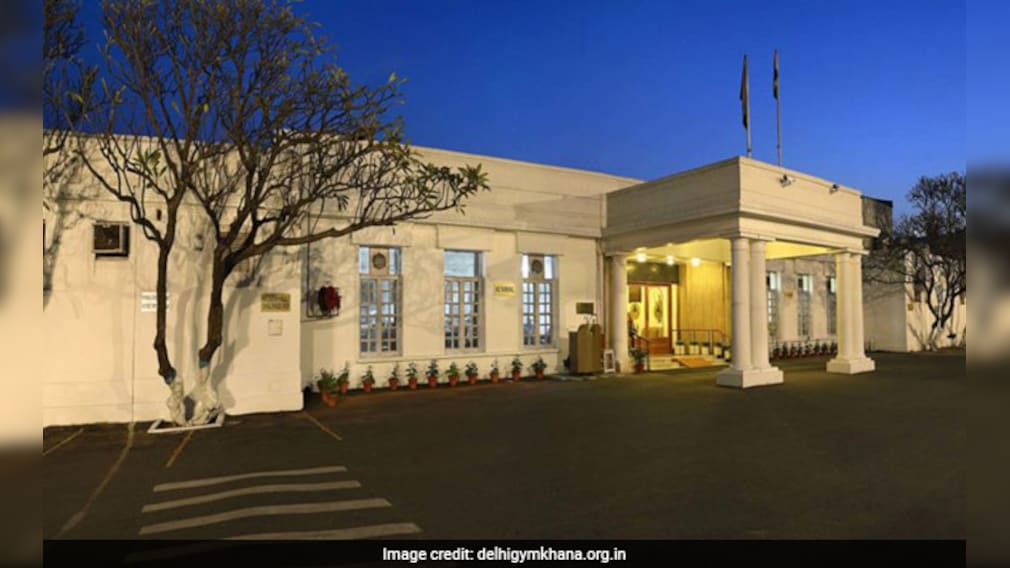
Tucked besides the imposing Ashoka trees and the power corridors of the Capital, the Delhi Gymkhana Club has for over a century symbolised power, elitism, exclusivity, access, colonial influence and above all privilege.
It has always been more than just a sports or recreation club. Its membership defined people's status in the Delhi high society.
Founded in 1913 as the "Imperial Delhi Gymkhana Club", the institution was created during the British colonial era as a socialising space for imperial officers and the ruling elite. After Independence in 1947, the word "Imperial" was dropped, but much of the club's culture, traditions and aura survived.
Spread across nearly 27 acres on Safdarjung Road, the club building was designed by famed British architect Robert Tor Russell - who also designed Connaught Place and Teen Murti House.
The club boasts 26 grass tennis courts, which is the most in any club in the country. It has seven clay courts, three squash courts, badminton courts, a billiards room and a covered swimming pool. There are three lounge bars and 43 resident cottages.
High-ranking bureaucrats, military chiefs, diplomats, judges, politicians, industrialists and old business families made up much of its membership making it synonymous with India's ruling establishment. Its membership carries equal prestige as a high office.
With around 1,200 members, getting into the coveted circle has historically been extraordinarily difficult. The waiting period to get a membership has stretched 20 to 30 years. Just about a 100 memberships are opened every year to fill up for deaths and resignations.
And money alone is no guarantee for entry. It has always been about the "network". Families with influence -- bureaucratic, military or political -- spanning generations. Recommendations, social standing, and connections mattered more than the money.
It's a club that has guarded access and maintained its "traditions" like no other. Strict dress codes and etiquette reinforce its reputation for exclusivity.
For over a century, the Delhi Gymkhana has followed the 40-40-20 rule for membership. 40% went to civil servants, 40% to the defence services and 20% to 'others' (read commoners). Adult children of members got preferential treatment in grant of membership thus snuffing out chances of the "outsiders".
Those getting membership attend "at home'', a ritual where club members see if a person is good enough to be one of "them".
This exclusivity has also made Delhi Gymkhana controversial. Critics accused the club of representing colonial mindset in modern democratic India. In 2020, the National Company Law Tribunal sharply criticised the institution, remarking that the club still "reeks of an imperial mindset" and serves privileged elites.
Despite criticism, the charm of Delhi Gymkhana remains intact. Its membership signals that the person has arrived into the top social circles.
In more ways than one, Delhi Gymkhana represents a paradox of modern India. It is a heritage institution, a colonial relic, a social power centre and a status symbol all rolled into one.
As it stands at a crossroads with an eviction order from the Centre, an era in Delhi stares at sunset.
-
Opinion | The Last Bet? What Trump's 'Mother Of All Bombs' Could Actually Do To Iran

Can an MOAB deliver a decisive blow to Iran that may force it to surrender immediately, as Japan did after Hiroshima and Nagasaki in World War 2?
-
Hit Songs, Empty Pockets: The Hidden Math Behind India's Viral Music Boom
Over 80,000 brands and five lakh creators in India make branded content. The opportunity is worth around Rs 1,500 crore.
-
Opinion | Great 'Exceptions': How The Oil India Was Attacked For Is The Oil Trump Now Seeks
A law written to punish the buyers of Russian oil was suspended by the US to protect a purchase of Russian oil. India spent fourteen months being lectured for less.
-
Opinion | Louis Vuitton Loot, Torched Cars: France Protests Have An Unlikely Beneficiary
It's an unbelievable moment. Crowds looting the most exclusive stores in Paris, including the famed Luis Vuitton. But what's behind this meltdown?
-
Blog: Kolkata Didn't Learn From 2015. Eleven Years Later, It Proved To Be Fatal
The City of Joy isn't a stranger to crowd control. Be it during Pujo or Christmas at Park Street, Eden Gardens cricket matches, or Derbies between Mohun Bagan and East Bengal. But during Pujo, the entire city is on alert.
-
Opinion | Slurs, Threats, Now A Temple Attack Plot: When Did America Become So Hostile To Indians?
The rising tide of anti-India, anti-Hindu, and racist attacks serves as a stark reminder that economic prosperity does not automatically guarantee social immunity from bigotry.
-
A Step Behind Neha Bora: What Rahul Gandhi's Gesture Says About Congress' Gen-Z Pitch
At INDIA bloc's march to Supreme Court, Rahul Gandhi placed himself a step behind two women, hands resting on their shoulders. One was his sister Priyanka. The one on his right was Neha Bora. Here's what the image means for the protest wave now, and for Rahul's politics in general.
-
Opinion | Imran Khan, And The Perils Of Having An 'Opinion' In Bollywood
The reality of the industry is quite grimy. More often than not, its inhabitants have been fairweather friends, happy to sing the praises of whoever is in a position of authority.
-
Exclusive: India's Food Safety Problem Goes Beyond Just Dirty Kitchens - By Tukaram Mundhe
On World Food Day, Maharashtra's Commissioner of Food Safety explains why instead of taking stopgap measures, the entire supply chain in India needs to be held accountable and made transparent.
-
Opinion | India Has Enough Coal. So Why Are Power Plants Running Short? A 76 Million 'Crunch'
As of October 5, as many as 82 of the 191 thermal plants monitored by the Central Electricity Authority were in the 'critical' category