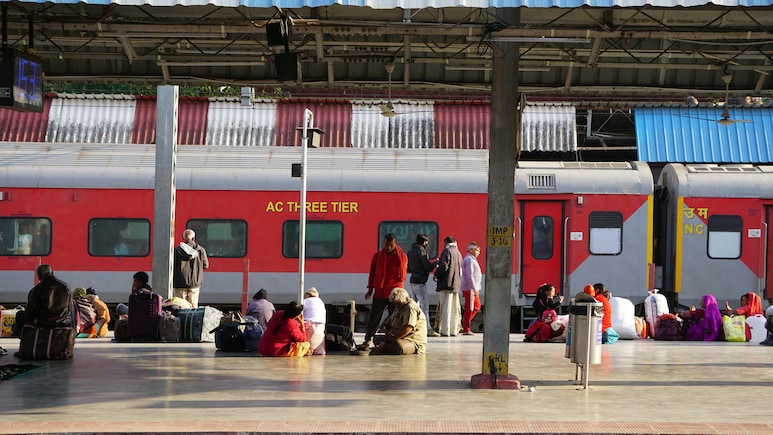
Most people who visit Amritsar do the same things in the same order. Golden Temple in the morning, langar at noon, Wagah border parade in the evening, kulchas somewhere in between. It is a perfect itinerary, and there is nothing wrong with it. But Amritsar has another dimension that most visitors never discover: a set of short, inexpensive local train rides that head directly towards the border with Pakistan, passing through some of the most historically loaded, quietly beautiful countryside in Punjab. These are not tourist trains. They are working local services, and that is exactly what makes them worth your time.
Also Read: Which Is The Last Road Of India? Know The Location And History
What Makes These Journeys Different
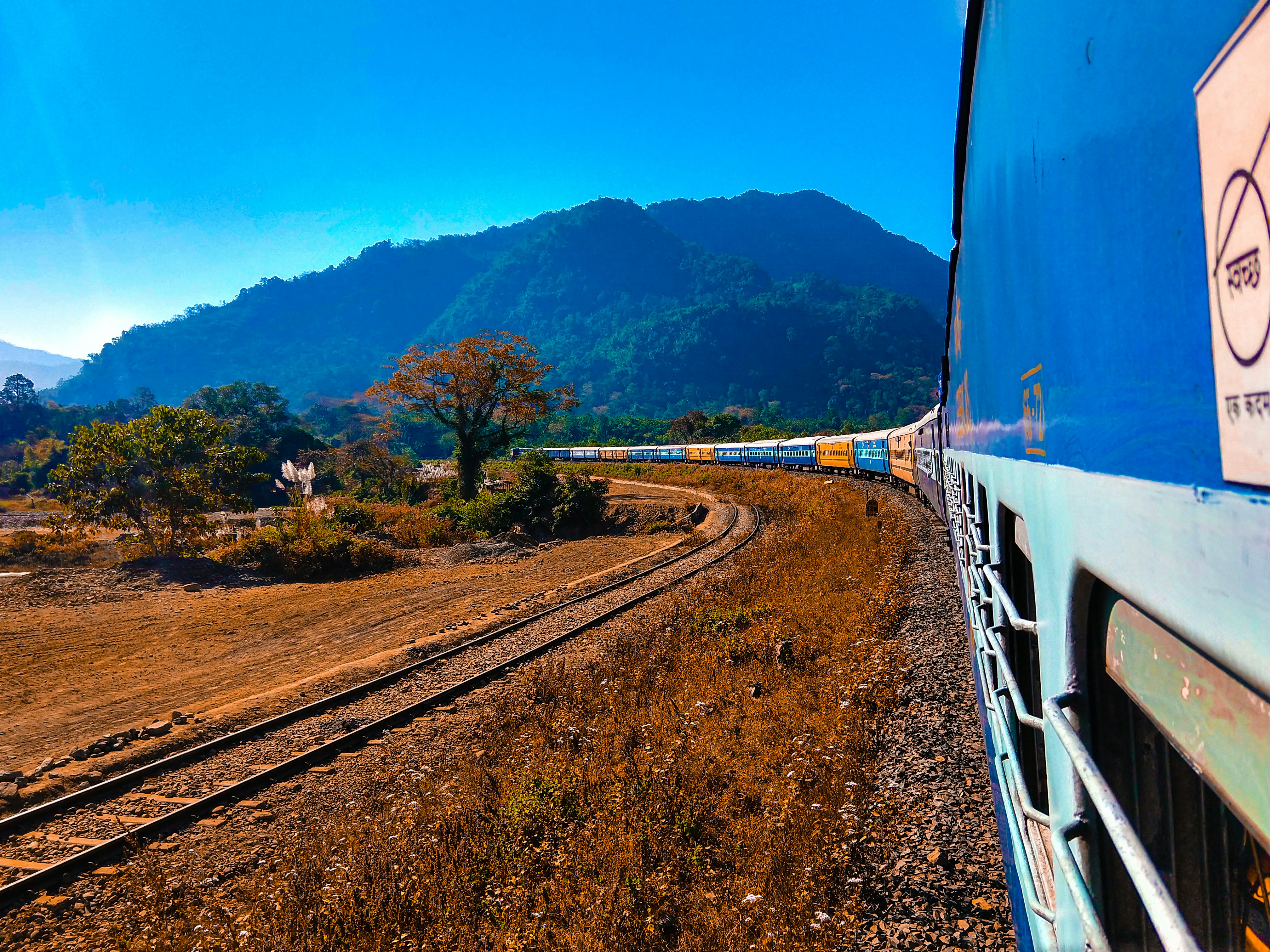
Photo Credit: (Stock photo for representational purposes only)
These three routes, to Attari, Dera Baba Nanak, and Khem Karan, are the last train lines before India ends. The tracks literally run towards the frontier. Some of them were the same lines that carried the trains of Partition in August 1947, loaded with people fleeing in both directions as the subcontinent divided itself overnight. Today, those same tracks carry farmers coming home from the fields, BSF jawans returning to duty after leave, families heading to gurdwaras, and occasionally travellers wise enough to have looked beyond the guidebook.
The beauty of these journeys is their ordinariness. Ticket prices start at ₹10. The coaches are unreserved. The windows are large. And the Punjab countryside, with its flat green fields, distant hamlets, and clear open skies, unrolls outside like a painting that asks nothing of you except your attention.
Each route also ends somewhere historically significant: a Partition-era border crossing, a town named after Guru Nanak himself, or a shrine-inside-a-border-fencing situation that you genuinely will not find anywhere else in the country. Here is what awaits all three.
Journey One: Amritsar to Attari (25 km | 40-45 minutes | ₹10)

This is the most famous of the three routes and the one that carries the heaviest historical weight. The train from Amritsar to Attari covers just 25 kilometres, stopping briefly at Chheharta and Khasa, and takes about 40 to 45 minutes. It is a short ride on paper. It is a very long ride in your head.
The track you are travelling on is the same one that connected Amritsar to Lahore before Partition. If the border did not exist, you would reach Lahore in roughly another 30 minutes from Attari. The rails are still there, gated shut at the frontier. The line famously appeared in Salman Khan's Bajrangi Bhaijaan (2015), and for good reason: there is something about this stretch that cinematically captures the strange, painful proximity of two countries that were once one.
The landscape changes as soon as the train leaves Chheharta behind. Green fields open up in every direction, the air gets noticeably fresher, and a gentle quiet settles over the compartment. You can spot the BSF grounds near Khasa where jawans run drills, and further along, small villages sit close to the tracks, close enough that you can see people going about their mornings. December mornings here are famously foggy, softening everything into a kind of storybook grey that is actually quite lovely.
Attari station itself is a colonial-era structure that deserves at least a slow walk-through before you do anything else. It has an international platform, the one from which trains to and from Pakistan once departed and arrived, even after 1947. A song from Shah Rukh Khan's Veer-Zaara (2004) was filmed here, which tells you something about its particular atmosphere: a place that feels suspended between eras.
What to do in Attari:
Most people already know about the Attari-Wagah border parade, the evening flag-lowering ceremony conducted jointly by Indian and Pakistani troops that draws large crowds daily. It is theatrical, high-energy, and worth watching. But Attari has more to offer than just the parade.
Nearby is Sarai Amanat Khan village, once a rest stop on the old Mughal-era Delhi-to-Lahore route, and still recognised for its vintage architecture. Film crews continue to use it as a location. Pul Kanjri, also known as Pul Moran, is a historic structure near the border fence built by Maharaja Ranjit Singh as a resting place during his travels between Delhi and Lahore. It is named after Moran, a dancer who is said to have entertained the Maharaja here. The town also has Sham Singh Attari Park with a small museum dedicated to this celebrated general of Ranjit Singh's army. The museum is modest but the history it covers is not.
Train timings: 07:30 am and 06:20 pm from Amritsar to Attari; 08:20 am and 07:15 pm from Attari back to Amritsar.
Journey Two: Amritsar to Dera Baba Nanak (55 km | 1 hour 20 minutes | ₹15)

This route is longer, quieter, and for many, the most rewarding of the three. The train covers 55 kilometres in about one hour and twenty minutes, passing through stations like Verka, Majitha, Ramdas, Rattar Chattar, and Hardowal before arriving at Dera Baba Nanak in Gurdaspur district. Some services originate at Verka station, which is just minutes from Amritsar, so connections are easy.
The stations along this route are what make it special for anyone who appreciates architecture and atmosphere. Verka station looks like a hill-station bungalow, complete with a large veranda. The stations further along the line have vintage colonial-era buildings draped in bougainvillaea. Hardowal, in particular, is the kind of small station that photographers would camp outside for an afternoon. Dera Baba Nanak's modest station building has a quiet, timeless quality, and was recently featured in the 2025 film Gustaakh Ishq.
What you see from the window is pure Punjab: men and women working in pea farms, BSF jawans heading back to duty after leave, tractors moving across golden fields, and the occasional schoolchild running alongside the train for a few seconds before giving up. On the return journey, farmers wave from the fields as the light changes.
The town of Dera Baba Nanak is named after Sri Guru Nanak Dev Ji, and its significance to Sikh history is considerable. This is where Guru Nanak spent the last years of his life, and the town sits directly across the Ravi River from Kartarpur in Pakistan, which is where Guru Nanak established his final home and is now the site of Gurdwara Darbar Sahib Kartarpur, one of the holiest shrines in Sikhism.
The Kartarpur Corridor, which allows Indian Sikh pilgrims to visit that gurdwara in Pakistan visa-free, starts here. The corridor has seen closures and reopenings over the years, so check its current status before planning the visit. Even if the corridor is closed, the shrine across the river is visible from the Indian side, which is a powerful moment in itself.
Also Read: Why Bengaluru Turns Pink Every Spring With Exotic Flowers Brought By The British
What to do in Dera Baba Nanak:
The main shrine in town is Darbar Sahib, near the bus stand in the heart of the bazaar. It is the primary gurdwara associated with Guru Nanak in this town and serves free langar throughout the day. Just nearby is Sri Chohla Sahib, another significant gurdwara where relics connected to Guru Nanak are kept and displayed. The religious artefacts and items sold around these shrines tend to be more fairly priced than those around the Golden Temple, so it is a good place to pick up something meaningful to take home.
The Dera Baba Nanak bazaar itself has a lived-in charm that is worth wandering through before boarding the return train.
Train timings: 04:20 am, 10:30 am, 02:15 pm, and 05:50 pm from Amritsar or Verka; 06:05 am, 12:15 pm, 04:00 pm, and 07:20 pm from Dera Baba Nanak back.
Journey Three: Amritsar to Khem Karan (77 km | approximately 2 hours | ₹20)
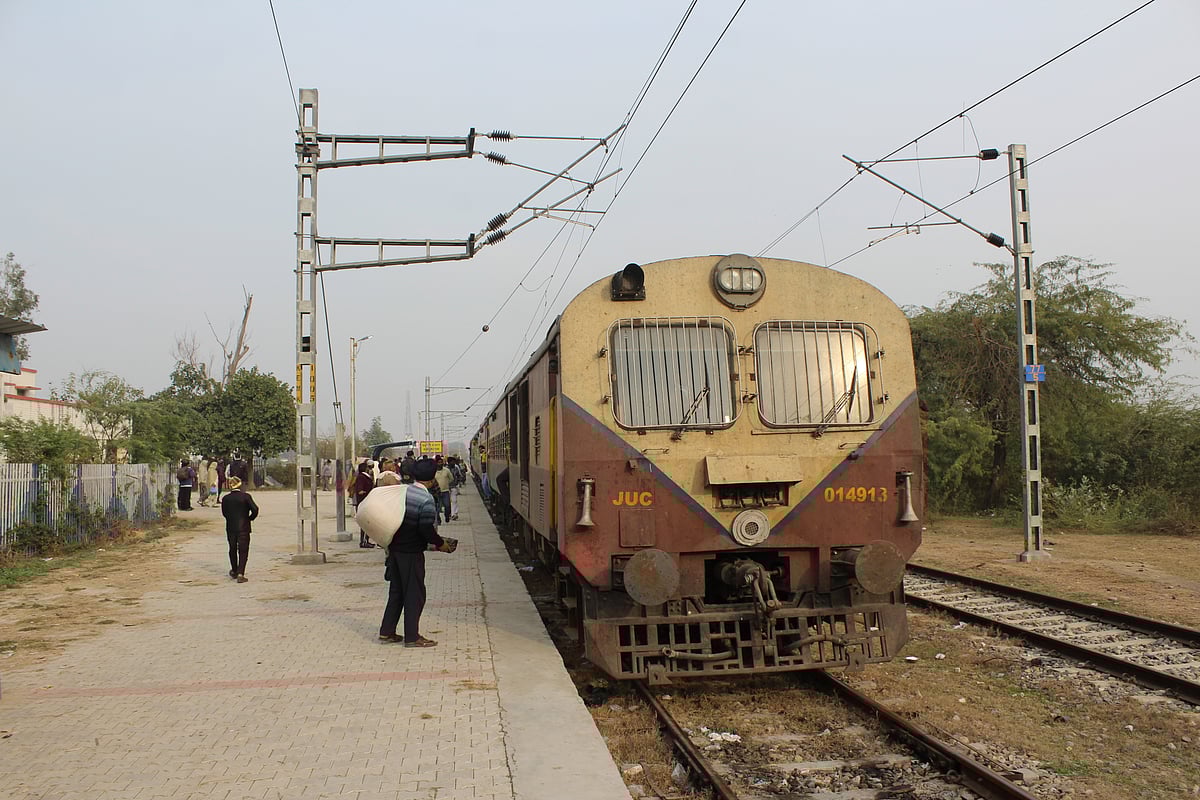
This is the longest of the three journeys, covering 77 kilometres across 12 halts over about two hours. Some trains on this route depart from Bhagtanwala station, which is roughly 15 minutes from central Amritsar by auto. The route passes through Taran Taran district, and the landscapes here have a particular rural richness: tractors ploughing fields, women carrying bundles of wood along the tracks, and elderly farmers driving bullock carts. It is a window into a Punjab that is neither tourist-facing nor performing for anyone.
Khem Karan carries deep historical significance for India. This town was the site of the famous Battle of Asal Uttar in September 1965, during the Indo-Pakistani War, where the Indian Army, primarily the 4th Mountain Division and elements of the 2nd Armoured Brigade, defeated a Pakistani armoured advance in what became known as the "Graveyard of Tanks." Pakistani tanks abandoned in the fields of Khem Karan became iconic images of that war. The area is a matter of considerable national pride in Punjab, and locals will talk about 1965 with a specificity and detail that no history book quite captures.
What to do in Khem Karan:
Khem Karan is home to two remarkable shrines that sit right alongside the border fence, reached only after crossing through BSF checkpoints. You must carry your identity documents, and electronic devices are to be deposited with the BSF before crossing. This is not an inconvenience; it is part of the experience.
The first shrine is Gurdwara Sahib Singh Shaheed, dedicated to a martyr of Sikh history, and opens every Sunday. The second is the Sheikh Braham Dargah, a Sufi saint's resting place that has a documented connection to Sri Guru Nanak Dev Ji, and opens every Thursday. Both sit in agricultural land right next to the white triangular border markers. On the Pakistani side, people from across the border sometimes gather to watch, separated only by a fence. Pakistani Rangers stand on their side, Indian BSF on ours. Photography is restricted from the Indian side.
It is one of the most quietly extraordinary experiences available within India's borders, and almost nobody outside Punjab knows about it.
Train timings: 04:40 am, 09:15 am, 01:35 pm, and 06:10 pm from Amritsar or Bhagtanwala; 06:50 am, 11:25 am, 03:35 pm, and 08:10 pm from Khem Karan back.
A Word About The Heritage Stations
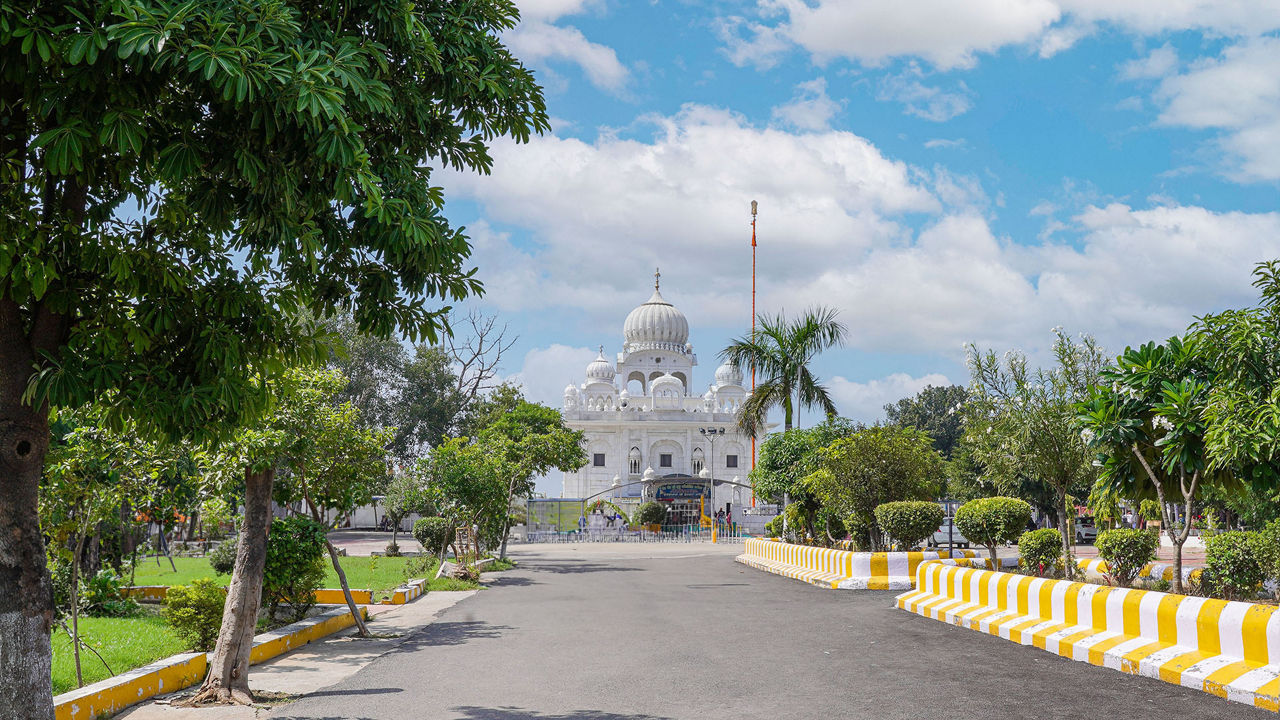
It would be remiss not to mention that the colonial-era station buildings along all three routes have been largely neglected by railway authorities. Several have been labelled abandoned. On the Attari route, the historic station buildings at Chheharta and Khasa were demolished some years ago. Khasa, in particular, was a popular film shoot location because of its distinctive design, and its demolition was a genuine loss.
The stations that remain, particularly on the Dera Baba Nanak route, are beautiful and deserve proper restoration and promotion. Both Indian Railways and the Punjab Heritage and Tourism Promotion Board have an opportunity here to build a heritage rail tourism product out of what already exists. Right now, these routes are an insider's secret. They should not have to stay that way.
Also Read: Foreigners Get A Warm Holi Greeting From Locals While Trekking, See Their Reaction
Capturing History
Three trains, three border towns, three completely different histories, and tickets that together cost less than a plate of chole bhature at a decent restaurant in any Indian city. That is the deal Amritsar is quietly offering anyone willing to show up at the platform a little early and let the countryside come to them. These are not grand, romantic railway journeys with dining cars and panoramic decks. They are local trains full of farmers, soldiers, pilgrims, and occasionally one or two travellers who decided to look beyond the obvious. The tracks run towards the border, the fields run in every direction, and Punjab, the real Punjab, shows up exactly as it is: unhurried, generous, and more interesting than the tourist map would have you believe.
Track Latest News Live on NDTV.com and get news updates from India and around the world


