Solar Systems
- All
- News
- Videos
- Web Stories
-
How 3I/ATLAS, Icy Lemmon And Cosmic SWAN Redefined The Sky In 2025
- Friday December 26, 2025
- Science |
The year stood out for its memorable comet activity, with interstellar visitor 3I/ATLAS, along with comets C/2025 A6 (Lemmon) and C/2025 R2 (SWAN), drawing global attention.
-
www.ndtv.com
-
Interstellar Comet 3I/ATLAS Shows Wobbling Jets in Rare Sun-Facing Tail, Surprising Astronomers
- Wednesday December 24, 2025
Astronomers have detected strange wobbling jets in the rare sun-facing tail of interstellar comet 3I/ATLAS. Observed as the comet neared the Sun, the shifting jets reveal new details about how material escapes from comets formed around other stars, offering rare insight into alien planetary systems.
-
www.gadgets360.com
-
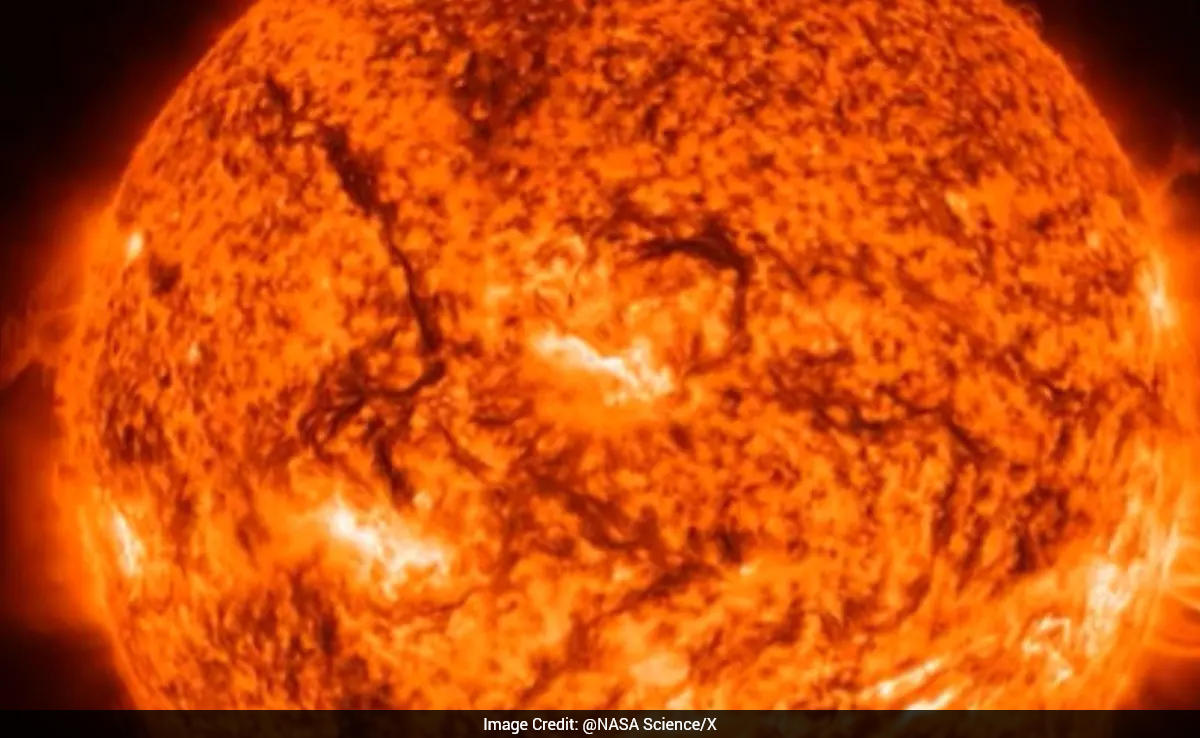
NASA's Parker Solar Probe Reveals Sun's Powerful Eruptions And Mysterious Energy Return
- Tuesday December 23, 2025
- Science |
Nour Rawafi, a project scientist at the Johns Hopkins Applied Physics Laboratory, explained that there had been previous indications that solar material could return in this way, but seeing it so clearly was truly remarkable.
-
www.ndtv.com
-
Why Venus Is the Brightest Morning Star Visible From Earth
- Thursday December 25, 2025
Venus appears so bright in the sky due to reflective sulfuric acid clouds, its closeness to Earth, and sunlight scattering that creates optical effects like a glory.
-
www.gadgets360.com
-
Hubble Captures Rare Collision in Nearby Planetary System, Revealing Violent Planet Formation
- Friday December 19, 2025
Astronomers using NASA’s Hubble Space Telescope have witnessed rare collisions between rocky bodies in the Fomalhaut system. The glowing debris clouds created by these impacts offer a unique glimpse into how planets form and highlight challenges in identifying true exoplanets.
-
www.gadgets360.com
-
Interstellar Comet 3I/ATLAS to Make Closest Approach to Earth on December 19
- Thursday December 18, 2025
Interstellar comet 3I/ATLAS will make its closest approach to Earth on Dec. 19, passing safely at a vast distance. Discovered by NASA-funded telescopes, the rare visitor offers scientists a valuable chance to study material formed around another star. Observations from space telescopes are expected to deepen understanding of interstellar objects.
-
www.gadgets360.com
-
NASA’s Parker Solar Probe Observes Solar Wind Making ‘U-Turn’, Shedding Light on Space Weather
- Wednesday December 17, 2025
NASA’s Parker Solar Probe captured solar wind reversing toward the sun, revealing how magnetic fields recycle coronal material. This process, seen during a close flyby, helps refine models of space weather and may allow scientists to better predict solar storms that can impact satellites, communications, and power systems across the solar system.
-
www.gadgets360.com
-
Interstellar Comet 3I/ATLAS To Make Closest Flyby Of Earth On December 19
- Tuesday December 16, 2025
- Science |
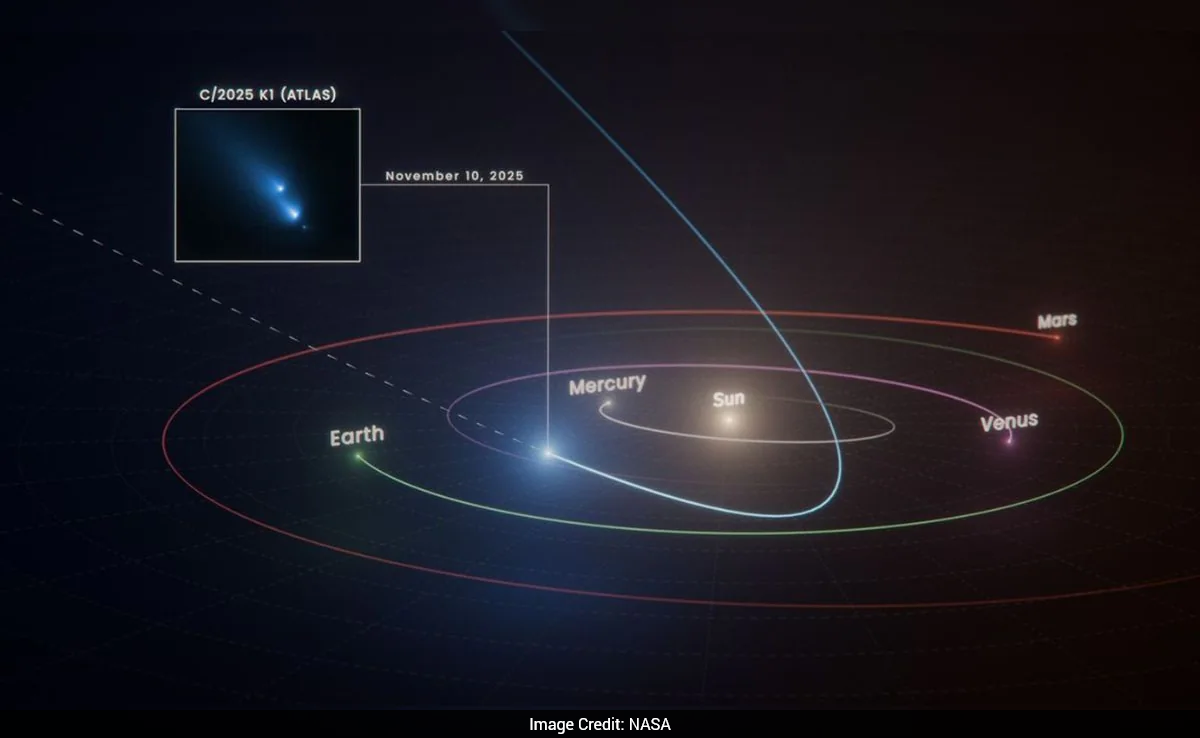
Interstellar comet 3I/ATLAS, discovered by NASA-funded telescopes, will pass Earth on December 19 at a safe distance of 270 million km.
-
www.ndtv.com
-
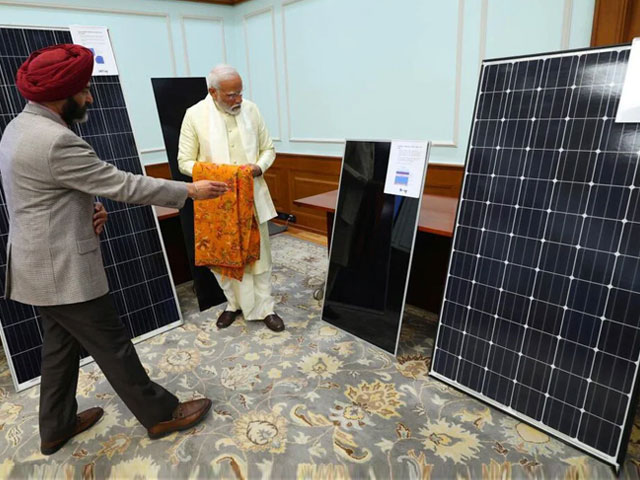
Elon Musk Slams Nuclear Energy As 'Super Dumb', Declares Solar Power The Real Future
- Tuesday December 16, 2025
- Offbeat |
Elon Musk's solar business, anchored by the 2016 Tesla-SolarCity merger, now operates under Tesla Energy, offering solar panels, Solar Roof systems, and battery storage to promote renewable home energy solutions.
-
www.ndtv.com
-
Scientists Study Ancient Interstellar Comet 3I/ATLAS, Seeking Clues to Early Star System Formation
- Sunday December 14, 2025
Comet 3I/ATLAS, a rare interstellar visitor from beyond the solar system, is putting on a striking celestial show as it nears Earth. After passing perihelion in October, the comet brightened nearly tenfold and shifted from red to green due to glowing carbon molecules. Tracked closely by astronomers worldwide, this ancient object offers a unique opp...
-
www.gadgets360.com
-
Ahead Of Closest Approach To Earth, A Look At 3 Latest Images Of Interstellar Comet 3I/ATLAS
- Tuesday December 9, 2025
- Science |
The comet was detected on July 1, 2025, by the Asteroid Terrestrial-impact Last Alert System (ATLAS) survey telescope in Chile.
-
www.ndtv.com
-
Misaligned Exoplanet Is Challenging How We Think Solar Systems Form
- Friday December 5, 2025
Astronomers studying the dwarf-star system TOI-3884b have uncovered a striking anomaly: the planet’s orbit is sharply misaligned with its star’s rotation. Using multicolour transit observations, researchers detected repeated starspot-crossing events that revealed the planet passes over cooler regions on the stellar surface. Follow-up monitoring...
-
www.gadgets360.com
-
A Nearby Planet May Have Formed the Moon Following a Collision With Early Earth: Study
- Wednesday December 3, 2025
A new analysis of Apollo samples and Earth rocks suggests that a nearby rocky planet, not a distant object, collided with early Earth and formed the moon. The study argues that this lost planet, Theia, originated in the inner solar system and shared Earth’s early neighbourhood, offering fresh insight into one of the most important events in our p...
-
www.gadgets360.com
-
Scientists Find Clock on Mars Runs 477 Microseconds Faster Than Earth
- Thursday December 4, 2025
A new study by NIST physicists shows that clocks on Mars run about 477 microseconds faster per day than identical clocks on Earth. The difference comes from Mars’s weaker gravity, orbital eccentricity, and gravitational influences across the solar system. Though tiny, this daily time lead will pose challenges for future Mars navigation and commun...
-
www.gadgets360.com
-
How 3I/ATLAS, Icy Lemmon And Cosmic SWAN Redefined The Sky In 2025
- Friday December 26, 2025
- Science |
The year stood out for its memorable comet activity, with interstellar visitor 3I/ATLAS, along with comets C/2025 A6 (Lemmon) and C/2025 R2 (SWAN), drawing global attention.
-
www.ndtv.com
-
Interstellar Comet 3I/ATLAS Shows Wobbling Jets in Rare Sun-Facing Tail, Surprising Astronomers
- Wednesday December 24, 2025
Astronomers have detected strange wobbling jets in the rare sun-facing tail of interstellar comet 3I/ATLAS. Observed as the comet neared the Sun, the shifting jets reveal new details about how material escapes from comets formed around other stars, offering rare insight into alien planetary systems.
-
www.gadgets360.com
-
NASA's Parker Solar Probe Reveals Sun's Powerful Eruptions And Mysterious Energy Return
- Tuesday December 23, 2025
- Science |
Nour Rawafi, a project scientist at the Johns Hopkins Applied Physics Laboratory, explained that there had been previous indications that solar material could return in this way, but seeing it so clearly was truly remarkable.
-
www.ndtv.com
-
Why Venus Is the Brightest Morning Star Visible From Earth
- Thursday December 25, 2025
Venus appears so bright in the sky due to reflective sulfuric acid clouds, its closeness to Earth, and sunlight scattering that creates optical effects like a glory.
-
www.gadgets360.com
-
Hubble Captures Rare Collision in Nearby Planetary System, Revealing Violent Planet Formation
- Friday December 19, 2025
Astronomers using NASA’s Hubble Space Telescope have witnessed rare collisions between rocky bodies in the Fomalhaut system. The glowing debris clouds created by these impacts offer a unique glimpse into how planets form and highlight challenges in identifying true exoplanets.
-
www.gadgets360.com
-
Interstellar Comet 3I/ATLAS to Make Closest Approach to Earth on December 19
- Thursday December 18, 2025
Interstellar comet 3I/ATLAS will make its closest approach to Earth on Dec. 19, passing safely at a vast distance. Discovered by NASA-funded telescopes, the rare visitor offers scientists a valuable chance to study material formed around another star. Observations from space telescopes are expected to deepen understanding of interstellar objects.
-
www.gadgets360.com
-
NASA’s Parker Solar Probe Observes Solar Wind Making ‘U-Turn’, Shedding Light on Space Weather
- Wednesday December 17, 2025
NASA’s Parker Solar Probe captured solar wind reversing toward the sun, revealing how magnetic fields recycle coronal material. This process, seen during a close flyby, helps refine models of space weather and may allow scientists to better predict solar storms that can impact satellites, communications, and power systems across the solar system.
-
www.gadgets360.com
-
Interstellar Comet 3I/ATLAS To Make Closest Flyby Of Earth On December 19
- Tuesday December 16, 2025
- Science |
Interstellar comet 3I/ATLAS, discovered by NASA-funded telescopes, will pass Earth on December 19 at a safe distance of 270 million km.
-
www.ndtv.com
-
Elon Musk Slams Nuclear Energy As 'Super Dumb', Declares Solar Power The Real Future
- Tuesday December 16, 2025
- Offbeat |
Elon Musk's solar business, anchored by the 2016 Tesla-SolarCity merger, now operates under Tesla Energy, offering solar panels, Solar Roof systems, and battery storage to promote renewable home energy solutions.
-
www.ndtv.com
-
Scientists Study Ancient Interstellar Comet 3I/ATLAS, Seeking Clues to Early Star System Formation
- Sunday December 14, 2025
Comet 3I/ATLAS, a rare interstellar visitor from beyond the solar system, is putting on a striking celestial show as it nears Earth. After passing perihelion in October, the comet brightened nearly tenfold and shifted from red to green due to glowing carbon molecules. Tracked closely by astronomers worldwide, this ancient object offers a unique opp...
-
www.gadgets360.com
-
Ahead Of Closest Approach To Earth, A Look At 3 Latest Images Of Interstellar Comet 3I/ATLAS
- Tuesday December 9, 2025
- Science |
The comet was detected on July 1, 2025, by the Asteroid Terrestrial-impact Last Alert System (ATLAS) survey telescope in Chile.
-
www.ndtv.com
-
Misaligned Exoplanet Is Challenging How We Think Solar Systems Form
- Friday December 5, 2025
Astronomers studying the dwarf-star system TOI-3884b have uncovered a striking anomaly: the planet’s orbit is sharply misaligned with its star’s rotation. Using multicolour transit observations, researchers detected repeated starspot-crossing events that revealed the planet passes over cooler regions on the stellar surface. Follow-up monitoring...
-
www.gadgets360.com
-
A Nearby Planet May Have Formed the Moon Following a Collision With Early Earth: Study
- Wednesday December 3, 2025
A new analysis of Apollo samples and Earth rocks suggests that a nearby rocky planet, not a distant object, collided with early Earth and formed the moon. The study argues that this lost planet, Theia, originated in the inner solar system and shared Earth’s early neighbourhood, offering fresh insight into one of the most important events in our p...
-
www.gadgets360.com
-
Scientists Find Clock on Mars Runs 477 Microseconds Faster Than Earth
- Thursday December 4, 2025
A new study by NIST physicists shows that clocks on Mars run about 477 microseconds faster per day than identical clocks on Earth. The difference comes from Mars’s weaker gravity, orbital eccentricity, and gravitational influences across the solar system. Though tiny, this daily time lead will pose challenges for future Mars navigation and commun...
-
www.gadgets360.com