




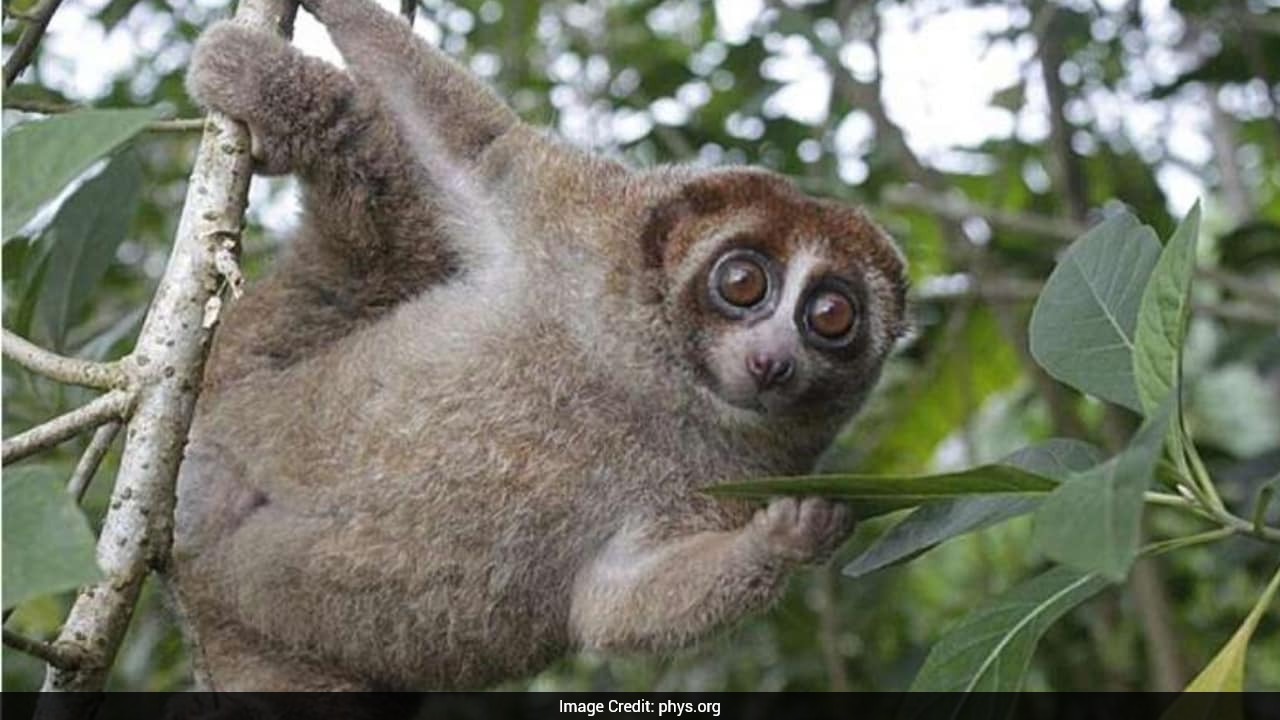
A rare primate from Indonesia, known as the Bangka slow loris, has been rediscovered after nearly 89 years without being documented by scientists. Researchers found that more than 90 of these animals had been recorded in different parts of Bangka Island between 2015 and 2025. Some were found in backyards, beside roads and even on power lines, reported NYPost.
According to phys.org, the discovery has surprised scientists, as the species was last documented in 1937 and was feared to be extinct. The Bangka slow loris is a nocturnal animal that lives in trees and is found on the Indonesian islands of Bangka, Sumatra and Borneo. It is known for its large eyes and is one of the world's only venomous primates.
Many of the animals found on Bangka Island were injured, including some that had come into contact with electrical wires. One had also been attacked by a dog.
The Alobi Wildlife Rescue Centre helped recover the injured animals and release 86 of them into the wild. The Bangka slow loris is a small primate that measures about 10 inches on average. It is smaller than its relative, the Sumatran slow loris.
The animal activates its venom by licking a gland on its arm. Its venom can cause a severe allergic reaction called anaphylactic shock in humans.
However, the toxin is mainly used during defensive grooming activities with other members of its species.
Researchers were surprised that the animal had remained unnoticed by scientists for so long despite living close to populated areas.
Study author Timon Glaw said the rediscovery offered hope that other species believed to be extinct might still survive in places that scientists had not studied for decades.
Despite the rediscovery, the Bangka slow loris remains at serious risk of extinction. Alobi Wildlife Rescue Centre Director Langka Sani said its natural habitat had shrunk significantly because of illegal tin mining and large-scale land clearing for oil palm plantations.
The species is currently listed as critically endangered on the International Union for Conservation of Nature's Red List.
Glaw said rediscovering the animal was only the first step towards protecting it. He stressed the need for a long-term conservation strategy that includes research, surveys and habitat protection.
Although the discovery confirms that the Bangka slow loris still survives, scientists warn that it remains very close to extinction.
Track Latest News Live on NDTV.com and get news updates from India and around the world

