





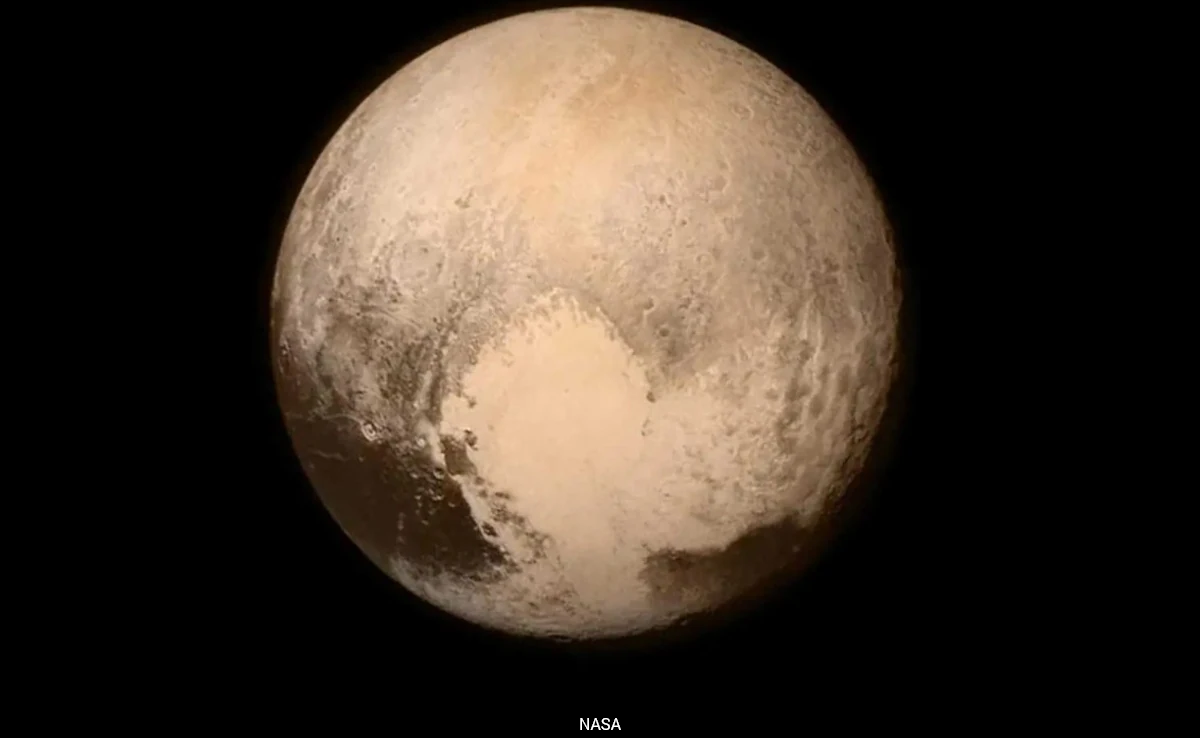
In 2006, the International Astronomical Union stripped Pluto of its planetary status, reclassifying the icy world as a dwarf planet. The decision came after the IAU formally defined what a planet must be. Under those rules, a celestial body must orbit the Sun, be massive enough for gravity to shape it into a sphere, and clear its orbital path of debris. Pluto meets the first two conditions, but not the third.
Why Pluto Failed the Test
According to Space.com, Pluto shares space in the distant Kuiper Belt with many other dwarf planets. This disqualified it from full planetary status. However, critics of the ruling argue the standard is inconsistently applied, noting that Earth shares orbital space with lots of asteroids, as does Jupiter.
Also Read | NASA Chief Calls For Making Pluto A Planet Again At US Senate Hearing
New Horizons Changed the Picture
According to Euronews, in July 2015, NASA's New Horizons spacecraft delivered the first close-up images of Pluto, revealing a surprisingly complex world with mountains, nitrogen-ice glaciers, and a geologically diverse surface that challenged earlier assumptions about the dwarf planet.
NASA Chief Steps Into the Debate
NASA Administrator Jared Isaacman told a Senate committee hearing that he is "very much in the camp of make Pluto a planet again," adding that NASA is currently working on scientific papers on "a position that we would love to escalate through the scientific community to revisit this discussion", as repoted by Scientific American.
A Complicated Path Ahead
Some researchers warn that restoring Pluto's status could create new complications, as more than 100 similar objects are believed to exist in the outer solar system, meaning reclassifying Pluto might mean adding many more worlds to the official list, according to Orbital Today. The IAU remains the field's ultimate authority on naming objects in space and setting astronomical standards.
Track Latest News Live on NDTV.com and get news updates from India and around the world

