





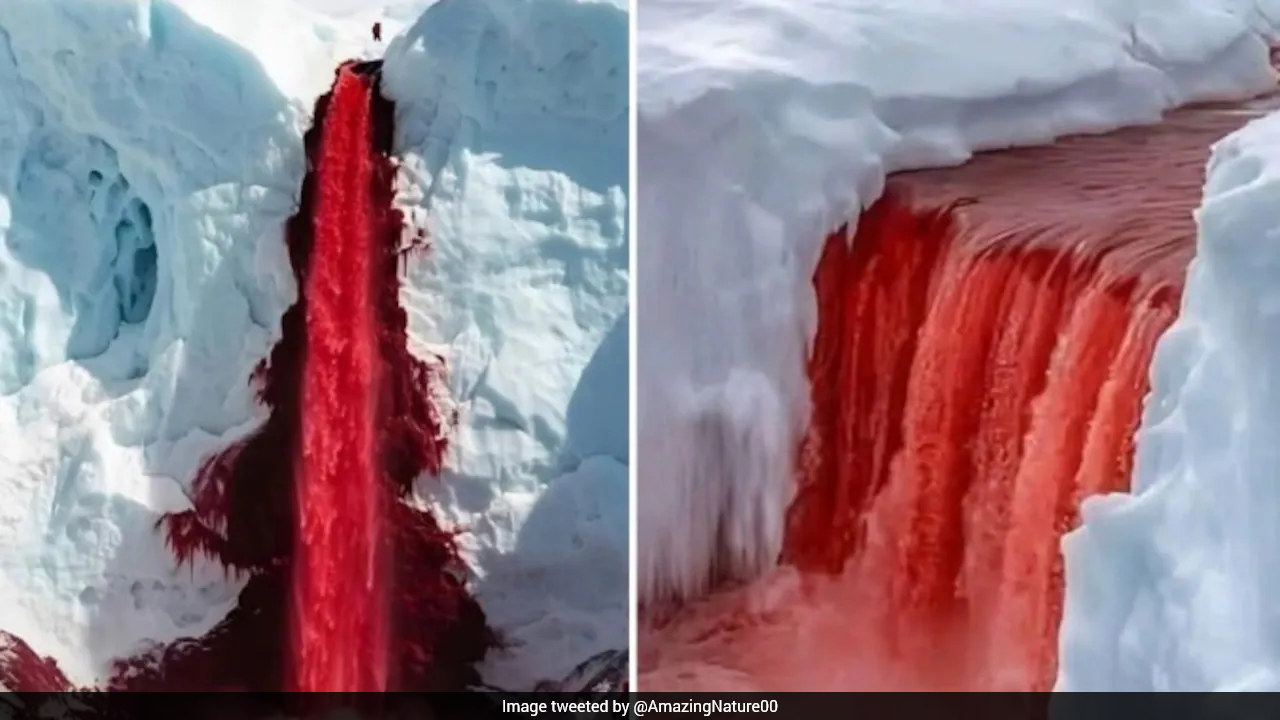
- Blood Falls in Antarctica is red due to iron-rich, salty water from beneath Taylor Glacier
- The iron reacts with oxygen, creating rust and turning the water a deep red color
- The salty water remains liquid under freezing temperatures due to its high salt content
A waterfall in Antarctica looks as though it is pouring blood across the frozen landscape. But despite its eerie appearance, the crimson stream isn't blood at all - it's one of the continent's most fascinating natural wonders. Known as Blood Falls, the rust-red cascade flows from the Taylor Glacier and has puzzled scientists for more than a century. Now, new research has helped explain how this unusual phenomenon reaches the surface.
Nature is awesome.
— Fascinating History (@Fascinate_Hist) December 22, 2025
"Blood Falls" in Antarctica. pic.twitter.com/Us9BXO4jBY
Why is Blood Falls red?
Blood Falls gets its striking colour from iron-rich, salty water trapped deep beneath the glacier. When this water reaches the surface, the iron reacts with oxygen in the air, creating rust and turning the water a deep red. The water also remains liquid despite Antarctica's freezing temperatures because it is extremely salty. The high salt content lowers its freezing point, allowing it to flow even in one of the coldest places on Earth.
The source of Blood Falls is an ancient underground lake buried about 400 metres beneath the Taylor Glacier. Scientists believe the lake formed when seawater became trapped beneath the advancing glacier around 1.5 million years ago.
Over time, the trapped water became increasingly salty, creating a dense brine that has remained sealed beneath the ice for millions of years.
Antarctica's Blood Falls looks like a bleeding glacier, but it's really science at work.
— John Luke (@yesknow) August 31, 2025
Iron-rich, salty water seeps out of the Taylor Glacier, turning red when it hits oxygen. pic.twitter.com/u0uRFvwHwt
Solving a century-old mystery
When Australian geologist Griffith Taylor discovered Blood Falls in 1911, he believed its red colour was caused by algae. Later studies proved otherwise, revealing that iron-rich brine was responsible.
For decades, however, researchers couldn't explain how the underground water reached the surface.
That mystery was largely solved in 2017, when researchers from the University of Alaska Fairbanks used radar to map a 300-metre network of hidden channels inside the glacier. The study showed that pressurised brine slowly travels through these channels before emerging as Blood Falls.
A new study published this year in Antarctic Science has added another piece to the puzzle by explaining how fractures in the glacier allow the brine to periodically break through the ice.
Life without sunlight
Perhaps the most remarkable discovery lies beneath the glacier itself. Scientists found a thriving community of microbes living in the ancient brine, completely cut off from sunlight and oxygen for more than a million years. Instead of relying on photosynthesis, these microorganisms survive using chemical reactions involving sulfate.
Their existence has made Blood Falls an important site for astrobiology, as it offers clues about how life might survive in the icy, oxygen-poor environments of planets and moons elsewhere in the Solar System.
Track Latest News Live on NDTV.com and get news updates from India and around the world

