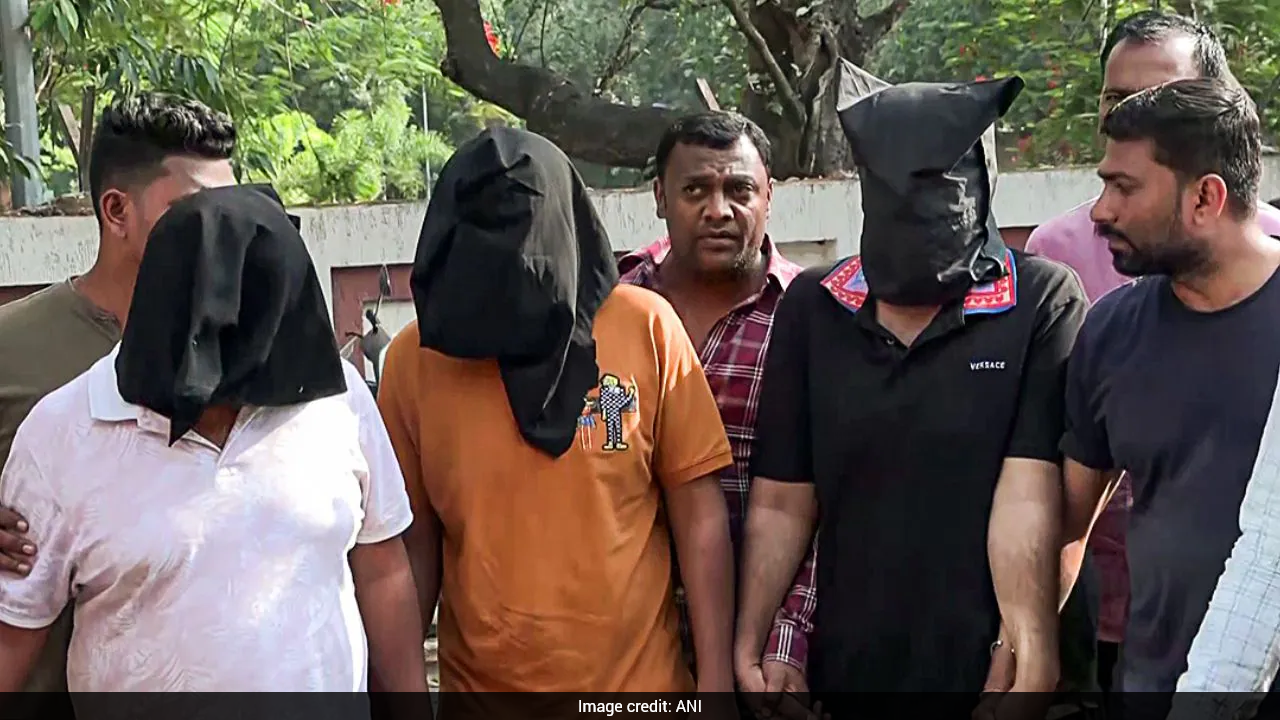
The Maharashtra Teacher Eligibility Test (TET) 2026 paper leak, reported a day before the examination scheduled for June 28, has once again exposed persistent loopholes in the country's examination system. After the leaked question paper surfaced in Thane, the authorities announced the postponement of the examination. Acting on a tip-off, the Thane Police arrested three accused who were allegedly attempting to sell the question papers.
The Maharashtra Police's Special Investigation Team (SIT) is currently probing an inter-state paper leak racket allegedly linked to accused involved in similar cases in other states.
The incident has affected more than 6 lakh candidates who were scheduled to appear for the examination.
Modus Operandi Of Examination Syndicate
The investigation into the NEET (UG) 2024 paper leak case has revealed that the main accused, Sanjiv Mukhia, and his associates allegedly established a highly organised network operating at multiple levels.
Intelligence and Reconnaissance
Members of the syndicate allegedly gather detailed information about printing presses, transportation routes, logistics vehicles, and secure warehouses where confidential examination materials and question papers are stored.
Tampering with Seals
According to investigators, sealed boxes carrying question papers are allegedly tampered with during transit, allowing the papers to be accessed before they reach examination centres.
Digital and Social Media Dissemination
Once the question papers are obtained, they are allegedly circulated within minutes to selected recipients through encrypted messaging platforms such as Telegram and WhatsApp.
Shortcut to Money and Fame: The Coaching Institution-Mafia Nexus
Paper leaking has evolved into a highly lucrative, organised criminal enterprise in which coaching institutes and middlemen work hand in glove.
The primary reasons behind this are:
Tremendous Profits - Investigations reveal that leaked question papers are sold for astronomical sums, often fetching between Rs 30 lakh and Rs 32 lakh per student. This creates a "pyramid of profit" in which middlemen, examination centre staff, and coaching operators make millions overnight.
Guaranteed Results and Commercial Reputation - By providing question papers in advance, coaching institutes allegedly guarantee top ranks or high marks for their students. The greater the number of successful candidates, the stronger the institute's brand value, leading to increased admissions and the ability to charge exorbitant fees in subsequent years.
Collusion with Examination Centres and Insiders - According to investigations, the racket involves a well-established network of coaching institute owners, printing press employees, and administrative staff at examination centres, who allegedly share the illegal profits generated from the leaked material.
Psychological Pressure to Succeed - The Indian examination system is characterised by intense competition. The pressure to secure admission to medical and engineering colleges or obtain government jobs is so high that students and their parents often fall prey to unethical means, risking their life savings.
The Illusion of 'Guess Papers' - To avoid detection, instead of leaking the actual question paper, some institutions allegedly sell materials under the guise of "guess papers." These are reportedly prepared with the help of insiders and closely resemble the actual examination papers.
Legal Loopholes and Administrative Accountability Crisis
In February 2024, Parliament passed the Public Examinations (Prevention of Unfair Means) Bill, 2024, to curb malpractices in major exams such as UPSC, SSC, NEET, JEE, and CUET. It prescribes imprisonment ranging from five to 10 years and a minimum fine of Rs 1 crore for offenders.
However, this stringent law has proved ineffective on the ground because:
Fines dwarfed by economics Of Racket: Since the mafia allegedly charges Rs 30-32 lakh per student, the Rs 1 crore fine can reportedly be recovered from the proceeds of just three to four students. Given the enormous profit margins, the penalty fails to serve as a meaningful financial deterrent.
Low-Level Arrests (The Scapegoat Culture): Investigating agencies often manage to arrest only low-level agents, computer operators, or candidates. The alleged kingpins of the syndicate and senior officials linked to examination systems frequently remain beyond the reach of the law.
Zero Accountability: The syndicate allegedly operates with the confidence that no legal mechanism compels it to return the illegally earned money, allowing the racket to continue repeatedly as a profitable criminal enterprise.
Administrative failures such as paper leaks are eroding the trust of crores of aspiring youth across the country. Until accountability is fixed at the highest levels of examination systems and exemplary action is taken against those responsible to set a strong precedent, new laws will remain mere paper tigers.
