





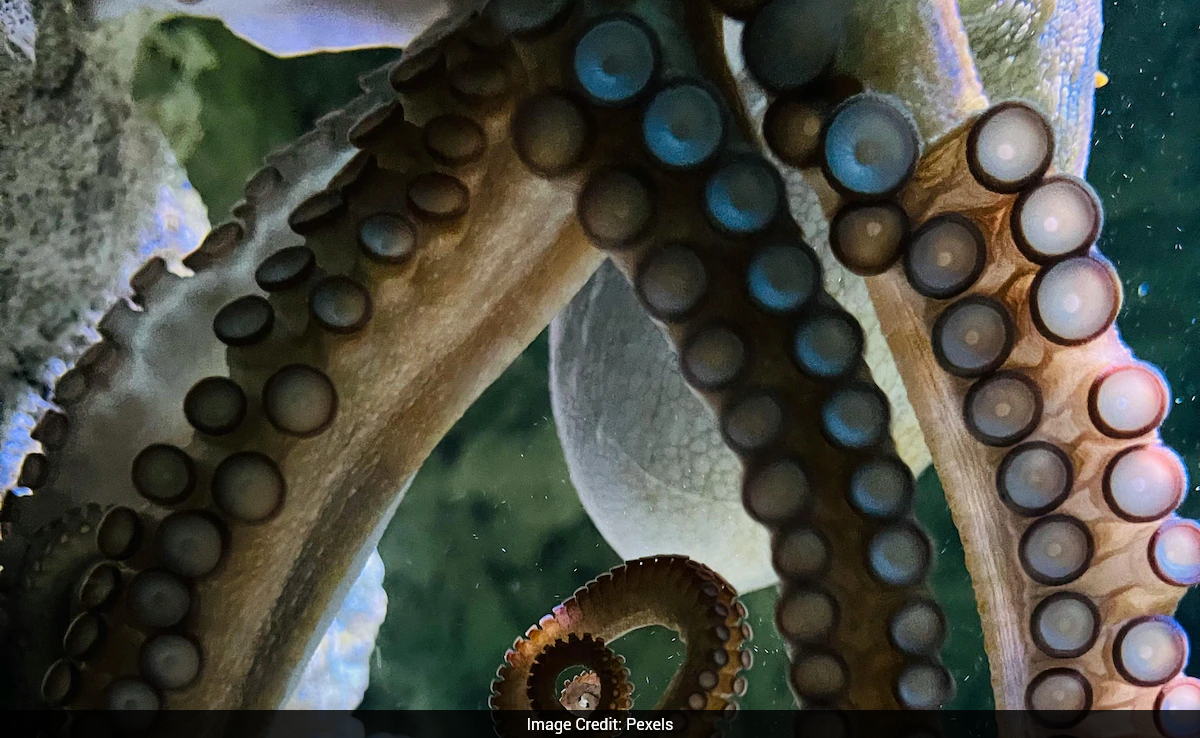
A new study is changing what scientists know about life in ancient oceans, revealing that giant octopuses once ruled the seas as powerful hunters. Researchers have discovered that octopuses measuring up to 62 feet in length were among the top ocean predators around 100 million years ago, reported CNN.
The finding comes from rare fossils hidden inside solid rock, with well-preserved jaw specimens showing heavy wear from crushing hard prey such as shells and bones. The study was published in the journal Science.
Study co-author Yasuhiro Iba said that this suggests these giant octopuses may have functioned as apex predators in the Cretaceous sea.
He also said that the team was surprised, adding that the fossil record of octopuses is extremely limited and finding animals this large and ecologically important in the Cretaceous ocean was beyond their expectations.
The extinct species, named Nanaimoteuthis, is estimated to have been between 23 and 62 feet long. Researchers calculated their size by studying the dimensions of their beak fossils.
According to the study, these creatures were among the earliest finned octopuses known in the scientific record, identified by paddle-shaped fins on their heads.
Iba explained that octopuses rarely fossilize because their bodies are mostly soft, and only a few hard parts like jaws are likely to survive over time. Scientists reexamined 15 large jaw fossils previously found in Japan and Canada's Vancouver Island, and also uncovered 12 additional fossilized jaws embedded in sedimentary rock from the Cretaceous Period, dating from 100 million to 72 million years ago.
The team used a 3D imaging method called grinding tomography along with an AI model to analyze the fossils. Iba described this method as a digital fossil mining approach that created detailed 3D models of the jaw specimens.
During the same period, dinosaurs such as Tyrannosaurus rex, Triceratops, and Velociraptor dominated life on land, while these giant octopuses ruled the oceans.
Track Latest News Live on NDTV.com and get news updates from India and around the world

