





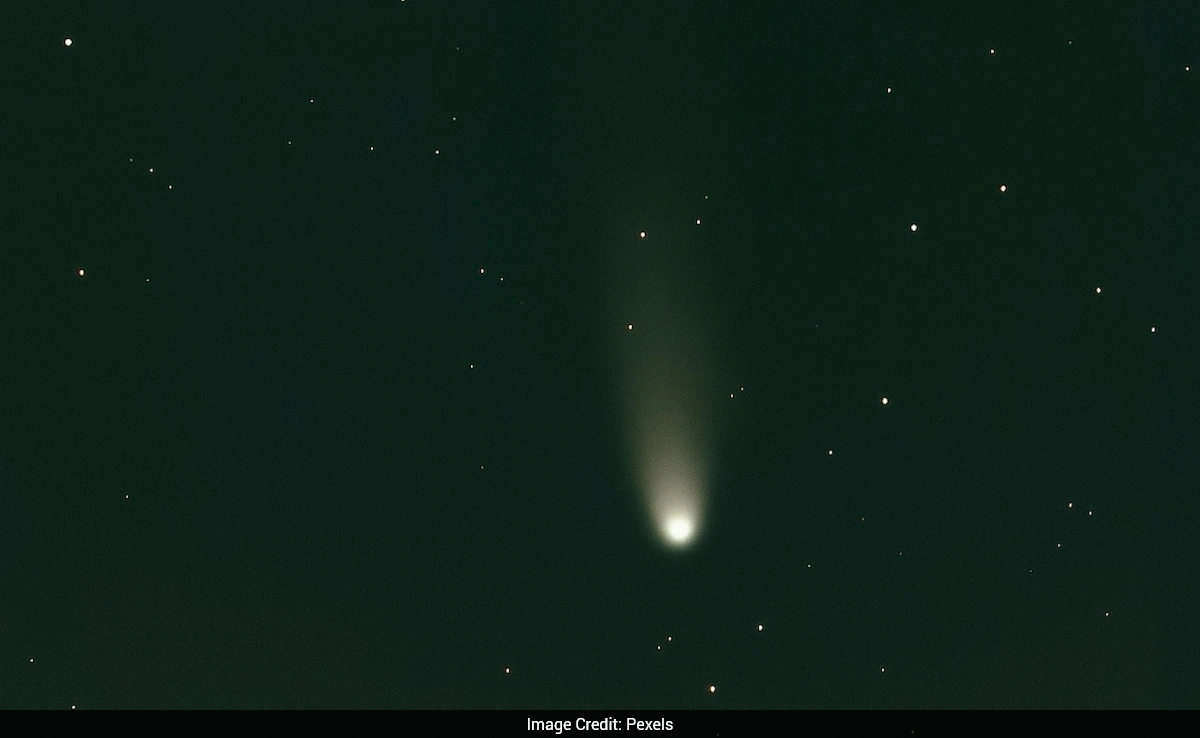
A rare celestial event is set to capture attention as an interstellar comet makes its way through the solar system, offering skywatchers a unique viewing opportunity not seen since prehistoric times, reported NYPost. The interstellar comet known as C/2025 R3 (Pan-STARRS) was first discovered on September 7, 2025, by the Pan-STARRS survey at Haleakala, Hawaii. This icy object completes an orbit around the Sun only once every 170,000 years, making its current appearance extremely rare.
Over the next ten days, this comet will steadily increase in brightness as it moves toward the inner solar system. On April 19th, it will reach its closest point to the Sun, or perihelion. Although it will come very close, it will remain confined to about half the distance between Earth and the Sun, making it highly unlikely to break up, as happens with some comets that approach extremely close to the Sun.
On April 27th, the comet will be closest to Earth and at the same time, it will appear brightest. However, it will not be visible from the Northern Hemisphere at that time.
People are advised to try to observe this comet between April 10th and April 20th. During this period, it will steadily brighten and will be visible in relatively dark skies before disappearing into the bright sunlight.
According to Nick James, head of the British Astronomical Association's Comet Section, the best chance of seeing it is within the next week, when it will become brighter and clearly visible in dark skies. He also explained that to see it, people should wake up a few hours before sunrise and find a clear, open horizon in the east.
Those in the Northern Hemisphere should look down toward the eastern sky about an hour and a half before sunrise.
The comet is currently in the constellation Pegasus and passing near the Great Square of Pegasus. This region is marked by four stars of approximately equal brightness-Skeet, Alpheratz, Markab, and Algenib.
To see it, pay attention to the faint and diffuse glow, called a coma. A small tail may also appear, which will become more pronounced as it approaches the Sun.
Although this comet can be seen with the naked eye, it will be easier to see it using 10x50 binoculars or similar equipment, especially in the morning as daylight begins to increase.
Track Latest News Live on NDTV.com and get news updates from India and around the world

