





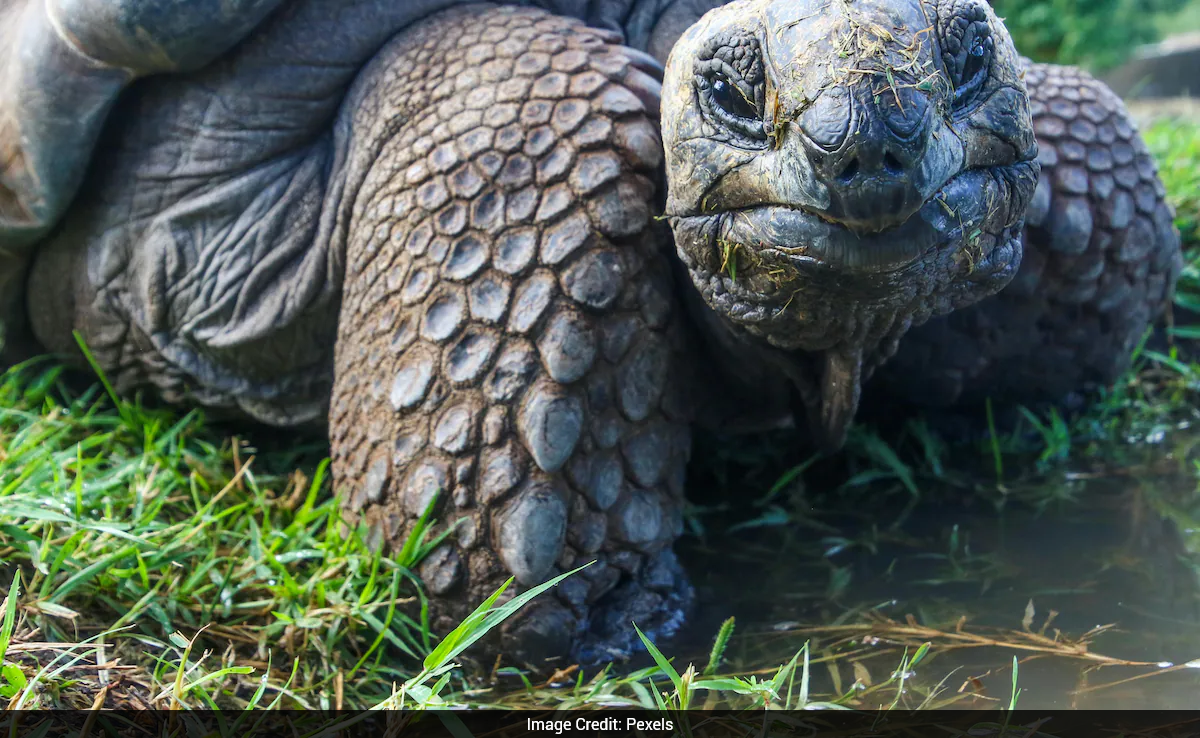
Floreana Island in the Galapagos welcomes giant tortoises back for the first time in more than 150 years. On February 20, the Galapagos National Park Directorate and conservation partners released 158 giant tortoises on the island. The species had disappeared after heavy hunting by whalers and the introduction of invasive predators wiped them out in the mid-1800s, reported Newsweek.
Without the tortoises, the island's ecosystem collapsed over generations. Giant tortoises weren't just Floreana's inhabitants-they were the island's architects. For centuries, they grazed on vegetation, created pathways through dense forests, and spread seeds across the island.
Their disappearance triggered an ecological collapse that transformed the landscape. Bringing them back isn't just symbolic, it's also a structural change. Tortoises are the foundation on which Floreana's entire ecosystem can be rebuilt, and their return represents the largest rewilding success in the island's modern history.
The process used NASA satellite technology, which helped scientists determine the animals' most suitable habitat for long-term survival. Released from their cages, the tortoises immediately face the challenge of finding food, water, and nesting sites on the strange island.
Researchers developed a decision tool using data from several NASA satellite missions-Landsat, Global Precipitation Measurement, and the Terra satellite-to map vegetation, rainfall, temperature, and terrain conditions on Floreana.
This data was combined with millions of spatial observations of tortoises across the archipelago to create habitat suitability maps.
These maps provide projections of conditions for up to 40 years. Long-term prediction is important because giant tortoises can live for more than a century, so it's crucial to see how the island's climate and vegetation are evolving, not just where they currently are.
In 2000, researchers discovered unusual tortoises on Wolf Volcano, Isabela Island, that didn't match any known living species. DNA from the bones of extinct Floreana tortoises confirmed that these animals belonged to the Floreana lineage, likely because whalers transported tortoises between the islands a century ago. The breeding program sparked by this discovery produced hundreds of offspring, which are now being returned to Floreana.
The Galapagos National Park Directorate has released more than 10,000 tortoises throughout the archipelago over the past 60 years, making it one of the largest rewilding efforts ever.
Track Latest News Live on NDTV.com and get news updates from India and around the world

