





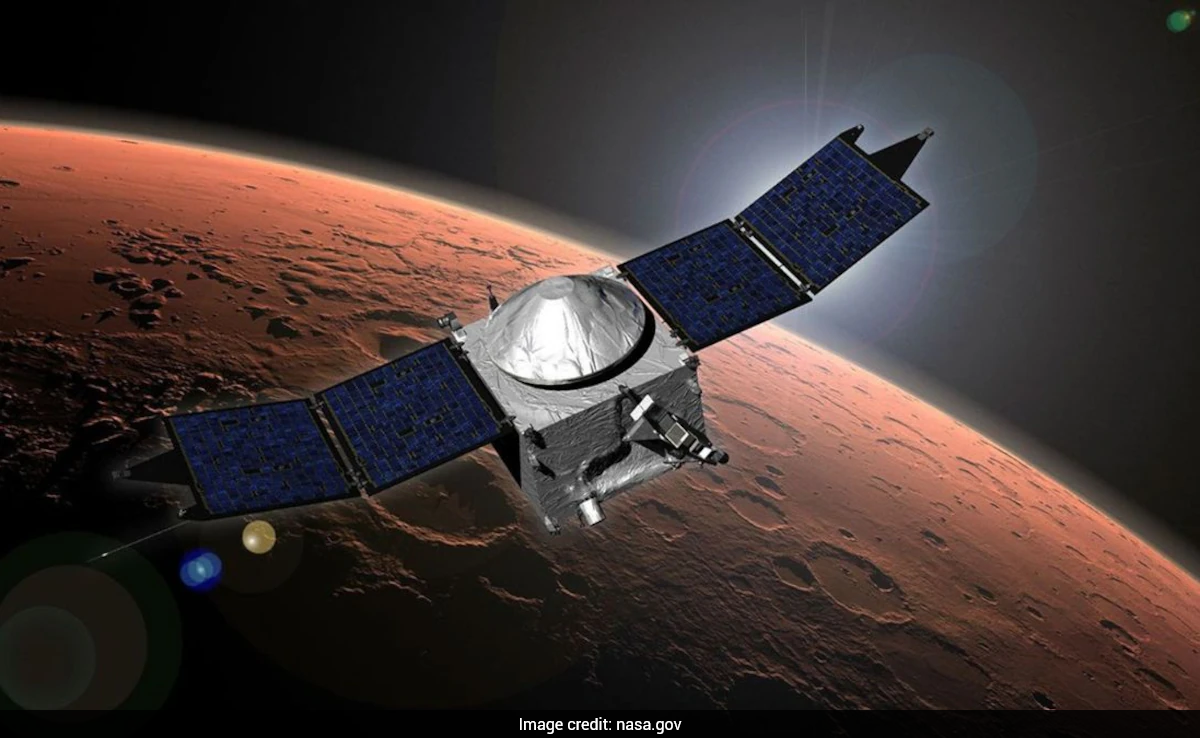
NASA has resumed attempts to reestablish contact with its Mars Atmosphere and Volatile Evolution (MAVEN) spacecraft, which was lost recently. The spacecraft has been silent since December 6, 2025. It was launched in November 2013, and since then, it studied Mars' upper atmosphere and its interaction with the solar wind. According to NASA, the spacecraft was last heard from on December 6.
MAVEN's last communication indicated it was rotating unexpectedly and possibly deviating from its intended orbit. The exact cause is unknown, but possibilities include onboard computer failure, a stuck valve, or fuel shortage.
Also read | NASA's New High-Resolution Map Shows Dark Matter In "Stunning Detail"
Now, as per the latest update by NASA, the efforts to resume contact with MAVEN were made with the help of the Deep Space Network and the US National Science Foundation's Green Bank Observatory when spacecraft and rovers at Mars emerge from solar conjunction.
The solar conjunction is a period when the Red Planet and Earth are on opposite sides of the Sun, and contact with Mars missions isn't possible.
A team of experts is also analysing data recovered from a December 6 radio science campaign. "This analysis is being used to create a timeline of possible events and identify likely root causes of the issue," said the space agency. "NASA is assembling a formal anomaly review board to investigate the available data."
The Curiosity team also tried to connect with the spacecraft in December by using the rover's Mastcam instrument to image MAVEN's reference orbit. However, they failed to detect it.
Also read | Jupiter's Moon Europa May Be Supplying Its Ocean With Life-Supporting Matter, Find's Study
When MAVEN Pictured 3I/ATLAS
The image of 3I/ATLAS, the third interstellar object so far discovered in our solar system, which made its closest approach to Earth on December 19, was taken by several space assets, and MAVEN was one of them.
NASA revealed that MAVEN captured 3I/ATLAS in two unique ways with its Imaging Ultraviolet Spectrograph (IUVS) camera. "First, IUVS took multiple images of the comet in several wavelengths, much like using various filters on a camera. Then it snapped high-resolution UV images to identify the hydrogen coming from 3I/ATLAS," said NASA.
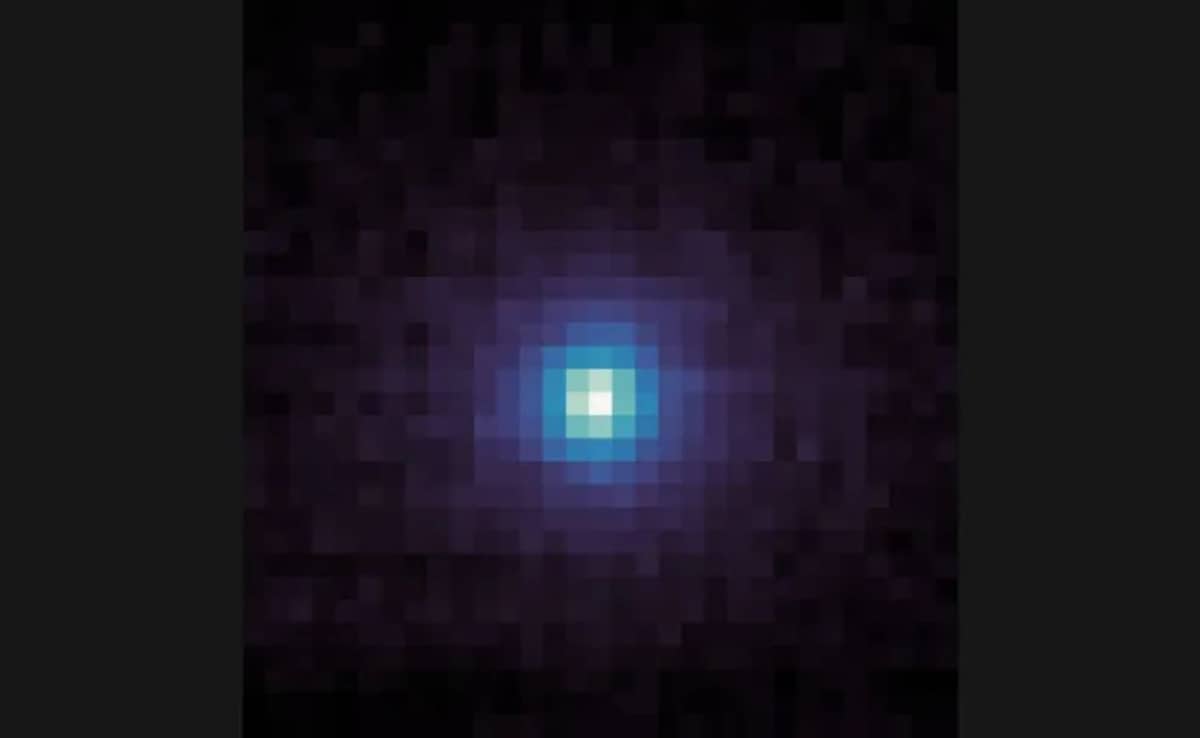
This ultraviolet image shows the halo of gas and dust, or coma, surrounding comet 31/ATLAS as seen on Oct 9, 2025, by MAVEN spacecraft.
Photo Credit: NASA
"The images MAVEN captured truly are incredible," Shannon Curry, MAVEN's principal investigator and research scientist at the Laboratory for Atmospheric and Space Physics (LASP) at the University of Colorado Boulder, said as quoted by NASA.
"The detections we are seeing are significant, and we have only scraped the surface of our analysis."
Track Latest News Live on NDTV.com and get news updates from India and around the world

